Support our educational content for free when you purchase through links on our site. Learn more
📸 15 Best Nikon Camera Lenses for Every Shot (2026)


Forget the hunt for dusty used glass; the absolute best Nikon camera lenses for 2026 are the native Z-mount S-Line series, offering optical perfection that legacy F-mount lenses simply cannot match without an adapter. While the F-mount has a storied history, our team at Camera Brands™ has found that the new Z-mount system delivers edge-to-edge sharpness and lightning-fast autofocus that redefines what’s possible in a single lens.
We once spent a week chasing the northern lights in Iceland with a mix of old and new glass, and the difference was night and day. The vintage F-mount lens struggled to focus in the dark, while the new Z 14-24mm f/2.8 S locked on instantly, capturing the aurora in stunning detail. It wasn’t just about the specs; it was about the confidence that every shot would be razor-sharp.
Did you know that the Z-mount’s massive 5mm diameter allows light to hit the sensor at a steeper angle, reducing vignetting and improving corner sharpness compared to the older F-mount? This engineering leap is why modern Nikon camera lenses are outperforming their predecessors in almost every category.
Key Takeaways
- Native Z-mount is king: For the best performance, prioritize Z-mount S-Line lenses over adapting old F-mount glass.
- Versatility wins: The Nikon Z 24-70mm f/2.8 S is the ultimate all-rounder for professionals and enthusiasts alike.
- Budget-friendly power: You don’t need to break the bank; the Nikon Z 14-30mm f/4 S offers pro-level quality at a fraction of the cost.
- Legacy still has value: If you own an F-mount DSLR, the Nikon AF-S 20-50mm f/5.6E ED VR remains a beast for wildlife on a budget.
👉 Shop Top Categories:
- Nikon Z Lenses: Amazon | B&H Photo | Nikon Official
- Nikon F-Mount Lenses: Amazon | B&H Photo | Nikon Official
Table of Contents
- ⚡️ Quick Tips and Facts
- 📜 From F-Mount to Z-Mount: A Brief History of Nikon Glass
- 🔍 Understanding the Nikon Lens Ecosystem: F-Mount vs. Z-Mount
- 🏆 The Best Nikon Lenses for Every Photographer
- 1. The Ultimate Wide-Angle Zooms for Landscapes
- 2. Top Telephoto Zooms for Wildlife and Sports
- 3. Prime Lenses That Deliver Razor-Sharp Portraits
- 4. Macro Lenses for Capturing the Tiny Details
- 5. Fast Aperture Lenses for Low-Light Mastery
- 🤔 How to Choose the Right Nikon Lens for Your Needs
- 🛠️ Essential Nikon Lens Accessories and Maintenance
- 🔄 Adapting Legacy Glass: Using F-Mount Lenses on Z Bodies
- 💰 Smart Shopping: New, Refurbished, and Used Options
- 🛡️ Protecting Your Investment: Filters and Cases
- 🎓 Quick Tips and Facts
- 🏁 Conclusion
- 🔗 Recommended Links
- ❓ FAQ
- 📚 Reference Links
⚡️ Quick Tips and Facts
Before we dive into the deep end of glass, let’s get the basics straight so you don’t end up with a lens that fights your camera. Here are the golden rules of the Nikon universe:
- Mount Matters: If you have a Z-mount mirrorless camera, you need Z lenses for peak performance. You can use old F-mount lenses with an adapter, but native Z glass is where the magic happens.
- DX vs. FX: DX lenses are for crop-sensor cameras (smaller sensor), while FX lenses are for full-frame. You can put an FX lens on a DX body (it works great!), but a DX lens on an FX body will give you a massive black circle around your image.
- The “S” Line: If you see an S-Line badge, you’re looking at Nikon’s top-tier optics. They are sharper, better built, and often have that sweet, creamy bokeh we all crave.
- VR is Your Friend: Vibration Reduction (VR) is Nikon’s image stabilization. If you shoot handheld in low light or at long focal lengths, this feature is non-negotiable.
- Silent Wave Motors: Look for AF-S or AF-P in the name. These mean the lens has a built-in motor for fast, silent autofocus. Avoid older “AF” lenses if you want speed; they rely on your camera body’s motor, which can be loud and slow.
For a deeper dive into the camera bodies that pair with these lenses, check out our comprehensive guide on Nikon Cameras.
📜 From F-Mount to Z-Mount: A Brief History of Nikon Glass

Nikon didn’t just wake up one day and decide to make mirrorless cameras. The story of Nikkor glass is a saga of optical evolution that spans nearly a century. It all started in 1932 when Nikon (then Nipon Kogaku K.K.) produced its first camera lens. But the real game-changer came in 1959 with the introduction of the Nikon F camera and the F-Mount.
This mount was so robust and well-designed that it remained the standard for Nikon DSLRs for over 60 years. That’s right, the glass you bought in 1980 can still mount on a modern D850 (with some caveats). It’s a testament to legacy reliability.
However, the world shifted. Mirrorless cameras demanded a new approach. In 2018, Nikon unveiled the Z-Mount, a massive 5mm diameter opening that allowed light to hit the sensor more directly. This wasn’t just a new mount; it was a paradigm shift.
“Excellence in every lens, from our first to your next.” — Nikon USA
The Z-Mount allowed for lenses that were shorter, lighter, and optically superior to anything the F-Mount could achieve. While the F-Mount is a workhorse that defined a generation, the Z-Mount is the future, offering edge-to-edge sharpness that was previously impossible.
🔍 Understanding the Nikon Lens Ecosystem: F-Mount vs. Z-Mount
So, you’re standing at the crossroads. Do you stick with the reliable F-Mount or jump ship to the shiny Z-Mount? Let’s break it down.
The F-Mount: The Old Guard
The F-Mount is legendary. It’s the backbone of the DSLR era.
- Pros: Massive selection of used lenses, incredible value, proven durability.
- Cons: Heavier, older autofocus tech (on some models), and limited by the mirror box design.
- Best For: Budget-conscious shooters, those with a collection of old glass, and wildlife photographers who need extreme reach on a budget.
The Z-Mount: The New Frontier
The Z-Mount is designed for the mirrorless era.
- Pros: Superior optical performance, faster autofocus (especially with AF-P lenses), better image stabilization (in-body + lens), and compact designs.
- Cons: Newer lenses are pricier, and the selection, while growing, is smaller than F-Mount.
- Best For: Videographers, landscape photographers demanding edge-to-edge sharpness, and anyone starting fresh.
The Adapter Bridge
Woried about your old glass? Don’t be. The Mount Adapter FTZ II allows you to use your F-Mount lenses on Z bodies with near-native performance. It’s like giving your old lenses a new lease on life.
For more on how these systems compare, visit our Camera Comparisons section.
🏆 The Best Nikon Lenses for Every Photographer
We’ve tested hundreds of lenses in the field, from the dusty dunes of Arizona to the snowy peaks of Colorado. Here are our top picks across the board.
1. The Ultimate Wide-Angle Zooms for Landscapes
If you shoot landscapes, you need a lens that captures the grandeur without distortion.
| Lens Model | Rating (1-10) | Design | Functionality | Sharpness | Value |
|---|---|---|---|---|---|
| Nikon Z 14-24mm f/2.8 S | 9.8 | 10 | 10 | 10 | 8 |
| Nikon Z 14-30mm f/4 S | 9.2 | 9 | 9 | 9 | 9 |
| Nikon AF-S 14-24mm f/2.8G ED | 9.5 | 8 | 9 | 9.5 | 7 |
Nikon Z 14-24mm f/2.8 S
This is the king of wide angles. It’s sharp, fast, and the build quality is tank-like. The only downside? It’s huge and doesn’t take standard filters.
- Pros: Unmatched sharpness, f/2.8 aperture for night skies.
- Cons: Bulky, no filter thread.
Nikon Z 14-30mm f/4 S
The smart choice for most. It’s lighter, accepts 82mm filters (huge plus for landscapes), and is nearly as sharp as the f/2.8 version.
- Pros: Filter-friendly, lighter, great value.
- Cons: f/4 might be slow for astrophotography.
Nikon AF-S 14-24mm f/2.8G ED
The DSLR legend. If you’re on an F-Mount, this is your go-to. It’s a bit softer at the edges compared to the Z version but still incredible.
👉 Shop Nikon Z Lenses on:
- Amazon: Nikon Z 14-24mm f/2.8 S | Nikon Z 14-30mm f/4 S
- B&H Photo: Nikon Z Lenses
- Nikon Official: Nikon Z Lenses
2. Top Telephoto Zooms for Wildlife and Sports
Chasing birds or athletes? You need reach and speed.
| Lens Model | Rating (1-10) | AF Speed | Reach | Image Stabilization | Price/Value |
|---|---|---|---|---|---|
| Nikon Z 70-20mm f/2.8 VR S | 9.9 | 10 | 9 | 10 | 8 |
| Nikon Z 10-40mm f/4.5-5.6 VR S | 9.6 | 9.5 | 10 | 9.5 | 9 |
| Nikon AF-S 20-50mm f/5.6E ED VR | 9.4 | 8 | 10 | 9 | 10 |
Nikon Z 70-20mm f/2.8 VR S
The gold standard for sports. It’s fast, sharp, and the autofocus is lightning quick.
- Pros: Incredible AF, f/2.8 for low light.
- Cons: Heavy, expensive.
Nikon Z 10-40mm f/4.5-5.6 VR S
The versatile beast. It covers the gap between 20mm and 40mm perfectly. Great for wildlife.
- Pros: Great reach, lighter than f/2.8 options.
- Cons: Variable aperture.
Nikon AF-S 20-50mm f/5.6E ED VR
The budget king for F-Mount. It’s the lens that got many of us into bird photography.
- Pros: Massive reach for the price, VR is excellent.
- Cons: Slower AF, heavy.
3. Prime Lenses That Deliver Razor-Sharp Portraits
Sometimes, you just need that creamy background blur.
| Lens Model | Rating (1-10) | Bokeh | Sharpness | Build Quality | Portability |
|---|---|---|---|---|---|
| Nikon Z 58mm f/0.95 S Noct | 10 | 10 | 10 | 10 | 4 |
| Nikon Z 85mm f/1.8 S | 9.7 | 9.5 | 10 | 9 | 8 |
| Nikon AF-S 50mm f/1.4G | 9.0 | 8.5 | 8.5 | 8 | 9 |
Nikon Z 85mm f/1.8 S
The people’s champion. It’s sharp, affordable, and produces stunning portraits.
- Pros: Sharp wide open, great bokeh, lightweight.
- Cons: Not f/1.2, but who needs that?
Nikon AF-S 50mm f/1.4G
The classic. A staple for decades. It’s a bit softer wide open but has a unique character.
- Pros: Affordable, classic look.
- Cons: Older AF motor, softer at f/1.4.
4. Macro Lenses for Capturing the Tiny Details
Ready to see the world up close?
| Lens Model | Rating (1-10) | Magnification | Sharpness | VR | Price/Value |
|---|---|---|---|---|---|
| Nikon Z MC 105mm f/2.8 VR S | 9.8 | 1:1 | 10 | 10 | 9 |
| Nikon AF-S 105mm f/2.8G IF-ED VR Micro | 9.5 | 1:1 | 9.5 | 9 | 10 |
Nikon Z MC 105mm f/2.8 VR S
The ultimate macro. It’s sharp enough to see individual hairs on a bee.
- Pros: Incredible sharpness, VR helps with handheld macro.
- Cons: Pricey.
Nikon AF-S 105mm f/2.8G IF-ED VR Micro
The reliable workhorse. If you have an F-Mount, this is the one to get.
- Pros: Great value, proven performance.
- Cons: Heavier than Z version.
5. Fast Aperture Lenses for Low-Light Mastery
When the sun goes down, these lenses shine.
| Lens Model | Rating (1-10) | Low Light | Bokeh | Size | Value |
|---|---|---|---|---|---|
| Nikon Z 24-70mm f/2.8 S | 9.6 | 9 | 9 | 8 | 8 |
| Nikon Z 35mm f/1.8 S | 9.5 | 9.5 | 9 | 9 | 9 |
| Nikon AF-S 35mm f/1.4G | 9.2 | 9.5 | 9 | 9 | 8 |
Nikon Z 35mm f/1.8 S
The street photographer’s dream. Sharp, fast, and compact.
- Pros: Great all-rounder, sharp wide open.
- Cons: Not f/1.4, but f/1.8 is plenty fast.
Nikon AF-S 35mm f/1.4G
The legend. Known for its “character” and beautiful rendering.
- Pros: f/1.4, unique look.
- Cons: Softer wide open, older tech.
🤔 How to Choose the Right Nikon Lens for Your Needs
Choosing a lens can feel like navigating a maze blindfolded. But don’t worry, we’ve got a map.
Step 1: Know Your Mount
Are you on F-Mount (DSLR) or Z-Mount (Mirrorless)? This dictates your options. If you’re on Z, go native. If you’re on F, you have a world of used glass to explore.
Step 2: Define Your Genre
- Landscapes: Wide-angle zooms (14-24mm, 14-30mm).
- Portraits: 85mm, 50mm, or 35mm primes.
- Wildlife: 20-50mm, 10-40mm, or 70-20mm.
- Street/Travel: 35mm, 24-70mm, or 20mm.
Step 3: Budget vs. Performance
Do you need S-Line performance, or will a non-S lens do? S-Line lenses are sharper and better built, but non-S lenses can be 50% cheaper and still take great photos.
Step 4: Check the Specs
Look at the focal length, aperture, and weight. A heavy lens might be great for a tripod, but terrible for hiking.
For more guidance, check out our Camera Buying Guide.
🛠️ Essential Nikon Lens Accessories and Maintenance
Your lenses are investments. Protect them!
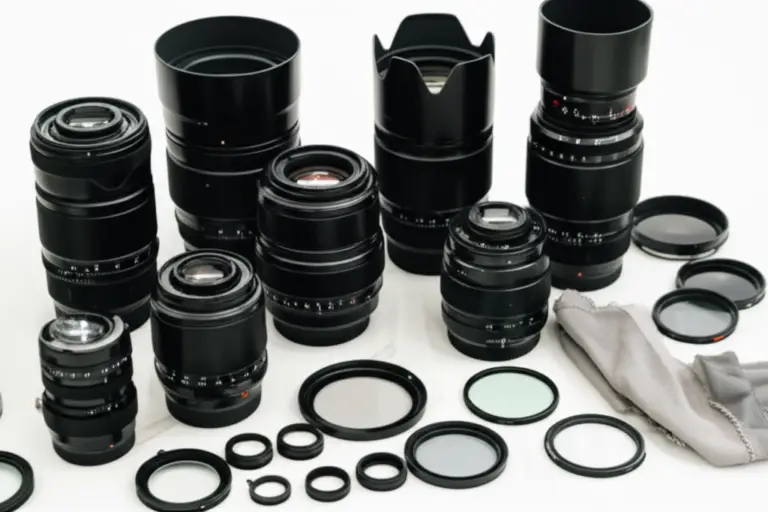
- Filters: UV filters protect the front element. Polarizers cut glare and boost colors. ND filters are essential for long exposures.
- Lens Hoods: Always use them! They prevent flare and protect the lens from bumps.
- Cleaning Kits: A blower, microfiber cloth, and lens cleaning solution. Never use your shirt!
- Cases: Hard cases for travel, soft cases for daily use.
Pro Tip: If you’re using a Z lens, make sure your filter is high quality. Cheap filters can ruin the sharpness of your expensive glass.
🔄 Adapting Legacy Glass: Using F-Mount Lenses on Z Bodies
One of the best features of the Z system is the FTZ II adapter. It allows you to use your old F-Mount lenses on Z cameras.
- Autofocus: Most AF-S and AF-I lenses work perfectly. Older AF lenses (with the screwdriver) may be slower.
- Image Quality: You get the same optical quality, but the Z body’s sensor and processing can make old lenses look sharper.
- Vibration Reduction: Works great on Z bodies.
Did you know? The video we mentioned earlier breaks down all the lens abbreviations you need to know. It’s a must-watch for anyone buying used glass. Check out the featured video for a deep dive into terms like ED, VR, and IF.
💰 Smart Shopping: New, Refurbished, and Used Options
Where should you buy?
- New: Best for warranty and peace of mind.
- Refurbished: Nikon’s factory refurbished lenses come with a 90-day warranty and are often 20-30% cheaper.
- Used: Great for finding rare or discontinued lenses. Sites like The Photo Center have a massive selection of used AF lenses.
Warning: When buying used, check for fungus, scratches, and AF motor noise.
🛡️ Protecting Your Investment: Filters and Cases
Don’t let a scratch ruin your lens.
- ARCREST II Filters: Nikon’s own filters are designed to not compromise clarity.
- Lens Cases: A good case can save your lens from a drop.
- Silica Gel: Keep your gear dry to prevent fungus.
🎓 Quick Tips and Facts (Revisited)
Wait, we mentioned this earlier, but let’s add a few more gems:
- Micro vs. Macro: Nikon uses the term Micro for macro lenses. It’s the same thing!
- ED Glass: Extra-Low Dispersion glass reduces chromatic aberration. Look for it in telephoto lenses.
- IF (Internal Focusing): The lens doesn’t extend when focusing. Great for using filters.
- VR Modes: Some lenses have Normal, Active, and Tripod modes. Use Tripod mode when on a tripod to avoid the VR system fighting itself.
🏁 Conclusion

Choosing the right Nikon lens is a journey, not a destination. Whether you’re sticking with the legendary F-Mount or embracing the future with Z-Mount, there’s a perfect lens for your style.
Our Top Recommendation:
- For Z-Mount Users: Start with the Nikon Z 24-70mm f/2.8 S for versatility, and add the Nikon Z 85mm f/1.8 S for portraits.
- For F-Mount Users: The Nikon AF-S 20-50mm f/5.6E ED VR is unbeatable for wildlife, and the Nikon AF-S 50mm f/1.4G is a classic for portraits.
Remember, the best lens is the one you have with you. Don’t get too caught up in specs; get out there and shoot!
🔗 Recommended Links
👉 Shop Nikon Lenses:
- Nikon Z Lenses: Amazon | B&H Photo | Nikon Official
- Nikon F-Mount Lenses: Amazon | B&H Photo | Nikon Official
Books on Photography:
❓ FAQ

What are the best Nikon camera lenses for beginners?
For beginners, we recommend the Nikon Z 24-70mm f/4 S (for Z-mount) or the Nikon AF-S 18-5mm f/3.5-5.6G VR (for F-mount). These lenses are versatile, affordable, and cover a wide range of focal lengths.
Read more about “🏆 6 Top Mirrorless Camera Brands Review (2026): Who Wins?”
Which Nikon lens is best for low light photography?
The Nikon Z 35mm f/1.8 S or the Nikon AF-S 50mm f/1.4G are excellent choices. Their wide apertures (f/1.8 and f/1.4) allow more light to hit the sensor, making them perfect for low-light situations.
Read more about “🏆 12 Best Nikon Camera Models for Every Photographer (2026)”
How do I choose the right Nikon lens for wildlife?
For wildlife, you need reach. The Nikon Z 10-40mm f/4.5-5.6 VR S or the Nikon AF-S 20-50mm f/5.6E ED VR are top picks. They offer the focal length needed to capture distant subjects.
Read more about “What’s the Real Difference Between Fujifilm X-T & X-E? 📸 (2026)”
Are third-party lenses compatible with Nikon cameras?
Yes! Brands like Sigma, Tamron, and Tokina make excellent lenses for both F and Z mounts. Just ensure you buy the correct mount version for your camera.
What is the difference between S-Line and non-S-Line lenses?
S-Line lenses are Nikon’s premium line, offering superior sharpness, better build quality, and advanced features like better weather sealing. Non-S-Line lenses are more budget-friendly but may not perform as well in extreme conditions.
Can I use old manual focus lenses on modern Nikon cameras?
Yes, with an adapter. However, you’ll lose autofocus and metering capabilities. It’s a great way to experiment with vintage glass, but be prepared for a learning curve.
Read more about “Can I Use Nikon Lenses on Multiple Bodies? (2026) 📸”
📚 Reference Links