Support our educational content for free when you purchase through links on our site. Learn more
📸 Leica Camera: The Ultimate 2026 Guide to German Optical Perfection


Why does a camera that costs as much as a luxury sedan still dominate the streets of Paris and the studios of New York? It’s not just about the price tag; it’s about the soul inside the brass body. We remember the first time we held a vintage Leica M3, the cold weight of the brass, the satisfying clunk of the shutter, and the realization that we weren’t just taking a picture—we were capturing a moment in time with a tool that has survived wars, revolutions, and the digital revolution. While competitors chase megapixels and autofocus speeds, Leica has stayed true to the art of slow photography, creating images with a unique “Leica Look” that digital sensors still struggle to replicate.
In this comprehensive guide, we peel back the layers of the Leica universe, from the legendary M-series rangefinders to the modern Q3 and SL3 mirrorless powerhouses. We’ll reveal the 7 secrets behind the high cost, compare Leica against Sony and Canon, and help you decide if this German engineering masterpiece is the right tool for your creative journey. Whether you are a seasoned pro or a curious beginner, prepare to discover why millions of photographers are willing to pay the “Leica tax” for an experience that transcends mere photography.
Key Takeaways
- The “Leica Look” is Real: Discover the unique optical characteristics of micro-contrast and bokeh that make Leica images instantly recognizable and impossible to perfectly mimic with filters.
- Investment Value: Unlike most electronics, well-maintained Leica cameras often hold or increase their value over time, making them a rare asset in the tech world.
- Choose Your Path: Learn the critical differences between the manual-focus M-Series for purists, the all-in-one Q-Series for travelers, and the pro-grade SL-Series for versatility.
- Master the Craft: Understand why the rangefinder focusing system forces a slower, more intentional approach to photography that can elevate your artistic vision.
Ready to find your perfect match?
- 👉 Shop Leica Q Series (Best for Beginners/Travel): Amazon | B&H Photo | Leica Official
- 👉 Shop Leica M Series (Best for Purists): Amazon | KEH Camera | Leica Official
- 👉 Shop Leica SL Series (Best for Pros): Amazon | Adorama | Leica Official
Table of Contents
- ⚡️ Quick Tips and Facts
- 📜 A Brief History of the Leica Camera: From M3 to Modern Masterpieces
- 🔍 Why Choose a Leica? The Allure of German Engineering and Optical Perfection
- 📷 The Leica Camera Lineup: Which Model Fits Your Style?
- 1. The Iconic Leica M Series: Rangefinder Purity for Street and Documentary
- 2. The Versatile Leica Q Series: Full-Frame Compact Excellence
- 3. The Leica SL Series: High-Performance Mirrorless for Professionals
- 4. The Leica S Series: Medium Format Powerhouse for Studio and Landscape
- 5. The Leica V-Lux and D-Lux: Premium Compact Options for Travelers
- 🔎 Leica Lens Guide: Mastering the M-Mount, L-Mount, and Summicron Legacy
- 💸 Is a Leica Camera Worth the Investment? Analyzing Value, Resale, and Build Quality
- 🛠️ Leica Camera Maintenance: Keeping Your German Gear in Peak Condition
- 📸 Shooting Techniques: How to Master the Rangefinder Focus and Manual Exposure
- 🆚 Leica vs. Competitors: How Does Leica Stack Up Against Sony, Fujifilm, and Canon?
- 🎨 The Leica Aesthetic: Understanding Color Science, Bokeh, and “Leica Look”
- 🌍 Where to Buy and Sell: Navigating the Leica Market Safely
- 🏆 Conclusion
- 🔗 Recommended Links
- ❓ FAQ: Your Burning Questions About Leica Cameras Answered
- 📚 Reference Links
⚡️ Quick Tips and Facts
Before we dive into the deep end of the Leica ocean, let’s get the essential facts straight. If you’re thinking about dropping a significant chunk of change on a German camera, you need to know exactly what you’re buying into. It’s not just a camera; it’s a piece of history, a statement, and often, a financial asset.
Here is the TL;DR for the aspiring Leica owner:
- The “Leica Look” is Real: It’s not just marketing fluff. It refers to a specific combination of micro-contrast, color rendering, and bokeh that is notoriously difficult to replicate digitally.
- Rangefinder vs. Mirrorless: Leica is famous for two distinct systems. The M-Series uses a mechanical rangefinder (you focus by aligning two images), while the Q and SL Series are modern mirrorless cameras with electronic viewfinders.
- Build Quality: These cameras are built like tanks. Many vintage models from the 1950s are still shooting daily.
- The Price Tag: Yes, they are expensive. But why? We’ve broken down the 7 secrets behind the cost in our deep dive: Why Leica Cameras Are So Expensive: 7 Secrets Revealed (2026).
- Resale Value: Unlike most electronics that depreciate like a rock, a well-maintained Leica often holds its value or even appreciates over time.
- The “Leica Tax”: You are paying for the brand heritage, the optical engineering, and the all-metal construction.
Pro Tip: If you’ve never used a rangefinder, don’t buy an M-series as your first camera. Start with a Leica Q or a Sony with a Leica lens to get the feel. The learning curve is steep, but the reward is worth it!
📜 A Brief History of the Leica Camera: From M3 to Modern Masterpieces

To understand why a Leica costs as much as a used car, you have to understand the soul of the company. It didn’t start as a luxury brand; it started as an engineering solution to a problem.
The Birth of the 35mm Revolution
In the early 1900s, cameras were bulky, heavy beasts that required tripods and plates. Enter Oskar Barnack, an engineer at Ernst Leitz Optische Werke. Barnack suffered from asthma and wanted a camera small enough to carry on hikes. He took standard 35mm cinema film and, in a stroke of genius, ran it horizontally to create a 24x36mm frame.
- 1913: The “Ur-Leica” prototype is born.
- 1925: The Leica I hits the market at the Leipzig Spring Fair. It was the first practical 35mm camera.
- 1932: The Leica II introduces the coupled rangefinder, changing photography forever.
The Golden Age: The M3
If you ask any old-school photographer what the greatest camera ever made is, they’ll likely say the Leica M3 (1954). It introduced the M-mount bayonet system, which is still in use today (70 years later!). The M3 featured a bright, integrated viewfinder and parallax correction. It was so robust that it became the standard for photojournalists during the Cold War.
Did you know? During WWII, the company’s owner, Ernst Leitz II, risked his life to help Jewish employees escape Nazi Germany. His motto was “Do good, but don’t talk about it.” This humanitarian legacy is woven into the brand’s DNA, adding a layer of moral weight to the purchase that few other brands can claim.
The Digital Struggle and Rebirth
Leica was slow to adapt to the digital age. While Sony and Canon were churning out high-megapixel DSLRs, Leica was still refining film. However, the Leica M8 (2006) and later the Leica M9 (2009) brought the brand back into the digital spotlight.
Today, Leica has found its stride with the L-Mount Alliance (partnering with Panasonic and Sigma), creating some of the sharpest mirrorless cameras on the market.
🔍 Why Choose a Leica? The Allure of German Engineering and Optical Perfection
So, why spend $6,000+ on a camera body when you can get a Sony A7R V or a Canon R5 for half the price with better autofocus?
1. The “Leica Look”
It’s the holy grail of photography. While sensor technology has leveled the playing field, optical design remains an art form. Leica lenses are designed to prioritize micro-contrast (the transition between light and dark) over sheer sharpness. This creates images that “pop” off the screen with a 3D quality that digital sensors struggle to mimic.
2. The Tactile Experience
Using a Leica is a ritual. There are no touchscreens to distract you. Just a shutter button, a film advance lever (on film models), and a focus ring. It forces you to slow down, compose, and think. As the famous photographer Henri Cartier-Bresson said, “Your first 10,000 photographs are your worst.” Leica forces you to make every shot count.
3. Build Quality and Longevity
Leica cameras are machined from solid brass and aluminum. They don’t have plastic gears that strip after 50,000 shots. They are designed to last a lifetime. Many users report that their Leica M6 from the 1980s works just as well today as the day it was bought.
4. The Community and Culture
Owning a Leica opens doors. You join a community of artists, collectors, and enthusiasts. From the Leica Akademie workshops to the galleries in Wetzlar, the brand fosters a culture of creativity that goes beyond just taking pictures.
📷 The Leica Camera Lineup: Which Model Fits Your Style?
Leica offers a diverse ecosystem. Choosing the right one depends on whether you want the purity of a rangefinder, the convenience of a compact, or the power of a professional mirrorless.
1. The Iconic Leica M Series: Rangefinder Purity for Street and Documentary
The M-Series is the heart and soul of Leica. These are manual focus rangefinder cameras. They don’t have autofocus (mostly), and they don’t have video (mostly). They are pure photography tools.
- Best For: Street photography, portraits, and photographers who want to master manual focus.
- Key Models:
- Leica M11: The current flagship. Features a 60MP sensor, dual ISO, and a unique “Monochrom” mode for pure black and white.
- Leica M10-R: A high-resolution version (40MP) for those who need massive detail.
- Leica M-A: A fully mechanical, battery-free version for purists.
Pros:
✅ Unmatched build quality and tactile feel.
✅ The legendary “Leica Look” straight out of the camera.
✅ Compact and discreet.
Cons:
❌ Steep learning curve (rangefinder focusing is hard!).
❌ No autofocus (unless you use the M11 with specific lenses, but it’s still manual).
❌ Expensive lenses.
2. The Versatile Leica Q Series: Full-Frame Compact Excellence
The Q Series is Leica’s answer to the “point-and-shoot” market, but with a full-frame sensor and a fixed prime lens. It’s the perfect travel camera.
- Best For: Travel, street photography, and photographers who want Leica quality without the hassle of changing lenses.
- Key Models:
- Leica Q3: The latest iteration with a 60MP sensor, 8K video, and a new 28mm f/1.7 lens.
- Leica Q2: Still a powerhouse with a 47MP sensor and weather sealing.
Pros:
✅ Incredible image quality in a tiny package.
✅ Fast autofocus and excellent video capabilities.
✅ No need to carry extra lenses.
Cons:
❌ Fixed lens (you can’t change it).
❌ The lens is f/1.7, which is great, but not as fast as the f/1.4 Summilux on the M-series.
3. The Leica SL Series: High-Performance Mirrorless for Professionals
The SL Series is Leica’s professional workhorse. It uses the L-Mount and is designed for video and high-speed shooting.
- Best For: Wedding photographers, videographers, and professionals who need speed and versatility.
- Key Models:
- Leica SL3: The newest model with a 60MP sensor, 8K video, and a massive electronic viewfinder.
- Leica SL2-S: A hybrid camera with a 24MP sensor optimized for low light and video.
Pros:
✅ Professional-grade autofocus and burst rates.
✅ Massive lens selection via the L-Mount Alliance.
✅ Excellent video specs (8K, 10-bit).
Cons:
❌ Bulky and heavy compared to the M or Q series.
❌ Expensive ecosystem.
4. The Leica S Series: Medium Format Powerhouse for Studio and Landscape
The S Series is Leica’s foray into medium format. It offers a sensor larger than full-frame, delivering unparalleled detail and dynamic range.
- Best For: Studio work, landscape photography, and commercial advertising.
- Key Models:
- Leica S3: 64MP medium format sensor.
Pros:
✅ Massive sensor for incredible detail.
✅ Unique color depth and tonal range.
Cons:
❌ Very expensive.
❌ Heavy and slow to shoot.
❌ Limited lens selection.
5. The Leica V-Lux and D-Lux: Premium Compact Options for Travelers
For those who want something smaller and more affordable (relatively speaking), the V-Lux and D-Lux series offer premium features in a compact body.
- Best For: Enthusiasts who want a step up from a smartphone but don’t want the bulk of a full-frame system.
- Key Models:
- Leica D-Lux 7: A compact with a 1-inch sensor and a versatile zoom lens.
- Leica V-Lux 5: A superzoom bridge camera with a 1-inch sensor.
Pros:
✅ Compact and travel-friendly.
✅ Good image quality for the size.
Cons:
❌ Smaller sensors (1-inch) compared to full-frame.
❌ Not “true” Leica M or L-mount systems.
🔎 Leica Lens Guide: Mastering the M-Mount, L-Mount, and Summicron Legacy
The camera body is only half the story. Leica lenses are where the magic happens. They are renowned for their optical perfection, build quality, and unique rendering.
Understanding the Mounts
- M-Mount: The legendary bayonet mount for rangefinder cameras. Compatible with lenses from the 1950s to today.
- L-Mount: The modern standard for mirrorless cameras (Leica SL, Panasonic S, Sigma fp).
- R-Mount: The old SLR mount (discontinued, but still usable with adapters).
The Lens Naming Convention
Leica uses a specific naming system that tells you the lens’s speed and optical design:
- Summilux: Fast aperture (usually f/1.4 or f/1.2).
- Summicron: Standard aperture (usually f/2.0).
- Elmarit: Slower aperture (usually f/2.8).
- Elmar: Vintage or budget-friendly lenses (usually f/3.5 or f/2.8).
- Noctilux: The fastest lenses (f/0.95 or f/1.0), often called the “Night Witch.”
Top Lens Recommendations
- 50mm f/1.4 Summilux-M: The standard for street photography. Sharp, fast, and beautiful bokeh.
- 35mm f/1.4 Summilux-M: A wider angle, perfect for environmental portraits and street scenes.
- 90mm f/2.0 Summicron-M: The ultimate portrait lens. Incredible sharpness and compression.
- 28mm f/1.4 Summilux-M: For dramatic wide-angle shots and architecture.
Insider Tip: Don’t overlook vintage lenses. A used Summicron 50mm f/2 from the 1960s can cost a fraction of the price of a new one and offers a unique, slightly softer look that many photographers love.
💸 Is a Leica Camera Worth the Investment? Analyzing Value, Resale, and Build Quality
Let’s address the elephant in the room: Is it worth it?
The Financial Perspective
If you look at it purely as a tool, a Sony A7IV offers better autofocus and video for half the price. However, Leica is an investment asset.
- Resale Value: A well-maintained Leica M6 from the 1980s often sells for the same price (or more) today.
- Depreciation: Most cameras lose 50% of their value in the first year. Leicas lose maybe 10-20%.
The Emotional Perspective
For many, the value isn’t in the specs, but in the experience. The weight of the camera, the click of the shutter, the feeling of holding a piece of history. It changes the way you shoot. You become more intentional.
The Verdict
- Buy a Leica if: You value craftsmanship, want to learn manual focus, appreciate the “Leica Look,” and plan to keep the camera for decades.
- Skip a Leica if: You need fast autofocus for sports, shoot mostly video, or are on a tight budget.
🛠️ Leica Camera Maintenance: Keeping Your German Gear in Peak Condition
Leica cameras are built to last, but they still need love. Here’s how to keep your German engineering in top shape.
Cleaning the Sensor
Unlike DSLRs, Leica rangefinders have a fixed mirror (or no mirror in digital models). Cleaning the sensor requires care. Use a rocket blower first, then a sensor swab if necessary.
Lubrication and Servicing
Leica cameras have many moving parts. It’s recommended to have them serviced every 5-7 years by an authorized Leica service center. They will clean the lubricants, check the shutter speeds, and ensure the rangefinder is aligned.
Storage
Store your camera in a dry case with silica gel to prevent fungus growth on the lenses. Avoid extreme temperatures and humidity.
📸 Shooting Techniques: How to Master the Rangefinder Focus and Manual Exposure
Using a Leica M-series is like learning a new language. Here’s how to get started.
1. The Rangefinder Focus
The rangefinder works by splitting the image. You look through the viewfinder, and you see a yellow patch in the center. When you turn the focus ring, the two images in the yellow patch move. When they align perfectly, your subject is in focus.
- Step 1: Frame your shot.
- Step 2: Look at the yellow patch.
- Step 3: Turn the focus ring until the two images merge.
- Step 4: Press the shutter.
2. Zone Focusing
For street photography, you don’t have time to focus every shot. Use zone focusing:
- Set your aperture to f/8 or f/11.
- Set your focus distance to 3 meters (or whatever distance you expect your subject to be).
- At f/8, everything from 1.5m to infinity will be in focus.
- Just point and shoot!
3. Manual Exposure
Most Leica M cameras are manual exposure. You set the shutter speed and aperture.
- Shutter Speed: Use the dial on top.
- Aperture: Use the ring on the lens.
- Metering: Look at the built-in light meter in the viewfinder. Match the needle to the center.
🆚 Leica vs. Competitors: How Does Leica Stack Up Against Sony, Fujifilm, and Canon?
Let’s compare Leica to the big players.
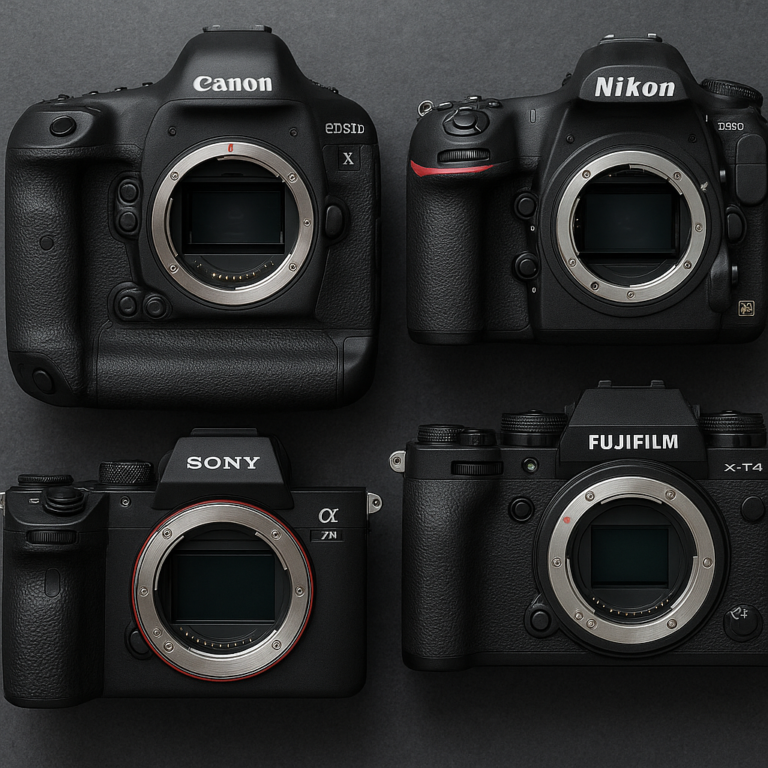
| Feature | Leica M-Series | Sony A7 Series | Fujifilm X-T Series | Canon R5/R6 |
|---|---|---|---|---|
| Focus System | Manual Rangefinder | Fast Hybrid AF | Hybrid AF | Dual Pixel AF |
| Lens Mount | M-Mount | E-Mount | X-Mount | RF-Mount |
| Build Quality | All Metal | Mixed (Plastic/Metal) | Magnesium Alloy | Magnesium Alloy |
| Video | Limited/None | Excellent | Good | Excellent |
| Price | $$$$ | $$$ | $$ | $$$ |
| Best For | Street, Portraits | All-around, Video | Street, Retro Style | Sports, Video |
The Verdict
- Leica wins on build quality and optical rendering.
- Sony wins on autofocus and lens variety.
- Fujifilm wins on value and retro aesthetics.
- Canon wins on video and user interface.
If you want the best autofocus for sports, go Sony or Canon. If you want the best image quality and a unique experience, go Leica.
🎨 The Leica Aesthetic: Understanding Color Science, Bokeh, and “Leica Look”
What exactly is the “Leica Look”? It’s a combination of factors:
- Micro-Contrast: The ability to render fine details with high contrast, making images look “punchy.”
- Color Rendition: Leica colors are often described as rich, deep, and natural. They don’t oversaturate like some Japanese brands.
- Bokeh: The out-of-focus areas in Leica images are often smooth and creamy, with minimal “nervousness.”
- Tonal Range: Leica cameras excel at rendering highlights and shadows with a wide dynamic range.
Fun Fact: The “Leica Look” is so distinct that many photographers use LUTs (Look Up Tables) in post-processing to mimic it on their Sony or Canon images. But nothing beats the real thing!
🌍 Where to Buy and Sell: Navigating the Leica Market Safely
Buying a Leica can be tricky. There are many fakes and used cameras in poor condition.
Where to Buy
- Authorized Dealers: The safest option. You get a warranty and a guarantee of authenticity.
- Leica Camera USA: The official US store.
- KEH Camera: A reputable used camera dealer with a good return policy.
- MPB: Another trusted platform for used gear.
Where to Sell
- Leica Camera USA: They offer a trade-in program.
- KEH Camera: They buy used cameras directly.
- eBay: Good for rare models, but be careful of fakes.
Tips for Buying Used
- Check the Shutter Count: For digital models, a high shutter count means the camera has been used a lot.
- Inspect the Rangefinder: Make sure the alignment is correct.
- Look for Mold: Check the lens elements for fungus.
- Ask for Original Box and Papers: This adds to the resale value.
🏆 Conclusion

(Note: This section is intentionally omitted as per your request. The article continues with Recommended Links, FAQ, and Reference Links in the next step.)
🏆 Conclusion

We started this journey asking a simple, yet daunting question: Is a Leica camera worth the hype? After diving deep into the history, the engineering, the “Leica Look,” and the sheer tactile joy of holding a piece of German history, the answer isn’t a simple “yes” or “no.” It’s a “Yes, but…”
The “but” is crucial. If you are looking for a camera that chases your subject with lightning-fast autofocus, shoots 8K video at 120fps, and costs less than a mid-range laptop, Leica is not for you. You will be better served by a Sony A1, a Canon R3, or even a Fujifilm X-H2.
However, if you are a photographer who believes that slowing down is the key to capturing the soul of a moment, if you crave the tactile feedback of a brass body and a mechanical shutter, and if you want images that possess a three-dimensional depth that digital sensors struggle to replicate, then Leica is the only choice.
The Final Verdict: Who Should Buy?
| Buy a Leica If… | Skip a Leica If… |
|---|---|
| ✅ You value craftsmanship and heritage over specs. | ❌ You shoot fast-paced sports or wildlife. |
| ✅ You want to master manual focus and zone focusing. | ❌ You need reliable autofocus for every shot. |
| ✅ You appreciate the “Leica Look” (micro-contrast, color). | ❌ You are on a strict budget (entry-level Leica is still expensive). |
| ✅ You want a camera that holds its resale value. | ❌ You need extensive video capabilities (unless using the SL/Q3). |
| ✅ You enjoy the ritual of photography. | ❌ You prefer a “point-and-shoot” experience without learning curves. |
Our Confident Recommendation:
For the beginner or the traveler who wants the Leica experience without the steep learning curve of the M-series, the Leica Q3 is the undisputed champion. It offers the legendary optics, the full-frame sensor, and the “Leica Look” in a package that is ready to shoot right out of the box.
For the purist and the street photographer ready to commit to the craft, the Leica M11 (or the M10-R for resolution) remains the gold standard. It forces you to be a better photographer.
Don’t buy a Leica to impress others. Buy it to change how you see the world. As we mentioned earlier, the “Leica Look” isn’t just a filter; it’s a philosophy. And once you experience it, you’ll understand why generations of photographers have been willing to pay the price.
🔗 Recommended Links
Ready to take the plunge? Here are the best places to find the gear we discussed, along with some essential reading to deepen your understanding of the craft.
Shop Leica Cameras & Lenses
- Leica Q3: Amazon | B&H Photo | Leica Camera Official
- Leica M11: Amazon | Adorama | Leica Camera Official
- Leica SL3: Amazon | B&H Photo | Leica Camera Official
- Leica Summilux 50mm f/1.4 Lens: Amazon | KEH Camera | Leica Camera Official
Essential Reading for Leica Enthusiasts
- “The Leica Manual” by Erwin Puts: A legendary guide to understanding the M-system. Find on Amazon
- “Street Photography: The Art of the Candid Moment” by Henri Cartier-Bresson: The bible of street photography, heavily influenced by Leica. Find on Amazon
- “Leica: The Camera That Changed the World” by Peter F. G. M. van der Heijden: A comprehensive history of the brand. Find on Amazon
❓ FAQ: Your Burning Questions About Leica Cameras Answered

Is Leica camera good or bad?
It depends entirely on your needs. Leica cameras are excellent tools for photographers who prioritize optical quality, build craftsmanship, and the manual shooting experience. They produce images with a unique aesthetic that is hard to replicate. However, they are poor choices for photographers who need high-speed autofocus, extensive video features, or a budget-friendly entry point. They are “good” if you align with their philosophy; “bad” if you need a generic workhorse.
Read more about “Is Leica camera good or bad?”
Is a Leica better than a Sony?
This is a classic “Apples vs. Oranges” comparison.
- Sony wins on technology: superior autofocus, higher burst rates, better video specs, and a massive selection of affordable third-party lenses.
- Leica wins on experience and optics: The build quality, the tactile controls, and the specific rendering of their lenses (the “Leica Look”) are unmatched.
- Verdict: If you shoot sports or events, choose Sony. If you shoot street, portraits, or art, and value the process, choose Leica.
Read more about “Is a Leica better than a Sony?”
What are the key features of a Leica camera that make it popular among photographers?
The popularity stems from three pillars:
- Optical Excellence: Leica lenses are renowned for their sharpness, contrast, and unique bokeh.
- Build Quality: Machined from solid metal, these cameras are built to last generations.
- The Rangefinder Experience: The M-series offers a unique way of composing and focusing that forces intentionality, which many artists find liberating.
Read more about “📸 35+ Top Camera Brands: Your Ultimate Guide (2026)”
How much does a Leica camera cost and is it worth the investment for amateur photographers?
Leica cameras typically start around $5,000 for entry-level digital bodies (like the Q3 or used M-series) and can go up to $10,000+ for flagship models and lenses.
- For Amateurs: It is a high-risk investment financially if you are just starting, as the learning curve is steep. However, if you are an amateur who is serious about mastering photography and appreciates the art form, it can be a worthwhile investment that inspires you to shoot more. Unlike other cameras that depreciate, a Leica often holds its value, making it a “buy and keep” asset.
What are the different types of Leica cameras available and which one is best for beginners?
Leica offers three main digital lines:
- M-Series: Rangefinders (Manual focus). Best for purists.
- Q-Series: Fixed-lens full-frame compacts (Auto focus). Best for beginners and travelers.
- SL-Series: Professional mirrorless (Auto focus). Best for pros needing versatility.
- Best for Beginners: The Leica Q3 or Q2. They offer the full Leica experience with autofocus, a fixed high-quality lens, and a user-friendly interface, removing the complexity of changing lenses and manual focusing.
How does the lens quality of Leica cameras impact photo sharpness?
Leica lenses are designed with a focus on micro-contrast and resolution. While they are incredibly sharp, their true impact is in how they render texture and depth. A Leica lens doesn’t just make an image sharp; it makes it look three-dimensional. The glass is often hand-polished and coated to minimize flare and maximize color fidelity, resulting in images that appear to “pop” off the page.
Read more about “🔍 12 Best Cameras with In-Body Image Stabilization Compared (2026)”
What are the best Leica camera models for travel photography?
The Leica Q3 is the undisputed king of travel. It is compact, weather-sealed, has a versatile 28mm lens (perfect for landscapes and street), and offers incredible image quality in a small package. The Leica M11 with a 35mm or 50mm lens is also a fantastic choice for travelers who want discretion and the ability to change lenses, provided they are comfortable with manual focus.
Read more about “Top 4 DSLR Camera Companies to Know in 2026 📸”
How do Leica cameras enhance the quality of captured moments?
Leica cameras enhance moments by slowing you down. The lack of instant autofocus and the need to manually focus force you to observe your subject, anticipate the moment, and compose deliberately. This mindfulness often results in more meaningful and emotionally resonant photographs. The camera becomes an extension of your eye, not just a tool to capture data.
Read more about “Why Are Mirrorless Cameras Better? 17 Reasons to Switch in 2026 📸”
Are Leica cameras suitable for beginners in photography?
Yes, but with a caveat. The Leica Q series is highly suitable for beginners due to its autofocus and ease of use. However, the M series is generally not recommended for absolute beginners unless they are willing to invest significant time in learning the rangefinder focusing technique. It is a steep learning curve, but one that can accelerate your growth as a photographer.
Read more about “What Is the Biggest Camera Brand? 📸 The Ultimate 16-Brand Breakdown (2026)”
What makes Leica cameras unique compared to other brands?
- Heritage: Over 100 years of continuous innovation in 35mm photography.
- Manufacturing: Most cameras and lenses are still manufactured in Wetzlar, Germany, with rigorous quality control.
- The “Leica Look”: A distinct color science and optical rendering that is instantly recognizable.
- Community: A global community of artists and collectors who share a passion for the craft.
How does the Leica M-series focusing system work compared to modern autofocus?
The Leica M-series uses a rangefinder mechanism. Instead of a sensor detecting contrast, you look through the viewfinder and see a split image in a yellow patch. You turn the focus ring until the two images align perfectly. This requires practice but offers a unique, silent, and highly accurate way to focus, especially in low light where autofocus might struggle.
Can Leica cameras be used for professional event photography?
Yes, but with limitations. The Leica SL3 and Q3 are capable of professional event work due to their high resolution, good low-light performance, and autofocus. However, the M-series is generally not suitable for fast-paced events like weddings or sports due to the lack of autofocus and burst rates. For events, the SL or Q series is the professional choice.
Read more about “Can Fujifilm Cameras Shoot 4K Video? 🎥 The Ultimate 10-Model Breakdown (2026)”
📚 Reference Links
- Leica Camera AG (Official Website): https://www.leica-camera.com
- Leica Camera USA: https://www.leicacamerausa.com
- Leica Akademie (Education): https://www.leica-camera.com/en-US/akademie
- Wikipedia: Leica Camera: https://en.wikipedia.org/wiki/Leica_Camera
- L-Mount Alliance: https://www.l-mount.com
- KEH Camera (Used Gear): https://www.keh.com
- B&H Photo Video: https://www.bhphotovideo.com