Support our educational content for free when you purchase through links on our site. Learn more
📸 35+ Top Camera Brands: Your Ultimate Guide (2026)

Ever felt like you need a map to navigate the sprawling landscape of camera brands? You’re not alone! From the legendary giants whose names echo through photographic history to the nimble innovators pushing the boundaries of what’s possible, choosing the right camera brand can feel like a monumental decision. Here at Camera Brands™, we’ve spent decades behind the lens, capturing everything from fleeting wildlife moments to the intricate details of product photography. We’ve seen brands rise, evolve, and sometimes, sadly, fade away. But what truly sets one brand apart from another, beyond just megapixels and price tags? Is it the “feel” in your hand, the subtle magic of their color science, or the sheer breadth of their lens ecosystem? We’re about to pull back the curtain and reveal the fascinating stories, cutting-edge technologies, and unique philosophies behind over 35 active and iconic camera brands, helping you find your perfect photographic partner for 2026 and beyond.
Key Takeaways
- Mirrorless Dominance: The camera market has largely shifted to mirrorless systems, offering lighter bodies, advanced autofocus, and superior video capabilities, making them the go-to for most new buyers.
- Ecosystem Over Body: Your choice of camera brand is often a commitment to its lens ecosystem. The range and quality of available lenses are paramount to your photographic growth and versatility.
- Personalized Choice: There’s no single “best” camera brand; the ideal choice depends on your photography style, budget, and ergonomic preferences. Try before you buy!
- Innovation Continues: Brands are constantly pushing boundaries with features like global shutters, advanced AI autofocus, and computational photography, offering unprecedented creative control.
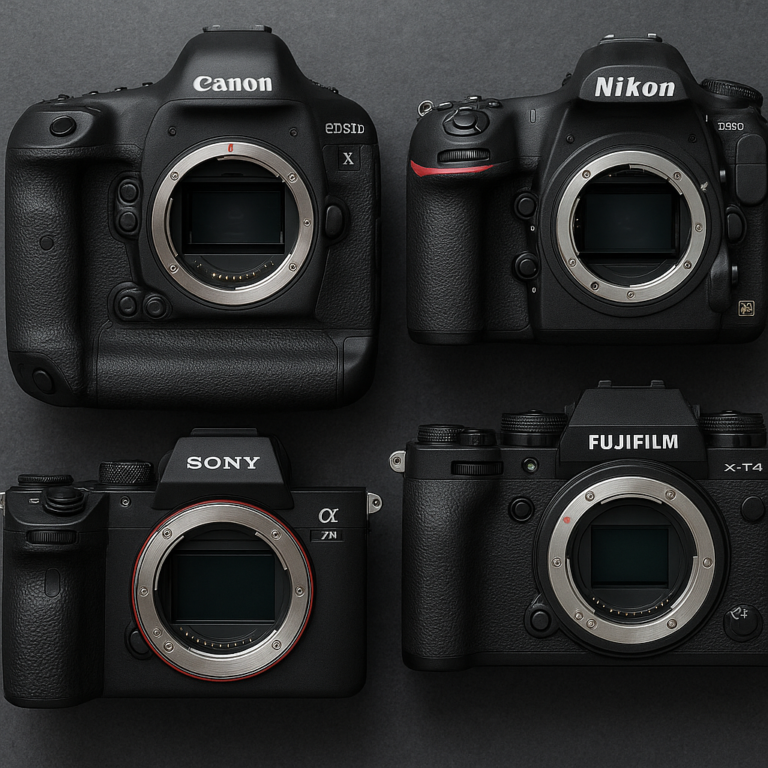
- Beyond the Big Three: While Canon, Nikon, and Sony lead, brands like Fujifilm, Panasonic, OM System, and specialized cinema/action camera brands offer unique strengths and compelling alternatives.
👉 Shop Top Camera Brands:
- Canon Cameras: Shop on Amazon | Shop on Walmart | Canon Official Website
- Nikon Cameras: Shop on Amazon | Shop on Best Buy | Nikon Official Website
- Sony Alpha Cameras: Shop on Amazon | Shop on B&H Photo Video | Sony Official Website
- Fujifilm Cameras: Shop on Amazon | Shop on Adorama | Fujifilm Official Website
- Panasonic Lumix Cameras: Shop on Amazon | Shop on eBay | Panasonic Official Website
Table of Contents
- ⚡️ Quick Tips and Facts for Choosing Your Camera Brand
- 📸 The Legacy Lens: A Brief History and Evolution of Camera Brands
- 🌟 The Heavy Hitters: Top Consumer Camera Brands Dominating the Market Today
- 🔍 Beyond the Big Names: Niche & Specialty Camera Brands You Should Know
- 🕰️ Echoes of the Past: Iconic Camera Brands That Shaped Photography (and Are No Longer Active)
- 🤔 How to Choose the Right Camera Brand for YOU: A Practical Guide
- 🎯 Understanding Your Needs: What Kind of Photographer Are You?
- 💰 Budgeting for Your Brand Ecosystem: Cameras, Lenses, and Accessories
- ⚙️ Key Features to Consider Across Brands
- 🤝 The Importance of Lens Ecosystem and Compatibility
- 🧑 💻 User Experience and Ergonomics: Holding Your Future Camera
- 🔄 Future-Proofing Your Investment: Brand Roadmaps and Innovation
- 🗣️ Community and Support: Learning and Growing with Your Brand
- 🆚 Brand Battles: Mirrorless vs. DSLR – Who’s Winning?
- 💡 Beyond the Specs: What Truly Differentiates Camera Brands?
- 📈 The Future of Photography: Emerging Trends and Brand Responses
- ✨ Conclusion: Your Perfect Camera Brand Awaits!
- 🔗 Recommended Resources & Further Reading
- ❓ Frequently Asked Questions About Camera Brands
- 📚 Reference Links
⚡️ Quick Tips and Facts for Choosing Your Camera Brand
Alright, shutterbugs, gather ’round! Choosing the perfect camera brand can feel like navigating a labyrinth of megapixels, autofocus points, and lens mounts. But fear not, your expert team at Camera Brands™ is here to shine a light on the path! We’ve spent countless hours behind the viewfinder, testing gear in every conceivable scenario, from the serene landscapes of Patagonia to the bustling streets of Tokyo. So, let’s kick things off with some rapid-fire wisdom to get your photographic journey started right.
Fact #1: It’s Not Just About the Camera Body! 📸
Many beginners obsess over the camera body, but here’s a secret: the lens ecosystem is often more critical. A fantastic lens on a good body will almost always outperform a mediocre lens on a great body. Think of it like a chef and their knives – the best stove in the world won’t make up for dull blades! When you commit to a brand, you’re often committing to their lens mount and the range of glass available. This is a crucial aspect of your Camera Buying Guide journey.
Fact #2: Mirrorless is the New Black (and it’s Here to Stay)! 🖤
While DSLRs still hold a special place in many hearts (including ours!), the industry has largely shifted to mirrorless cameras. They’re lighter, often smaller, and boast advanced autofocus systems, incredible video capabilities, and electronic viewfinders that show you exactly what your final image will look like. If you’re starting fresh, mirrorless is generally the way to go for future-proofing your investment.
Fact #3: “Best” is Subjective – “Best for YOU” is the Goal! ✅
This is perhaps the most important tip. There’s no single “best” camera brand. As The Phoblographer wisely puts it, “Rather than asking, what is the best camera, asking what is the best camera brand instead can help save photographers from future financial heartbreak.” Your ideal brand depends entirely on your photography style, budget, and personal preferences. Are you a wildlife photographer needing lightning-fast autofocus? A portrait artist craving creamy bokeh? Or perhaps an adventurer looking for the Top 8 Underwater Camera Brands & Features You Can’t Miss (2026) 🌊? We’ll help you figure it out!
Fact #4: Don’t Underestimate Ergonomics and User Experience! 🖐️
You’ll be holding this camera for hours, so how it feels in your hand, how intuitive the menu system is, and the placement of dials and buttons truly matters. A camera with stellar specs but terrible ergonomics will quickly become a dust collector. This is a key element of Camera Features that often gets overlooked.
Fact #5: Color Science is a Real Thing (and it Varies)! 🌈
Ever wondered why some brands’ photos just “pop” differently straight out of the camera? That’s often down to their color science. Some brands are renowned for their natural skin tones, others for vibrant landscapes. While you can always edit, starting with a color profile you love saves a ton of time. We’ll dive deeper into this, even touching on what some video reviewers think about different brands’ color accuracy!
Quick Tips Table:
| Aspect | ✅ Do This
✨ Conclusion: Your Perfect Camera Brand Awaits!

Phew! What a journey through the fascinating, ever-evolving world of camera brands! We’ve explored the titans, unearthed the niche gems, and even paid homage to the legends of yesteryear. If you’ve stuck with us this far, you’ve likely realized that the question “What’s the best camera brand?” is less about a definitive answer and more about a personal quest.
Remember that initial teaser about finding your perfect brand? Well, we hope by now you have a much clearer roadmap. We’ve seen how Canon shines with its unparalleled autofocus and ergonomic comfort, making it a dream for many, especially those transitioning from DSLRs. Nikon impresses with its stellar Z lenses and robust low-light autofocus, a true workhorse for demanding situations. Sony continues to lead with relentless innovation and blistering speed, often setting the pace for the entire industry.
Then there’s Fujifilm, captivating hearts with its retro aesthetics and magical color science – a brand that truly makes photography an experience. Panasonic (Lumix) stands out as the hybrid hero, blurring the lines between exceptional stills and professional-grade video. And let’s not forget the compact powerhouses like OM System (Olympus), the luxurious allure of Leica, or the medium format mastery of Hasselblad.
The “color science” question we posed earlier? It’s a subtle but significant differentiator. While modern RAW files offer immense flexibility, the in-camera JPEGs and video profiles from brands like Fujifilm (with their film simulations) and Leica (with their distinct character) can save you hours in post-production, delivering a signature look straight out of the camera. Panasonic’s in-camera LUTs are another testament to brands understanding the desire for specific looks.
Ultimately, choosing your camera brand is like choosing a creative partner. It’s about finding the ecosystem that inspires you, fits your workflow, and empowers your vision. Don’t get bogged down by pixel-peeping debates; instead, focus on what feels right in your hands, what lenses you’ll need, and what kind of photographic journey you want to embark on.
Our confident recommendation? Dive in! Rent a camera from a brand you’re considering, visit a local camera store to feel them in your hands, and read real-world reviews (like ours!) from photographers who actually use the gear. Your perfect camera brand isn’t just a collection of specs; it’s the one that helps you capture moments with cameras in a way that’s uniquely you. Happy shooting! 📸✨
🔗 Recommended Resources & Further Reading
Ready to take the plunge or just want to explore more? Here are some hand-picked resources and shopping links to help you on your photographic journey.
Shop Our Top Recommended Camera Brands & Products:
- Canon EOS R6 Mark II: Shop on Amazon | Shop on Walmart | Canon Official Website
- Nikon Zf: Shop on Amazon | Shop on B&H Photo Video | Nikon Official Website
- Sony Alpha a7R V: Shop on Amazon | Shop on Best Buy | Sony Official Website
- Fujifilm X-T5: Shop on Amazon | Shop on Adorama | Fujifilm Official Website
- Panasonic Lumix S5 II: Shop on Amazon | Shop on eBay | Panasonic Official Website
- Leica Q3: Shop on B&H Photo Video | Leica Official Website
Essential Photography Books for Every Level:
- “Understanding Exposure, Fourth Edition: How to Shoot Great Photographs with Any Camera” by Bryan Peterson: Shop on Amazon
- “The Digital Photography Book: Part 1” by Scott Kelby: Shop on Amazon
- “Stunning Digital Photography” by Tony & Chelsea Northrup: Shop on Amazon
Internal Camera Brands™ Resources:
- Camera Brands: https://www.camerabrands.org/category/camera-brands/
- Camera Buying Guide: https://www.camerabrands.org/category/camera-buying-guide/
- Camera Comparisons: https://www.camerabrands.org/category/camera-comparisons/
- Camera Guides: https://www.camerabrands.org/category/camera-guides/
- Camera Features: https://www.camerabrands.org/category/camera-features/
- Top 8 Underwater Camera Brands & Features You Can’t Miss (2026) 🌊: https://www.camerabrands.org/underwater-camera-brands-and-features/
❓ Frequently Asked Questions About Camera Brands
Got more questions swirling around your head? We’ve got answers! Our team has compiled some of the most common queries about camera brands to help you solidify your understanding.
Which camera brands are best for capturing action shots?
For lightning-fast action, you need a brand with exceptional autofocus speed, high burst rates, and reliable tracking.
- Canon: With its renowned Dual Pixel AF, cameras like the Canon EOS R3 and Canon EOS R6 Mark II are phenomenal for sports, wildlife, and fast-moving subjects. Their tracking capabilities are incredibly sticky.
- Sony: Sony’s Alpha series, particularly the Sony a9 III (with its revolutionary global shutter) and the Sony a1, are speed demons. Their AI-powered autofocus systems are incredibly advanced, making them top contenders for professional action photographers.
- Nikon: The Nikon Z9 and Nikon Z8 offer robust autofocus, impressive burst speeds, and excellent subject detection, making them highly capable for demanding action photography.
What are the latest innovations from popular camera brands?
The camera industry is a hotbed of innovation!
- Sony’s Global Shutter: The Sony a9 III introduced the world’s first full-frame global shutter, eliminating rolling shutter distortion and allowing flash sync at any shutter speed. This is a game-changer for action and studio photography.
- Canon’s Dual Pixel AF II: Canon continues to refine its Dual Pixel autofocus, making it faster, more accurate, and better at tracking subjects across the frame.
- Nikon’s Z-Mount Lenses: Nikon’s commitment to its Z-mount has resulted in a lineup of incredibly sharp and high-performing lenses, often praised for their optical quality.
- Panasonic’s In-Camera LUTs: The Lumix S5 II and S5 IIX allow users to load custom LUTs (Look Up Tables) directly into the camera, applying specific color grades to both video and stills in real-time.
- Computational Photography: Brands like OM System (Olympus) are pushing the boundaries with features like Live ND, Handheld High-Res Shot, and Starry Sky AF, leveraging processing power to achieve results previously only possible with complex techniques or heavy gear.
How do camera brand features affect photo capturing?
Every feature, from sensor size to button placement, plays a role in your photographic output and experience.
- Autofocus System: A fast and accurate AF system (like Canon’s Dual Pixel or Sony’s AI-driven AF) means fewer missed shots, especially with moving subjects.
- Sensor Size: Larger sensors (full-frame, medium format) generally offer better low-light performance, shallower depth of field (more bokeh), and higher dynamic range. Smaller sensors (APS-C, Micro Four Thirds) allow for more compact systems and often greater telephoto reach.
- Ergonomics & User Interface: How a camera feels in your hand and how intuitive its menus are directly impacts your shooting comfort and speed. A well-designed body means you can focus on the shot, not fumbling with controls.
- Lens Ecosystem: The availability and quality of lenses for a specific brand’s mount are paramount. A brand with a wide range of excellent lenses (primes, zooms, specialty) allows you to grow and adapt your kit to any photographic need.
- Color Science: As we discussed, each brand has a distinct “look” to its colors, especially in JPEGs. Finding a brand whose color science aligns with your aesthetic can significantly reduce post-processing time.
Which camera brands have the best lenses for portraits?
For stunning portraits, you’re looking for lenses that offer sharpness, beautiful bokeh (background blur), and accurate skin tones.
- Nikon: The Nikon Z-mount prime lenses, such as the NIKKOR Z 50mm f/1.2 S or NIKKOR Z 85mm f/1.2 S, are renowned for their incredible sharpness and creamy bokeh.
- Canon: Canon’s RF prime lenses, like the RF 85mm f/1.2L USM, deliver exceptional sharpness and beautiful subject separation, often praised for their rendering of skin tones.
- Sony: Sony’s G Master (GM) series lenses, including the FE 85mm f/1.4 GM and FE 135mm f/1.8 GM, are top-tier for portraits, offering superb resolution and exquisite bokeh.
- Fujifilm: Fujifilm’s Fujinon XF prime lenses, such as the XF 56mm f/1.2 R WR, are beloved for their character and ability to render beautiful portraits on their APS-C sensors.
- Leica: For those seeking a unique, classic look, Leica M-mount lenses offer unparalleled build quality and a distinct, often painterly, rendering that many portrait photographers adore.
What are the most reliable camera brands for travel photography?
Travel photography demands durability, portability, and versatility.
- Fujifilm: Many Fujifilm cameras, like the X-T5 or X-H2, offer a great balance of compact size, excellent image quality, and robust build. Their film simulations are also fantastic for getting great JPEGs on the go.
- OM System (Olympus): Known for their exceptional weather sealing and compact Micro Four Thirds system, OM System cameras (e.g., OM-1) are incredibly reliable in challenging environments and offer impressive telephoto reach in a small package.
- Sony/Canon/Nikon Mirrorless: Modern mirrorless bodies from these brands (e.g., Sony a7C II, Canon EOS R8, Nikon Z5) are increasingly robust, offer excellent image quality, and have a wide range of versatile travel lenses. Look for models with good weather sealing.
How do professional photographers choose their camera brands?
Professional photographers make brand choices based on a complex interplay of factors:
- Ecosystem & Investment: Many pros are deeply invested in a brand’s lens lineup, flashes, and accessories. Switching brands can be incredibly expensive.
- Client Needs: Specific jobs might require certain camera capabilities (e.g., high resolution for commercial work, extreme speed for sports, specific video codecs for film).
- Reliability & Support: Pros need gear that performs flawlessly under pressure and reliable customer service if issues arise.
- Ergonomics & Workflow: Comfort during long shoots and an intuitive menu system are crucial for efficiency.
- Personal Preference: Ultimately, many pros stick with what they know and love, often developing a deep familiarity with a brand’s quirks and strengths.
Which camera brands offer the best image quality?
“Best image quality” is subjective and often depends on what you’re shooting and your definition of “best.”
- Sony: Often lauded for its cutting-edge sensor technology, Sony cameras frequently lead in dynamic range and low-light performance, especially in their full-frame and medium format offerings.
- Fujifilm: While primarily APS-C, Fujifilm’s X-Trans sensors deliver exceptional detail and unique color rendition. Their GFX medium format cameras offer truly stunning resolution and dynamic range that rivals or surpasses full-frame.
- Leica: Known for its legendary optics and meticulous engineering, Leica cameras produce images with a distinct character, beautiful micro-contrast, and often a “painterly” quality that many find unparalleled.
- Hasselblad & Phase One: For the absolute pinnacle of resolution and dynamic range, medium format systems from these brands are unmatched, though they come with a significant price tag.
- Canon & Nikon: At the professional level, the image quality from top-tier Canon and Nikon cameras is virtually indistinguishable for most practical purposes. Differences often come down to subtle color science or specific lens characteristics.
What are some emerging camera brands that are changing the photography industry?
While the big players dominate, several brands are making waves with specialized or innovative approaches:
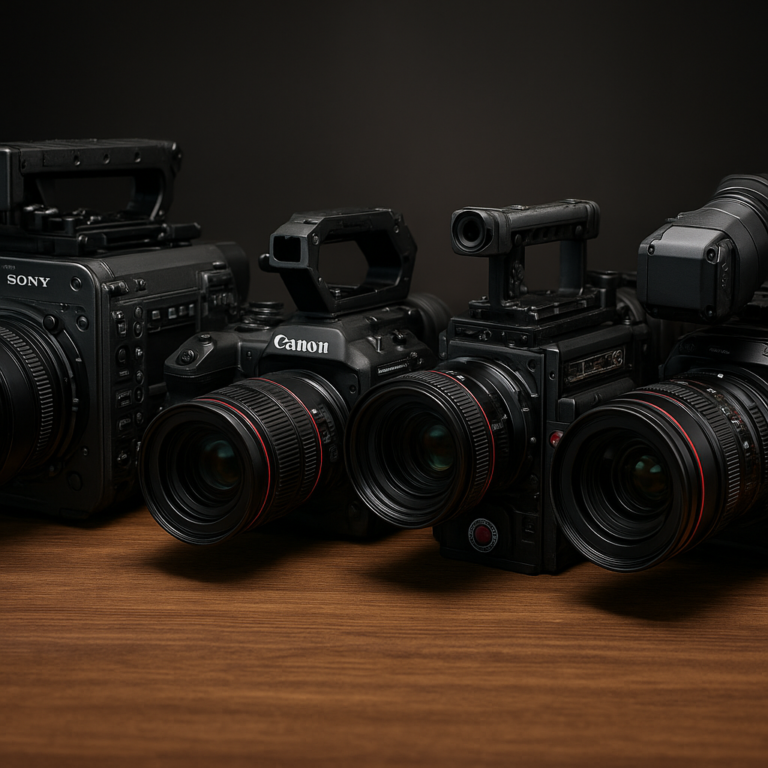
- Blackmagic Design: Revolutionizing cinema cameras by offering incredible video capabilities (RAW, high bitrates) at surprisingly accessible prices, making professional filmmaking more democratic.
- DJI: Primarily known for drones, DJI has integrated high-quality cameras into their aerial platforms and also produces excellent gimbals and action cameras, pushing the boundaries of stabilized cinematic capture.
- Insta360: Leading the charge in immersive 360-degree cameras, allowing for unique perspectives and “reframing” possibilities in post-production.
- Venus Optics (Laowa): A lens manufacturer creating truly unique and innovative lenses, such as macro probes and ultra-wide angle lenses with zero distortion, pushing creative boundaries for photographers.
How do camera brands like Canon and Nikon compare in terms of image quality?
In the modern mirrorless era, the gap in raw image quality between Canon and Nikon at comparable price points has become incredibly narrow.
- Sensor Performance: Both brands utilize excellent sensors. Historically, Nikon sometimes had a slight edge in dynamic range at base ISO, while Canon was often praised for its natural skin tones. However, these differences are now often negligible and can be easily adjusted in post-processing.
- Lens Quality: Both offer superb professional-grade lenses. Nikon’s Z-mount lenses have been particularly lauded for their sharpness and minimal aberrations. Canon’s RF lenses are also optically outstanding, often incorporating advanced features.
- Color Science: This remains a subtle differentiator. Many photographers find Canon’s JPEG colors, especially skin tones, to be pleasing straight out of the camera. Nikon’s colors are often described as vibrant and accurate. Ultimately, this is a matter of personal preference and can be tweaked in RAW editing.
What are the most popular camera brands among videographers?
Videographers have specific needs, and certain brands excel in this domain:
- Sony: The Alpha series (e.g., a7S III, a7 IV, FX3) is incredibly popular due to its excellent low-light performance, advanced video codecs, internal 10-bit recording, and robust autofocus.
- Panasonic (Lumix): The Lumix GH series (e.g., GH6) and S series (e.g., S5 IIX) are legendary for their video features, including high bitrates, advanced stabilization, and professional video tools like waveform monitors and vectorscopes.
- Blackmagic Design: Their Pocket Cinema Camera line offers cinema-grade RAW video recording at incredibly competitive prices, making them a favorite for indie filmmakers and professional videographers.
- RED Digital Cinema: The gold standard for Hollywood productions, RED cameras offer unparalleled resolution, dynamic range, and color science for high-end cinematic work.
Are there any affordable camera brands that offer high-quality features?
Absolutely! You don’t need to break the bank to get a capable camera.
- Canon: Entry-level mirrorless cameras like the Canon EOS R50 or EOS R10 offer excellent image quality, fast autofocus, and user-friendly interfaces at a more accessible price point.
- Nikon: The Nikon Z50 and Zfc are fantastic APS-C mirrorless options, providing great image quality and access to the growing Z-mount lens ecosystem.
- Sony: The Sony a6000 series (e.g., a6100, a6400) offers compact bodies with strong autofocus and good image quality, making them popular choices for beginners and enthusiasts.
- Fujifilm: Models like the Fujifilm X-T30 II or X-E4 provide that signature Fujifilm look and feel with excellent image quality in a more portable and affordable package.
What are the differences between DSLR and mirrorless camera brands?
This is a fundamental shift in camera technology:
- Mirrorless Cameras:
- No Mirror Box: Lighter, smaller bodies.
- Electronic Viewfinder (EVF): Shows you exactly what the final image will look like (exposure, white balance, effects).
- Advanced Autofocus: Often use on-sensor phase-detection, leading to faster, more accurate AF across the entire frame, especially for video.
- Better Video Features: Generally superior for video recording due to sensor design and processing power.
- Shorter Flange Distance: Allows for more compact lenses and easier adaptation of older lenses.
- DSLR Cameras:
- Mirror Box: Heavier, bulkier bodies.
- Optical Viewfinder (OVF): Provides a direct, real-time view through the lens, with no lag.
- Dedicated Autofocus Sensor: Often very fast in good light, but can be less accurate in live view or for video.
- Longer Battery Life: OVFs consume less power than EVFs.
- Legacy Lens Support: A vast array of older DSLR lenses are readily available.
Most major brands (Canon, Nikon, Sony, Panasonic, Fujifilm) have largely transitioned their focus to mirrorless systems, though some still offer DSLRs.
Which camera brand is best for professional photographers?
There isn’t one single “best” brand for all professionals, as it depends heavily on their specialty.
- Canon, Nikon, Sony: These three are the dominant forces in professional photography, offering comprehensive ecosystems of cameras, lenses, and accessories for virtually every genre (sports, weddings, portraits, photojournalism, commercial).
- Fujifilm: Popular among portrait, wedding, and street photographers who appreciate its unique aesthetics, compact size, and excellent lens lineup. Their GFX medium format system is also a professional choice for high-resolution work.
- Panasonic (Lumix): A top choice for professional videographers and hybrid shooters due to its advanced video features and robust build.
- Leica, Hasselblad, Phase One: For niche, high-end professional work (e.g., fine art, fashion, landscape, commercial where ultimate resolution is key), these brands offer unparalleled quality and prestige.
What are the top camera brands for beginners?
For beginners, ease of use, good auto modes, and a clear upgrade path are key.
- Canon: Often praised for its user-friendly interfaces and excellent entry-level DSLRs (like the Rebel series) and mirrorless cameras (like the EOS R50).
- Nikon: Similar to Canon, Nikon offers great entry-level options like the Nikon D3500 (DSLR) or Nikon Z30 (mirrorless), known for their intuitive controls and image quality.
- Sony: The Sony a6000 series (e.g., a6100) is a fantastic starting point for mirrorless, offering compact size, fast AF, and a strong lens selection.
- Fujifilm: While slightly more advanced in controls, cameras like the Fujifilm X-T200 or X-T30 II offer superb image quality and a fun, tactile shooting experience for beginners willing to learn.
- Panasonic (Lumix): Cameras like the Lumix G100 are designed with vloggers and beginners in mind, offering great video and photo capabilities in a compact form factor.
What camera brand starts with Y?
The most prominent camera brand that starts with ‘Y’ is Yashica.
- Yashica (Original): Historically, Yashica was a well-respected Japanese camera manufacturer known for its film SLRs and rangefinders. The original company faced financial difficulties and was eventually acquired.
- Yashica (Modern): The brand name has seen attempts at revival in recent years, with new digital cameras and accessories being released under the Yashica name, often targeting the retro or enthusiast market.
What is the most popular camera brand?
“Popularity” can be measured in different ways (sales, market share, brand recognition, enthusiast following), but generally, Canon and Sony often vie for the top spots in terms of global market share and sales volume in the digital camera space.
- Canon: Has historically held a dominant position, especially in the DSLR market, and continues to be a powerhouse in mirrorless.
- Sony: Has rapidly gained market share with its innovative mirrorless Alpha series, often leading in sensor technology and speed.
- Nikon: Remains a strong contender, particularly among professionals and enthusiasts, and holds significant market share.
- Fujifilm: While not matching the sheer volume of the top three, Fujifilm enjoys immense popularity and a fiercely loyal following among enthusiasts and professionals who value its unique aesthetic and user experience.
📚 Reference Links
Here are the sources and official brand websites that informed our comprehensive guide to camera brands:
- List of digital camera brands – Wikipedia: https://en.wikipedia.org/wiki/List_of_digital_camera_brands
- What Are The Best Camera Brands? – The Phoblographer: https://www.thephoblographer.com/2024/10/18/what-are-the-best-camera-brands/
- List of companies – Camera-wiki.org – The free camera encyclopedia: https://camera-wiki.org/wiki/list_of_companies
Official Brand Websites:
- Canon Official Website: https://www.usa.canon.com/
- Nikon Official Website: https://www.nikonusa.com/
- Sony Official Website (Imaging): https://electronics.sony.com/imaging
- Fujifilm Official Website (X Series & GFX): https://fujifilm-x.com/
- Panasonic Lumix Official Website: https://na.panasonic.com/us/lumix
- OM System Official Website: https://explore.omsystem.com/
- Leica Camera Official Website: https://leica-camera.com/
- Hasselblad Official Website: https://www.hasselblad.com/
- Pentax Official Website (Ricoh Imaging): https://us.ricoh-imaging.com/
- Sigma Global Vision: https://www.sigma-global.com/
- GoPro Official Website: https://gopro.com/
- DJI Official Website: https://www.dji.com/
- Insta360 Official Website: https://www.insta360.com/
- Blackmagic Design Official Website: https://www.blackmagicdesign.com/
- RED Digital Cinema Official Website: https://www.red.com/
- Phase One Official Website: https://www.phaseone.com/
- Z CAM Official Website: https://www.z-cam.com/
- Polaroid Official Website: https://us.polaroid.com/
- Kodak Official Website: https://www.kodak.com/
- Lomography Official Website: https://www.lomography.com/
- Yashica Official Website: https://www.yashica.com/
- Venus Optics (Laowa) Official Website: https://www.venuslens.net/
- Viltrox Official Website: https://www.viltrox.com/
- TTArtisan Official Website: https://ttartisan.com/
- 7Artisans Official Website: https://7artisans.com/