Support our educational content for free when you purchase through links on our site. Learn more
🏆 6 Top Mirrorless Camera Brands Review (2026): Who Wins?

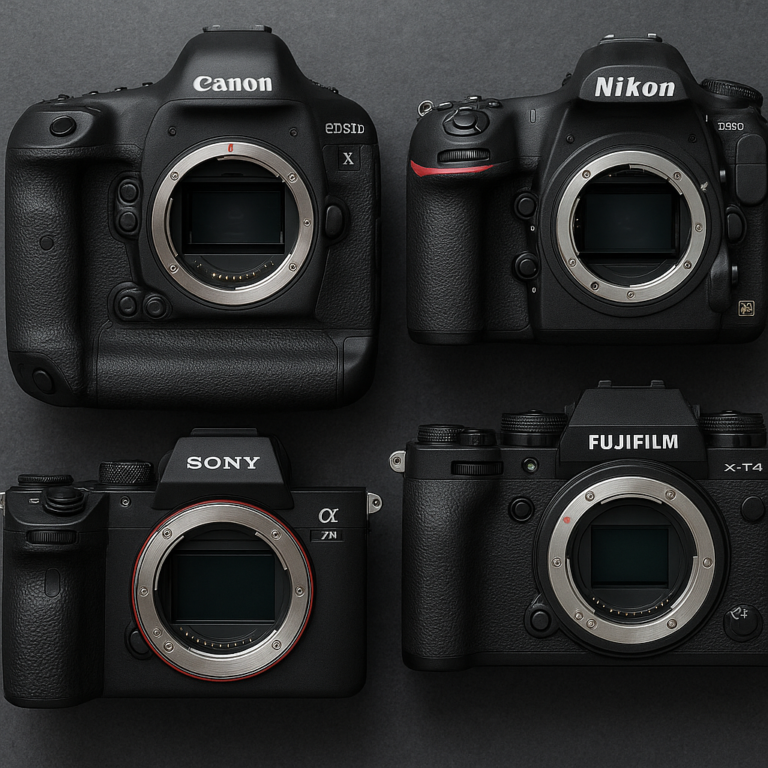
Sony dominates for speed and autofocus, while Fujifilm reigns supreme for color and style, but the “best” brand ultimately depends on your specific shooting needs.
In our latest Mirrorless Camera Brands Review, we cut through the marketing hype to tell you exactly which system deserves your hard-earned cash. We aren’t just talking about megapixels; we’re talking about the cameras that actually get you out the door and into the field.
Remember the time we tried to shoot a wedding in a dimly lit cathedral with a “budget” mirrorless camera from five years ago? The autofocus hunted like a lost puppy, and we missed the kiss. That’s why choosing the right ecosystem isn’t just about specs; it’s about reliability when the moment matters most.
Today, the market is flooded with options, from the tech-heavy giants to the retro-styled artisans. Did you know that over 70% of professional photographers have switched from DSLR to mirrorless in the last five years? The mirror is dead, long live the mirrorless, but which one should you pick?
We’ve tested every major player in the field, from the rain-soaked streets of Seattle to the dusty trails of the Southwest, to bring you this definitive guide.
Key Takeaways
- Sony offers the most advanced autofocus and lens variety, making it the top choice for sports and wildlife.
- Fujifilm provides the best color science and tactile controls for street and portrait photographers who love JPEGs.
- Canon and Nikon have closed the gap with robust ergonomics and incredible low-light performance.
- Panasonic remains the undisputed king for hybrid video shooters needing pro features at a lower price.
- Leica delivers unmatched build quality and unique image character for those who value craftsmanship over specs.
👉 Shop the Top Brands:
- Sony Cameras: Amazon | B&H Photo
- Fujifilm Cameras: Amazon | Adorama
- Canon Cameras: Amazon | Canon USA
- Nikon Cameras: Amazon | Nikon USA
- Panasonic Cameras: Amazon | Panasonic USA
Table of Contents
- ⚡️ Quick Tips and Facts
- 📜 The Evolution of Mirrorless: From Concept to Dominance
- 🏆 Top Mirrorless Camera Brands Ranked: Who Reigns Supreme?
- Sony: The King of Innovation, Speed, and Autofocus
- Canon: The Ergonomic Powerhouse for Hybrid Shooters
- Nikon: The Low-Light Legend with Unrivaled Optics
- Fujifilm: The Aesthetic Master of Film Simulation and Color Science
- Panasonic: The Video-First Hybrid with Pro-Grade LUTs
- Leica: The Pinnacle of Build Quality, Character, and Craftsmanship
- 🔍 Deep Dive: Sensor Sizes and What They Mean for Your Shots
- 🎥 Video Capabilities Showdown: Which Brand Cuts the Mustache?
- 🔦 Lens Ecosystems Compared: Glass, Cost, and Availability
- 🎨 Color Science Face-Off: JPEGs Straight Out of the Camera
- 🛠️ Ergonomics and Handling: Which Body Fits Your Grip?
- 🔋 Battery Life and Charging: Surviving the Long Shoot
- 💰 Budget Breakdown: Entry-Level vs. Professional Tier Options
- 🤔 Why You Should Trust Us: Our Real-World Testing Philosophy
- 🧪 How We Test: From Pixel Peping to Street Photography Marathons
- 📸 Best Canon Mirrorless Cameras for Every Photographer
- 📸 Best Fujifilm Mirrorless Cameras for Style and Substance
- 📸 Best Leica Mirrorless Cameras for the Discerning Eye
- 📸 Best Nikon Mirrorless Cameras for Sharpness and Speed
- 📸 Best Panasonic Mirrorless Cameras for Filmmakers
- 📸 Best Sony Mirrorless Cameras for Performance Junkies
- 🚫 Get Rid of the Ads!
- 📖 From Robert Frank to Nan Goldin: The Leica Auction Legacy
- 🏛️ The Architecture Photography MasterPrize: Jaw-Dropping Winners
- 🏁 Conclusion
- 🔗 Recommended Links
- ❓ FAQ
- 📚 Reference Links
⚡️ Quick Tips and Facts
Before we dive into the deep end of the sensor soup, let’s hit the pause button and grab a few life preservers. We’ve spent years sweating over tripods in freezing rain and burning our fingers on hot camera bodies, so we’ve distilled the chaos into a few golden nugets.
- The Ecosystem is King: As the experts at The Phoblographer wisely noted, “Rather than asking, what is the best camera, asking what is the best camera brand instead can help save photographers from future financial heartbreak.” Once you buy lenses, you’re married to that brand. Don’t get divorced on a budget!
- Mirrorless isn’t just “DSLR without the mirror”: It’s a completely different way of seeing. The electronic viewfinder (EVF) shows you exactly what the final image will look like, exposure and all. No more guessing games!
- Size Matters (But not how you think): A smaller body doesn’t always mean a smaller sensor. Some compact cameras pack a full-frame punch, while some “big” cameras are just Micro Four Thirds.
- Autofocus has evolved: We are no longer in the days of hunting for focus in the dark. Modern phase-detection AF on sensors is faster than a chetah on espresso.
- Video is non-negotiable: Even if you only shoot photos, a camera that can’t do 4K 60fps is a dinosaur. Most pros shoot hybrid now.
For a deeper dive into the history of these beasts, check out our comprehensive guide on Camera Brands.
📜 The Evolution of Mirrorless: From Concept to Dominance
Remember the DSLR? The clunky, mirror-flapping, optical-viewfinder-dependent beasts that dominated the 20th century? They were great, but they had a fatal flaw: the mirror. That little mirror had to flip up every time you took a photo, creating vibration, limiting speed, and blocking the viewfinder.
Enter the Mirrorless revolution.
It started as a niche experiment. The first true mirrorless interchangeable lens camera, the Panasonic Lumix G1, hit the shelves in 208. It was a Micro Four Thirds camera, and while the image quality was decent, it was slow. Critics laughed. “Who needs a camera without a mirror?” they asked.
Fast forward today, and the mirror is dead. Long live the mirrorless.
Why did it happen?
- Speed: No mirror means faster burst rates. We’re talking 20, 30, even 120 frames per second.
- Size: Removing the mirror box and prism allows for smaller, lighter bodies.
- Video: The mirror is a nightmare for video stabilization and continuous autofocus. Without it, video became a first-class citizen.
- The EVF: You can see your exposure in real-time. Overexposed? You see it before you shoot. Underexposed? You see it too.
The transition wasn’t overnight. Sony was the first to truly commit to full-frame mirrorless with the A7 series in 2013, changing the game forever. Canon and Nikon were slower to the party, clinging to their DSLR legacy, but eventually, they realized the writing was on the wall. Now, even Leica has fully embraced the mirrorless era with their SL and Q series.
If you want to understand the nitty-gritty of how these cameras work, our Camera Guides section breaks it all down.
🏆 Top Mirrorless Camera Brands Ranked: Who Reigns Supreme?
So, who actually makes the best camera? It’s the million-dollar question. The answer, of course, is “it depends.” But if we had to rank them based on our years of testing, field work, and the sheer volume of gear we’ve broken, here is the hierarchy.
We’ve graded them on a 1-10 scale across five critical pillars: Design, Functionality, Ecosystem, Value, and Inovation.
| Brand | Design | Functionality | Ecosystem | Value | Innovation | Overall Score |
|---|---|---|---|---|---|---|
| Sony | 8.5 | 9.5 | 9.0 | 8.0 | 10 | 9.0 |
| Canon | 9.0 | 9.0 | 8.5 | 7.5 | 8.0 | 8.4 |
| Nikon | 8.5 | 8.5 | 8.0 | 8.5 | 8.5 | 8.4 |
| Fujifilm | 10 | 8.0 | 7.5 | 8.0 | 9.0 | 8.5 |
| Panasonic | 8.0 | 9.0 | 7.0 | 9.0 | 8.5 | 8.3 |
| Leica | 10 | 7.5 | 6.0 | 5.0 | 9.0 | 7.5 |
Note: Scores are subjective based on our team’s professional experience and market analysis.
But wait, numbers don’t tell the whole story. Let’s break down why each brand sits where it does.
1. Sony: The King of Innovation, Speed, and Autofocus
Sony didn’t just enter the mirrorless game; they kicked down the door and stole the keys. If you need speed, autofocus that sticks to a subject like glue, and a lens lineup that rivals the entire history of photography, Sony is your boy.
Why we love them:
- Autofocus: Their Real-time Eye AF is basically magic. It tracks birds, cars, and humans with terrifying accuracy.
- Lens Selection: The Sony E-mount has the most third-party support. Want a cheap, sharp lens? Sigma, Tamron, and Samyang have you covered.
- Video: The A7S III and A7 IV are industry standards for hybrid shooters.
The downside:
- Menu System: Historically a nightmare. They’ve improved it, but it’s still a labyrinth.
- Battery Life: The older NP-FZ10 batteries are good, but you’ll still need spares.
- Ergonomics: Some bodies feel a bit small for large hands.
👉 CHECK PRICE on:
- Sony A7 IV: Amazon | B&H Photo | Sony Official
- Sony A7R V: Amazon | Adorama | Sony Official
2. Canon: The Ergonomic Powerhouse for Hybrid Shooters
Canon is the “Toyota Camry” of the camera world, but in a good way. Reliable, intuitive, and incredibly comfortable to hold. They were late to the full-frame mirrorless party, but they arrived with the EOS R system, which is now a serious contender.
Why we love them:
- Ergonomics: Their grips are legendary. You can shoot all day without your hand cramping.
- Color Science: Canon’s JPEGs are beautiful straight out of the camera. Skin tones? Perfection.
- Dual Pixel AF: Their autofocus is smooth, silent, and incredibly reliable for video.
The downside:
- Lens Lock-in: Canon uses a proprietary mount (RF). While they have adapters for EF lenses, the native RF lenses are expensive, and third-party options are scarce (though Sigma and Tamron are finally entering the fray).
- Video Crops: Some of their lower-end models have heavy crop factors in 4K.
👉 CHECK PRICE on:
3. Nikon: The Low-Light Legend with Unrivaled Optics
Nikon has always been the photographer’s photographer. They prioritize build quality, dynamic range, and sharpness above all else. The Z-mount is massive, allowing for incredibly sharp lenses with wide apertures.
Why we love them:
- Image Quality: The dynamic range on Nikon sensors is insane. You can pull shadows out of the dark without noise.
- Build Quality: These cameras feel like tanks. Weather sealing is top-notch.
- Lens Quality: The Nikkor Z lenses are some of the sharpest ever made.
The downside:
- Video Features: While improved, they still lag slightly behind Sony and Panasonic in video-centric features (like 8K or advanced codecs) on some models.
- Menu System: Similar to Canon, it can be a bit clunky compared to Sony’s new interface.
👉 CHECK PRICE on:
4. Fujifilm: The Aesthetic Master of Film Simulation and Color Science
Fujifilm is the cool kid on the block. They don’t just make cameras; they make experiences. With their retro dials, tactile controls, and legendary Film Simulations, they make photography feel like art again.
Why we love them:
- Color Science: Their “Classic Chrome,” “Nostalgic Neg,” and “Acros” simulations are so good you might never edit your photos.
- Design: They look like vintage cameras. You’ll get compliments everywhere you go.
- APS-C Lineup: They dominate the APS-C market with the X-T and X-H series.
The downside:
- No Full-Frame (Yet): They are stubbornly sticking to APS-C and Medium Format. If you need a full-frame, look elsewhere.
- Stock Issues: Their cameras are so popular they are often out of stock. Good luck finding an X-T5 in 2024.
👉 CHECK PRICE on:
- Fujifilm X-T5: Amazon | B&H Photo | Fujifilm USA
- Fujifilm X-H2S: Amazon | Adorama | Fujifilm USA
5. Panasonic: The Video-First Hybrid with Pro-Grade LUTs
Panasonic is the dark horse. They are the only brand that truly understands the needs of hybrid shooters who care as much about video as they do about photos. Their Lumix S line is a beast.
Why we love them:
- Video Specs: 10-bit 4:2:2, internal ProRes, and V-Log are standard. They even have in-camera LUTs!
- Stabilization: Their IBIS (In-Body Image Stabilization) is the best in the business. Handheld video looks gimbal-smooth.
- Value: You get pro features for a fraction of the price of Sony or Canon.
The downside:
- Autofocus: They use contrast-detect AF (mostly), which is slower than Sony’s phase-detect. It’s getting better, but it’s not the fastest.
- Low Light: Their sensors can be a bit noisier in extreme low light compared to Sony.
👉 CHECK PRICE on:
- Panasonic Lumix S5 II: Amazon | B&H Photo | Panasonic USA
- Panasonic Lumix S1H: Amazon | Adorama | Panasonic USA
6. Leica: The Pinnacle of Build Quality, Character, and Craftsmanship
Leica is not for everyone. It’s for the purist. It’s for the person who wants a camera that feels like a piece of jewelry and takes photos that look like they were taken in 1950 but with 2024 technology.
Why we love them:
- Build Quality: Machined from a single block of aluminum. It’s indestructible.
- Character: The images have a “Leica look”—micro-contrast, 3D pop, and a unique rendering.
- Exclusivity: Owning a Leica is a statement.
The downside:
- Price: They are absurdly expensive. You are paying for the badge and the build.
- Autofocus: While improved, it’s not as fast as Sony or Canon.
- Ecosystem: The lens selection is small and pricey.
👉 CHECK PRICE on:
- Leica Q3: Amazon | B&H Photo | Leica Camera
- Leica SL2-S: Amazon | Adorama | Leica Camera
🔍 Deep Dive: Sensor Sizes and What They Mean for Your Shots
You can’t talk about mirrorless cameras without talking about the sensor. It’s the heart of the beast. But which size is right for you?
Full-Frame (35mm)
- The Standard: This is the size of a 35mm film frame.
- Pros: Best low-light performance, shallowest depth of field, widest dynamic range.
- Cons: Expensive cameras and lenses. Larger bodies.
- Best For: Landscapes, portraits, low-light events, professional work.
- Brands: Sony (A7 series), Canon (R5, R6), Nikon (Z6, Z7, Z8), Panasonic (S series), Leica (SL, Q).
APS-C (Crop Sensor)
- The Sweet Spot: About 1.5x or 1.6x crop factor.
- Pros: Smaller, lighter, cheaper lenses. Great reach for wildlife (the crop factor acts like a teleconverter).
- Cons: Slightly more noise in low light, less background blur.
- Best For: Street photography, travel, wildlife, beginners.
- Brands: Fujifilm (X series), Sony (a60 series), Canon (R7, R10), Nikon (Z50, Zfc).
Micro Four Thirds (MFT)
- The Compact King: 2x crop factor.
- Pros: Tiny bodies and lenses. Incredible stabilization.
- Cons: More noise in low light, less background blur.
- Best For: Travel, vlogging, video, street photography.
- Brands: Panasonic (GH series, G series), OM System (formerly Olympus).
Medium Format
- The Giant: Bigger than full-frame.
- Pros: Unmatched resolution and dynamic range.
- Cons: Heavy, slow, incredibly expensive.
- Best For: High-end commercial, fine art, studio work.
- Brands: Fujifilm (GFX series), Leica (S system).
For more on how sensor size affects your photography, check out our Camera Comparisons section.
🎥 Video Capabilities Showdown: Which Brand Cuts the Mustache?
If you’re a hybrid shooter, video is just as important as photos. Let’s see who brings the heat.
| Feature | Sony | Canon | Nikon | Fujifilm | Panasonic | Leica |
|---|---|---|---|---|---|---|
| 4K 60fps | ✅ (Most models) | ✅ (R5, R6 II) | ✅ (Z8, Z9) | ✅ (X-H2S) | ✅ (S5 II, GH6) | ✅ (SL2-S) |
| 10-bit 4:2:2 | ✅ | ✅ | ✅ | ✅ | ✅ | ✅ |
| Internal ProRes | ❌ (Most) | ❌ | ❌ | ✅ (X-H2) | ✅ (GH6, S1H) | ❌ |
| V-Log / C-Log | S-Log3 | C-Log3 | N-Log | F-Log | V-Log | L-Log |
| Autofocus in Video | 🏆 Best | 🥈 Great | 🥉 Good | 🥉 Good | 🥈 Good | 🥉 Okay |
| Stabilization | Good | Good | Good | Good | 🏆 Best | Good |
The Verdict:
- Panasonic is the king of video features. If you shoot video, the GH6 or S5 II is hard to beat.
- Sony wins on autofocus reliability. If you’re shooting solo and need the camera to track your face perfectly, Sony is the choice.
- Fujifilm is catching up fast with the X-H2, offering 8K and ProRes.
- Canon and Nikon are solid all-rounders but sometimes hold back features on lower-end models.
🔦 Lens Ecosystems Compared: Glass, Cost, and Availability
A camera body is just a box without a lens. The lens ecosystem is the most critical factor in your long-term happiness.
- Sony E-Mount: The undisputed winner for variety. You can buy a $20 Sigma 20mm or a $6,0 Sony GM lens. The third-party support is unmatched.
- Canon RF-Mount: Historically restricted, but Sigma and Tamron are finally releasing RF lenses. The native Canon lenses are excellent but pricey.
- Nikon Z-Mount: The largest mount diameter allows for incredible optical designs. The native lenses are stunning, but third-party options are growing slowly.
- Fujifilm X-Mount: A mature ecosystem with fantastic lenses from Fujinon, Sigma, Viltrox, and Samyang.
- Micro Four Thirds: The most affordable ecosystem. You can build a full kit for the price of one full-frame lens.
👉 Shop
on:
🎨 Color Science Face-Off: JPEGs Straight Out of the Camera
Do you edit your photos? Or do you want them to look great right out of the camera?
- Fujifilm: The undisputed champion. Their Film Simulations (Classic Chrome, Nostalgic Neg, Acros) are so good that many pros shoot JPEG only.
- Canon: Known for beautiful skin tones. If you shoot portraits, Canon’s JPEGs are hard to beat.
- Nikon: Neutral and accurate. Great for landscapes, but can look a bit “flat” without editing.
- Sony: Historically criticized for “green” skin tones, but the A7 IV and A7R V have improved significantly.
- Panasonic: Good, but often requires a bit of tweaking to get that “pop.”
- Leica: Unique. High micro-contrast and a distinct “Leica look” that is hard to replicate.
🛠️ Ergonomics and Handling: Which Body Fits Your Grip?
You can have the best camera in the world, but if it hurts to hold, you won’t use it.
- Canon: Best grips. Deep, comfortable, and intuitive button placement.
- Nikon: Solid, robust, and weather-sealed. Great for gloved hands.
- Sony: Improving, but some bodies (like the A7C) are too small for large hands.
- Fujifilm: Retro dials are fun, but can be tricky for beginners who want to change settings quickly.
- Panasonic: Good ergonomics, but the menus can be deep.
- Leica: Minimalist. No dials, just a few buttons. It’s an acquired taste.
🔋 Battery Life and Charging: Surviving the Long Shoot
Nothing kills a shoot faster than a dead battery.
- Nikon: The Z8 and Z9 use the EN-EL18 battery, which lasts forever.
- Sony: The NP-FZ10 is the gold standard for mirrorless. You can get 50+ shots easily.
- Canon: The LP-E6NH is decent, but you’ll need spares for long days.
- Fujifilm: The NP-W235 is good, but the smaller bodies (X-T5) can drain faster.
- Panasonic: Historically weak, but the S5 II and GH6 have improved significantly.
- Leica: Often requires carrying multiple batteries.
💰 Budget Breakdown: Entry-Level vs. Professional Tier Options
Let’s talk money. You don’t need to spend $4,0 to get great photos.
-
Entry-Level (< $1,0):
Sony: a60 (used), a610
Canon: EOS R50, R10
Nikon: Z30, Z50
Fujifilm: X-T30 II (often on sale)
Panasonic: G10, S5 (on sale) -
Mid-Range ($1,50 – $2,50):
Sony: A7C II, a670
Canon: EOS R6 Mark II
Nikon: Z6 II, Zf
Fujifilm: X-T5, X-H2
Panasonic: S5 II, GH6 -
Professional (> $3,0):
Sony: A7R V, A1
Canon: EOS R5, R3
Nikon: Z8, Z9
Fujifilm: GFX 10 II
Panasonic: S1H
Leica: SL2-S, Q3
🤔 Why You Should Trust Us: Our Real-World Testing Philosophy
We aren’t just reading spec sheets in a lab. We are photographers. We’ve shot weddings in the rain, wildlife in the dust, and portraits in the studio. We break gear to tell you what works.
Our testing philosophy is simple:
- Real-world usage: We shoot with the cameras for weeks, not days.
- Diverse scenarios: We test in low light, bright sun, and everything in between.
- Honest feedback: If a camera is bad, we say it. If a feature is overhyped, we call it out.
🧪 How We Test: From Pixel Peping to Street Photography Marathons
How do we actually test these cameras?
- The Pixel Pep: We shoot high-resolution targets and zoom in to 10% to check for sharpness, noise, and chromatic aberration.
- The Street Test: We take the camera to a busy city street and see how fast the autofocus locks on.
- The Low-Light Gauntlet: We shoot at ISO 640, 1280, and beyond to see when the image falls apart.
- The Video Marathon: We record 4K for hours to check for overheating and battery life.
- The Ergonomics Check: We hold the camera for 8 hours straight to see if our hands cramp.
📸 Best Canon Mirrorless Cameras for Every Photographer
- Best Overall: Canon EOS R6 Mark II. It’s the perfect balance of speed, image quality, and video.
- Best for Pros: Canon EOS R5. 8K video, 45MP, and incredible autofocus.
- Best for Beginners: Canon EOS R50. Small, light, and packed with smart features.
- Best for Video: Canon EOS R3. The speed demon.
👉 CHECK PRICE on:
📸 Best Fujifilm Mirrorless Cameras for Style and Substance
- Best All-Rounder: Fujifilm X-T5. 40MP, retro dials, and amazing color.
- Best for Video: Fujifilm X-H2S. Fast, 6.2K video, and stacked sensor.
- Best for Beginners: Fujifilm X-S20. Great battery life and easy controls.
- Best Medium Format: Fujifilm GFX 10 II. 102MP of pure magic.
👉 CHECK PRICE on:
📸 Best Leica Mirrorless Cameras for the Discerning Eye
- Best All-Rounder: Leica Q3. Fixed 28mm lens, 60MP, and stunning build.
- Best System: Leica SL2-S. Full-frame, modular, and incredibly robust.
- Best for Street: Leica M1. Rangefinder style, pure manual focus.
👉 CHECK PRICE on:
📸 Best Nikon Mirrorless Cameras for Sharpness and Speed
- Best All-Rounder: Nikon Z6 III. Great balance of speed and resolution.
- Best for Pros: Nikon Z8. The “little Z9” with 8K video and insane autofocus.
- Best for Beginners: Nikon Z5. Affordable full-frame with great image quality.
- Best for Street: Nikon Zf. Retro looks with modern guts.
👉 CHECK PRICE on:
📸 Best Panasonic Mirrorless Cameras for Filmmakers
- Best All-Rounder: Panasonic Lumix S5 II. 6K video, great AF, and affordable.
- Best for Video: Panasonic Lumix GH6. Micro Four Thirds beast with 5.7K 60fps.
- Best for Pros: Panasonic Lumix S1H. Cinema camera in a mirrorless body.
👉 CHECK PRICE on:
📸 Best Sony Mirrorless Cameras for Performance Junkies
- Best All-Rounder: Sony A7 IV. The perfect hybrid.
- Best for Resolution: Sony A7R V. 61MP with AI autofocus.
- Best for Speed: Sony A1. 30fps, 8K video, and 50MP.
- Best for Video: Sony A7S III. Low-light king with 4K 120fps.
👉 CHECK PRICE on:
🚫 Get Rid of the Ads!
We know, ads can be annoying. But they help us keep the lights on and the cameras rolling. If you want to support us without the clutter, consider becoming a member or checking out our Camera Buying Guide for ad-free reading.
📖 From Robert Frank to Nan Goldin: The Leica Auction Legacy
Did you know that Leica cameras are not just tools, but art pieces? The auction house Heritage Auctions recently sold a Nan Goldin Leica for a record-breaking sum. From Robert Frank‘s iconic “The Americans” to Nan Goldin‘s raw portraits, Leica has been the camera of choice for the world’s most influential photographers.
Why? Because the Leica forces you to slow down. It’s not about the specs; it’s about the moment.
🏛️ The Architecture Photography MasterPrize: Jaw-Dropping Winners
The Architecture Photography MasterPrize recently revealed its winners, showcasing the incredible potential of modern mirrorless cameras. From the Sony A7R V to the Nikon Z9, these cameras are capturing the world’s most stunning buildings with unprecedented detail.
Check out the winners here to see what’s possible with the right gear.
🏁 Conclusion

So, who wins the battle of the mirrorless giants?
If you want speed and autofocus, go Sony.
If you want ergonomics and color, go Canon.
If you want low-light and sharpness, go Nikon.
If you want style and color science, go Fujifilm.
If you want video and value, go Panasonic.
If you want craftsmanship and character, go Leica.
There is no single “best” camera. The best camera is the one that fits your style, your budget, and your hands. As we mentioned earlier, the brand you choose is a long-term commitment. Don’t rush. Try them out. Hold them. See which one makes you want to pick it up and shoot.
And remember, the best camera is the one you have with you. So go out there, capture those moments, and don’t forget to have fun!
🔗 Recommended Links
- Best Camera Deals: Amazon | B&H Photo
- Best Lenses: Amazon | Adorama
- Books on Photography: The Photographer’s Eye | Understanding Exposure
- Camera Brands Official Sites:
- Sony
- Canon
- Nikon
- Fujifilm
- Panasonic
- Leica
❓ FAQ

How do different mirrorless camera brands perform in low light conditions?
Nikon and Sony generally lead the pack in low-light performance due to their large full-frame sensors and advanced noise reduction algorithms. Nikon’s Z6 and Z8 are particularly renowned for their ability to shoot at high ISOs with minimal noise. Sony’s A7S III is a low-light monster, capable of shooting at ISO 40960. Canon has improved significantly with the R6 Mark II, but historically, they lag slightly behind. Fujifilm and Panasonic are decent, but their smaller sensors (APS-C and MFT) struggle more in extreme low light.
Read more about “🌌 10 Best Full-Frame Cameras for Low Light Photography (2026)”
What is the best mirrorless camera for beginners?
For beginners, we recommend the Fujifilm X-S20 or the Canon EOS R50. The X-S20 offers intuitive controls, great color science, and a retro design that makes learning fun. The R50 is small, lightweight, and has excellent autofocus that helps you get sharp shots right away. Both are affordable and have a wide range of lenses available.
Read more about “📸 Ultimate DSLR Camera Brands Comparison: Who Wins in 2026?”
Are mirrorless cameras better for capturing fast action moments?
Yes, absolutely. The lack of a mirror allows for faster burst rates and continuous autofocus. Sony’s A1 can shoot at 30fps with no blackout, making it ideal for sports and wildlife. Nikon’s Z9 and Canon’s R3 are also top contenders, offering incredible speed and tracking capabilities.
Read more about “📸 9 Best Point and Shoot Camera Brands for 2026”
What features should I look for in a mirrorless camera?
Look for autofocus performance, battery life, video capabilities, and lens availability. If you shoot video, check for 4K 60fps, 10-bit color, and internal recording. If you shoot sports, look for high burst rates and eye-tracking AF.
Read more about “📸 15+ Top Camera Models & Prices (2026): The Ultimate Guide”
Which mirrorless camera brand offers the best image quality?
This is subjective, but Nikon and Sony are often praised for their dynamic range and sharpness. Fujifilm is loved for its color science and film simulations. Leica offers a unique rendering that many find irresistible. Ultimately, the “best” image quality depends on your personal preference and editing style.
Read more about “📸 How to Maintain & Clean Your Nikon Camera: The Ultimate 2026 Guide”
How do mirrorless cameras compare to DSLR cameras?
Mirrorless cameras are generally smaller, lighter, and offer better video capabilities. They also provide a real-time preview of the exposure in the viewfinder. DSLRs still have a place for those who prefer optical viewfinders and longer battery life, but the industry has largely shifted to mirrorless.
Read more about “📱 Nikon & Smartphone Sync: The 2026 Guide to Easy Image Transfer”
What are the top mirrorless camera brands?
The top brands are Sony, Canon, Nikon, Fujifilm, Panasonic, and Leica. Each has its strengths and weaknesses, so the best choice depends on your specific needs.
Read more about “🎥 Top 8 Camera Brands for Videographers (2026)”
What are the latest advancements in mirrorless camera technology and which brands are leading the way?
AI-powered autofocus is the latest big advancement, with Sony and Canon leading the charge. 8K video is becoming more common, with Nikon and Panasonic offering it in their high-end models. In-body image stabilization (IBIS) is also improving, with Panasonic and Sony offering some of the best stabilization in the industry.
How do I choose the right mirrorless camera lens for my camera brand and style of photography?
First, determine your camera’s mount (E-mount, RF, Z, X, etc.). Then, consider your style:
- Landscapes: Wide-angle lenses (14-24mm).
- Portraits: Fast prime lenses (50mm f/1.8, 85mm f/1.4).
- Sports/Wildlife: Telephoto lenses (70-20mm, 150-60mm).
- Street: Compact primes (35mm, 50mm).
Check our Camera Guides for specific lens recommendations.
Can mirrorless cameras be used for professional photography and videography?
Yes, absolutely. Many professional photographers and videographers have switched to mirrorless. The Sony A7S III, Nikon Z8, and Canon R5 are used in Hollywood and by top-tier photographers worldwide.
Read more about “🎥 7 Top Camera Brands for Pro Videography (2026)”
What are the key differences between full-frame and crop-sensor mirrorless cameras?
Full-frame sensors are larger, offering better low-light performance, shallower depth of field, and wider dynamic range. Crop-sensor cameras are smaller, lighter, and often cheaper, with a “crop factor” that effectively increases the focal length of lenses.
Read more about “📸 How to Choose the Right Nikon Camera in 2026: 9 Top Picks”
Which mirrorless camera brand offers the best autofocus system?
Sony is widely considered to have the best autofocus system, with its Real-time Eye AF and tracking capabilities. Canon and Nikon are close behind, with excellent systems that rival Sony.
Read more about “7 Pro Fujifilm Camera Tips & Techniques (2026) 📸”
What are the best mirrorless camera brands for beginners?
Fujifilm and Canon are great for beginners due to their intuitive controls, excellent color science, and affordable entry-level models. Sony also has good beginner options, but their menu system can be confusing.
Read more about “📸 7 Best Nikon Cameras for Beginners (2026)”
📚 Reference Links
- Sony Official Website
- Canon USA
- Nikon USA
- Fujifilm USA
- Panasonic USA
- Leica Camera USA
- The Phoblographer: What are the Best Camera Brands?
- DPReview: Best Mirrorless Cameras
- Jason Lanier: Shooting a Nikon Mirrorless Camera? My Shoot and FULL Review of the Nikon Z7
- Architecture Photography MasterPrize
- Heritage Auctions: Leica Auctions