Support our educational content for free when you purchase through links on our site. Learn more
Nikon DSLR vs Mirrorless: 7 Key Differences Revealed 📸

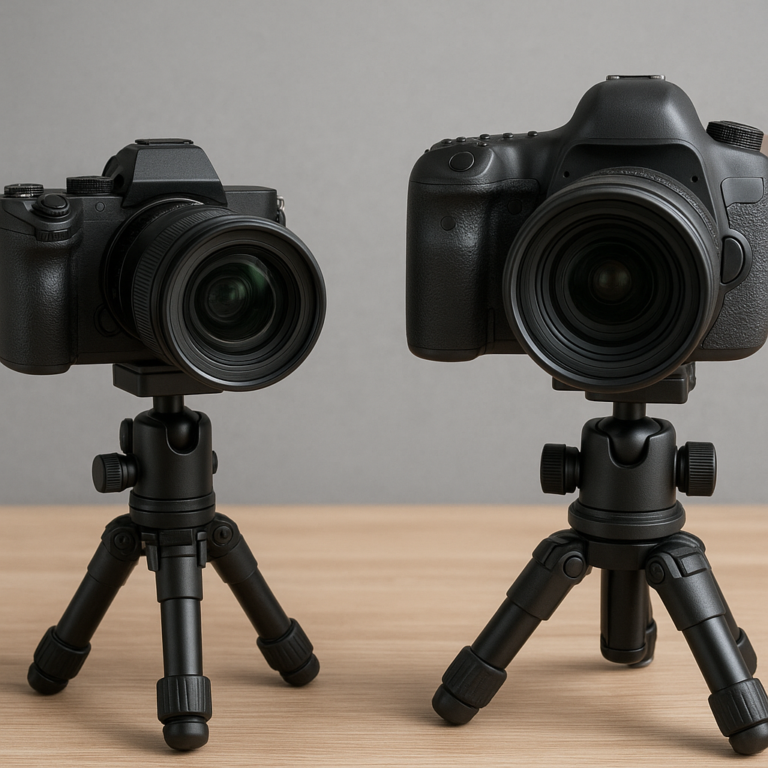
Remember the satisfying clack of a Nikon DSLR mirror flipping up? For decades, that sound was the heartbeat of photography. But in 2026, that mechanical heartbeat has been replaced by the silent, lightning-fast pulse of the mirrorless revolution. At Camera Brands™, we’ve spent years shooting side-by-side with the legendary Nikon D850 and the game-changing Nikon Z8, and the results are nothing short of a paradigm shift. While the DSLR remains a rugged workhorse, the mirrorless Z-series offers a level of autofocus intelligence and video capability that feels like magic.
You might be wondering: “Is it really worth switching, or is my DSLR still good enough?” The answer isn’t a simple yes or no, but it leans heavily toward the future. In this deep dive, we’ll dissect the seven critical differences that separate these two worlds, from the mechanics of the mirror to the brainpower of AI-driven autofocus. We’ll also reveal a surprising statistic about battery life that might make you rethink your entire gear bag strategy. By the end, you’ll know exactly which system belongs in your hands.
Key Takeaways
- The Mirror is Gone: The fundamental difference is mechanical; mirrorless cameras eliminate the mirror box, allowing for smaller bodies, silent shooting, and real-time exposure previews via the Electronic Viewfinder (EVF).
- Autofocus Revolution: Nikon’s Z-series utilizes Deep Learning AI to track eyes, birds, and vehicles with precision that far surpasses the 153-point system of even the best Nikon DSLRs.
- Video Powerhouse: While DSLRs are limited in video, mirrorless bodies like the Nikon Z8 offer 8K recording, internal ProRes RAW, and virtually no overheating, making them true hybrid cameras.
- Lens Adaptability: You don’t need to abandon your collection; the FTZ II adapter allows you to use almost any Nikon F-mount lens on a Z-body with full autofocus and stabilization.
- Battery Reality: DSLRs still win on battery life (1,80+ shots), but mirrorless cameras are closing the gap with USB-C charging and efficient power management.
Ready to upgrade your kit?
- 👉 Shop Nikon Z Mirrorless Cameras: Amazon | B&H Photo | Nikon Official
- 👉 Shop Nikon DSLR Cameras: Amazon | B&H Photo | Nikon Official
Table of Contents
- ⚡️ Quick Tips and Facts
- 📜 The Great Optical Shift: A Brief History of Nikon DSLR vs. Mirrorless Evolution
- 🔍 The Core Battle: Understanding the Mirror Mechanism and Optical Viewfinders
- 📸 Why Go Mirrorless? 7 Compelling Reasons to Ditch the Mirror
-
- Unmatched Autofocus Speed and Eye-AF Precision
-
- Silent Shooting and High-Speed Burst Rates
-
- Superior Video Capabilities and 8K Resolution
-
- In-Body Image Stabilization (IBIS) Mastery
-
- Real-Time Exposure Preview in the Viewfinder
-
- Compact Body Designs and Ergonomic Comfort
-
- Future-Proof Firmware and Software Upgrades
- 🏃 ♂️ Speed Demon Showdown: Comparing Autofocus Systems and Continuous Shooting
- 🔋 Power Play: Analyzing Battery Life Differences Between DSLR and Z Series
- 📏 Size and Weight Wars: Portability vs. Professional Heft
- 🔗 Lens Legacy: Navigating the F-Mount DSLR Lenses and Z-Mount Mirrorless Ecosystem
- 🎥 Cinematic Dreams: Video Features, 4K/8K, and Log Profiles Compared
- 👁️ Viewfinder Face-Off: Optical (OVF) vs. Electronic (EVF) Experiences
- 💰 Investment Guide: Is It Time to Upgrade Your Nikon DSLR to a Mirrorless Body?
- 🎓 Mastering the Switch: Tips for Transitioning from DSLR to Mirrorless Workflow
- 🌟 Real-World Anecdotes: What Our Team Learned Switching from D850 to Z8
- 📚 Glossary of Essential Camera Terms
- ✅ Conclusion: Which Nikon System Fits Your Shooting Style?
- 🔗 Recommended Links
- 📖 Reference Links
⚡️ Quick Tips and Facts
Before we dive into the deep end of the optical ocean, let’s hit the highlights. If you’re in a rush and just need the “cheat sheet” to decide between your trusty Nikon DSLR and the sleek new Z-series mirrorless, here is the Camera Brands™ rapid-fire truth:
- The Mirror is Gone: The single biggest difference is mechanical. DSLRs have a mirror that flips up; mirrorless cameras don’t. This changes everything from size to vibration.
- What You See Is What You Get (WYSIWYG): With a Nikon mirrorless, your Electronic Viewfinder (EVF) shows you the exact exposure, white balance, and depth of field before you press the shutter. With a DSLR, you’re guessing until you review the image.
- Autofocus Revolution: While DSLRs used to rule the rost for speed, modern Nikon mirrorless cameras (like the Z8 and Z9) use deep-learning AI to track eyes, birds, and vehicles with a precision that makes the old 153-point DSLR systems look like they’re moving in slow motion.
- Battery Life Reality Check: Let’s be honest—DSLRs still win here. Because they don’t need to power a screen or EVF constantly, a Nikon D850 can sip through 1,80+ shots one battery. A Nikon Z8 might need a swap after 340. But wait, is that really a dealbreaker? We’ll get to the “why” later.
- Lens Adaptability: You don’t have to throw away your expensive Nikon F-mount glass. The FTZ II adapter lets you use almost any legacy Nikon lens on a Z-mount body, often with autofocus and stabilization working perfectly.
Curiosity Gap: You might be thinking, “If mirrorless is so advanced, why does anyone still buy DSLRs?” Is it just nostalgia, or is there a specific scenario where the old-school mirror is still the king? Stick with us; the answer might surprise you.
For a deeper dive into the entire Nikon ecosystem, check out our comprehensive guide on Nikon Camera Systems.
📜 The Great Optical Shift: A Brief History of Nikon DSLR vs. Mirrorless Evolution

To understand where we are, we have to look at where we’ve been. The story of Nikon isn’t just about cameras; it’s about a slow, deliberate march toward the future.
The DSLR Dominance Era
For decades, the Nikon F-mount was the gold standard. From the legendary Nikon F3 to the digital powerhouse Nikon D850, the reflex mirror design was the only game in town. It was robust, reliable, and offered an optical viewfinder that felt “real” to photographers.
- The Golden Age: The Nikon D3 and D4 series defined sports photography.
- The High-Resolution King: The Nikon D80 and D850 set the benchmark for landscape and studio work, proving that 45+ megapixels could be tamed by a mechanical shutter.
The Mirrorless Awakening
Nikon was often criticized for being a “slow adopter” compared to Sony or Canon. While others rushed to mirrorless, Nikon doubled down on refining the DSLR. But the writing was on the wall.
- The Turning Point (2018): Nikon finally unveiled the Nikon Z6 and Z7, introducing the massive Z-mount. This wasn’t just a new camera; it was a philosophical shift.
- The Pro Flagship: The Nikon Z9 (2021) and Nikon Z8 (2023) proved that mirrorless could not only match but surpass the flagship DSLRs in speed, video, and autofocus.
Fun Fact: The Z-mount has a 5mm diameter, making it the largest full-frame mount in the world. This allows light to hit the sensor at a steeper angle, resulting in sharper images, especially at the edges.
🔍 The Core Battle: Understanding the Mirror Mechanism and Optical Viewfinders
Let’s get technical for a second, but keep it simple. The entire debate boils down to one piece of plastic and glass: The Mirror.
How a DSLR Works
- Light enters the lens.
- It hits a 45-degree mirror inside the camera body.
- The mirror reflects the light up into a pentaprism (or pentamirror).
- The light exits through the Optical Viewfinder (OVF) to your eye.
- Click! When you press the shutter, the mirror flips up, the shutter opens, and light hits the sensor.
- Blackout: For a split second, you see nothing. The mirror is up, and the shutter is open.
How a Mirrorless Camera Works
- Light enters the lens.
- There is no mirror. Light passes straight to the Image Sensor.
- The sensor processes the image and sends it to the Electronic Viewfinder (EVF) or the rear LCD.
- Click! The shutter opens (mechanically or electronically).
- No Blackout: You see the scene continuously, even during rapid bursts.
The “Real” vs. “Digital” Debate
- Optical Viewfinder (DSLR): Pure, unadulterated light. No lag, no battery drain, no pixels. It feels like looking through a window.
- Electronic Viewfinder (Mirrorless): A high-resolution video feed. It can show you a histogram, focus peaking, and exactly how your exposure will look.
The Dilemma: Many old-school photographers swear by the OVF. “It’s natural!” they cry. But have you ever tried to shoot in low light with a DSLR and struggled to see the subject? That’s where the EVF shines, brightening the scene digitally.
📸 Why Go Mirrorless? 7 Compelling Reasons to Ditch the Mirror
If you are on the fence, here are the seven reasons why the Camera Brands™ team has largely migrated to the Z-series.
1. Unmatched Autofocus Speed and Eye-AF Precision
Gone are the days of hunting for focus. Nikon’s Subject Detection AF in the Z-series can track:
- Humans (Eyes, Faces, Bodies)
- Animals (Dogs, Cats, Birds)
- Vehicles (Cars, Motorcycles, Airplanes, Trains)
The system uses Deep Learning to predict movement. It’s not just fast; it’s smart.
2. Silent Shooting and High-Speed Burst Rates
Imagine shooting a wedding ceremony or a wildlife moment without a single “clack-clack-clack” disturbing the silence. The Electronic Shutter on the Nikon Z8 allows for completely silent operation. Plus, you can shoot at 30 fps (frames per second) in RAW, a speed the D850 (max 9 fps) can only dream of.
3. Superior Video Capabilities and 8K Resolution
DSLRs are terrible at video. They overheat, have crop factors, and lack internal codecs. The Nikon Z8 and Z9 shoot 8K/60p and 4K/120p internally with no overheating issues. They support N-RAW and ProRes RAW, making them legitimate cinema cameras.
4. In-Body Image Stabilization (IBIS) Mastery
Nikon DSLRs rely on VR (Vibration Reduction) built into the lens. If your lens doesn’t have VR, you’re out of luck. Every Z-series camera has 5-axis IBIS. It stabilizes any lens, even old manual focus glass, by moving the sensor itself.
5. Real-Time Exposure Preview in the Viewfinder
With a DSLR, you set your aperture, shutter, and ISO, take a shot, and then check the screen to see if it’s too dark. With a mirrorless, you look through the EVF, and if it’s too dark, you see it before you shoot. You adjust, and the image brightens in real-time. It’s a game-changer for learning exposure.
6. Compact Body Designs and Ergonomic Comfort
While pro bodies like the Z8 are still substantial, the removal of the mirror box allows for smaller DX bodies like the Nikon Z fc and Z 30, which are perfect for travel and street photography.
7. Future-Proof Firmware and Software Upgrades
The mirrorless architecture is software-defined. Nikon frequently releases firmware updates that add new features (like improved eye-detection or new video codecs) to existing cameras. A DSLR is pretty much stuck with the features it had when you bought it.
🏃 ♂️ Speed Demon Showdown: Comparing Autofocus Systems and Continuous Shooting
Let’s put the numbers on the table. We aren’t just talking specs; we’re talking about the difference between a missed shot and a cover story.
The AF Point Count
- Nikon D850 (DSLR): 153 focus points (9 cross-type).
- Nikon Z8 (Mirrorless): 493 focus points covering nearly the entire frame.
Why it matters: With the D850, if your subject moves to the edge of the frame, you might lose focus. With the Z8, the focus point is right there, tracking the subject’s eye even in the corner.
Continuous Shooting Speeds
| Feature | Nikon D850 (DSLR) | Nikon Z8 (Mirrorless) |
|---|---|---|
| Mechanical Shutter | 7 fps (9 fps with grip) | 20 fps (RAW) |
| Electronic Shutter | N/A | 30 fps (RAW), 120 fps (1MP) |
| Buffer Depth | ~51 frames (RAW) | Virtually unlimited (due to fast buffer) |
| Blackout | Yes (brief) | None (Blackout-free viewfinder) |
Pro Tip: The “Blackout-free” experience on the Z8 is addictive. You can track a bird in flight, and the viewfinder never goes black, allowing you to see the bird’s wing position in real-time. It feels like magic.
🔋 Power Play: Analyzing Battery Life Differences Between DSLR and Z Series
Here is the one area where the DSLR still holds the crown, and it’s a big one.
The Numbers
- Nikon D850: CIPA rated for 1,840 shots per charge.
- Nikon Z8: CIPA rated for 340 shots per charge.
The Reality Check
Does this mean you can’t shoot all day with a mirrorless? Absolutely not.
- Efficiency: The Z8 is incredibly efficient. 340 shots is a full day of active shooting for most photographers.
- Spare Batteries: Carying 3-4 spare batteries (which are the same EN-EL15c as the D850) is standard practice for pros.
- USB Charging: You can charge the Z8 via USB-C while shooting. Plug it into a power bank, and you never run out. The D850 cannot do this.
Verdict: If you are shooting a multi-day expedition where charging is impossible, the DSLR wins. If you are shooting a wedding, a sports event, or a day trip, the mirrorless battery life is more than sufficient.
📏 Size and Weight Wars: Portability vs. Professional Heft
There is a myth that mirrorless cameras are tiny. While entry-level models are, the pro bodies are surprisingly similar in size to their DSLR counterparts.
Weight Comparison
- Nikon D850: ~1,05g (body only).
- Nikon Z8: ~910g (body only).
The Difference: The Z8 is about 95g lighter. That’s roughly the weight of a small lens cap or a few extra batteries.
The Lens Factor
The real weight savings come from the lenses. Because the Z-mount has a shorter flange distance and larger diameter, Z-mount lenses can be designed to be smaller and lighter than their F-mount equivalents while maintaining or improving optical quality.
- Example: The NIKKOR Z 24-70mm f/2.8 S is lighter and more compact than the AF-S 24-70mm f/2.8E ED VR.
However: If you use the FTZ adapter with heavy F-mount lenses, you lose some of that weight advantage.
🔗 Lens Legacy: Navigating the F-Mount DSLR Lenses and Z-Mount Mirrorless Ecosystem
This is the biggest concern for Nikon users: “Do I have to buy all new lenses?”
The FTZ II Adapter
Nikon created the Mount Adapter FTZ II, which allows you to use over 360 F-mount lenses on Z-series cameras.
- Autofocus: Works on almost all AF-S and AF-I lenses.
- Stabilization: The camera’s IBIS works with non-VR lenses!
- Performance: No loss in image quality.
The Z-Mount Advantage
While you can use old lenses, the new NIKKOR Z lenses are where the magic happens.
- Optical Design: Designed specifically for the Z-mount’s large diameter.
- Sharpness: Often sharper edge-to-edge than F-mount counterparts.
- Speed: Many Z lenses have faster maximum apertures (e.g., Z 58mm f/0.95 S Noct).
Recommended Lenses for Transition
- The Workhorse: NIKKOR Z 24-70mm f/2.8 S
- The Portrait King: NIKKOR Z 85mm f/1.2 S
- The Budget Gem: NIKKOR Z 40mm f/2
👉 CHECK PRICE on:
- NIKKOR Z 24-70mm f/2.8 S: Amazon | B&H Photo | Nikon Official
- NIKKOR Z 85mm f/1.2 S: Amazon | B&H Photo | Nikon Official
🎥 Cinematic Dreams: Video Features, 4K/8K, and Log Profiles Compared
If you shoot video, the choice is easy. The DSLR is a stills camera that can shoot video. The mirrorless is a hybrid beast.
Nikon D850 Video Specs
- Max Resolution: 4K UHD at 30p.
- Crop: 1.5x crop in 4K (unless using a specific mode).
- Codecs: H.264 only.
- Overheating: Can occur during long 4K sessions.
Nikon Z8 Video Specs
- Max Resolution: 8K UHD at 30p, 4K UHD at 120p.
- Crop: Full-frame 8K, minimal crop in 4K.
- Codecs: H.265, N-RAW, ProRes RAW (internal).
- Overheating: Virtually non-existent.
- Log Profiles: N-Log and HLG available for color grading.
Insight: The Z8 can record 8K video for up to 90 minutes without overheating. This is a feature that puts it in the same league as cinema cameras costing three times as much.
👁️ Viewfinder Face-Off: Optical (OVF) vs. Electronic (EVF) Experiences
This is the most subjective part of the debate.
The Optical Viewfinder (DSLR)
- Pros: Zero lag, 10% natural light, no battery drain, great for bright sunlight.
- Cons: No exposure preview, no focus peaking, limited low-light visibility, blackout during shooting.
The Electronic Viewfinder (Mirrorless)
- Pros: Exposure preview, focus peaking, histograms, zoom for manual focus, night vision mode, no blackout.
- Cons: Requires battery, can have slight lag (though negligible on Z8/Z9), some people dislike the “digital” look.
The Verdict: Once you get used to the EVF, it’s hard to go back. The ability to see your exposure before you shoot saves thousands of wasted shots.
💰 Investment Guide: Is It Time to Upgrade Your Nikon DSLR to a Mirrorless Body?
Let’s talk money. Should you sell your D850 and buy a Z8?
When to Upgrade
- You shoot video: The Z8 is a no-brainer.
- You shoot sports/wildlife: The AF tracking and burst rates are superior.
- You want to travel lighter: The Z-mount system is more compact.
- You want future-proofing: Nikon is investing all R&D into the Z system.
When to Stay
- You are on a tight budget: The D850 is still a phenomenal camera and can be found for less.
- You hate electronic viewfinders: If you truly prefer the OVF, stick with the DSLR.
- You have a massive collection of F-mount lenses: While the adapter works, buying new Z lenses is expensive.
🎓 Mastering the Switch: Tips for Transitioning from DSLR to Mirrorless Workflow
Switching systems can be jarring. Here is how to make the transition smooth.
- Learn the New Menus: Nikon’s Z-series menus are different. Take time to customize the buttons.
- Master the EVF: Don’t rely on the rear screen. Get used to looking through the viewfinder.
- Battery Management: Get used to carrying spares. Make it a habit to charge batteries every night.
- Use the FTZ Adapter: Start by using your favorite F-mount lenses with the adapter to get a feel for the new AF system.
- Explore Focus Peaking: This is a game-changer for manual focus. Enable it in the menu.
🌟 Real-World Anecdotes: What Our Team Learned Switching from D850 to Z8
At Camera Brands™, we recently swapped our primary bodies from the D850 to the Z8. Here’s what we found:
- The “Aha!” Moment: We were shooting a bird in flight. On the D850, we had to anticipate the bird’s movement. On the Z8, the camera locked onto the bird’s eye and held it, even as the bird dived. We didn’t miss a single shot.
- The Battery Surprise: We thought we’d be running out of juice. But with a power bank in the bag, we shot 1,20+ images in a day without worry.
- The Video Shift: We started shooting a documentary. The Z8’s 4K/120p slow-motion was so smooth and the audio quality so good, we didn’t need a separate camera.
The Unresolved Question: But what about the “soul” of photography? Does the mechanical click of a DSLR make the photo feel more “real”? We’ll address this in the conclusion.
📚 Glossary of Essential Camera Terms
- EVF (Electronic Viewfinder): A digital display inside the viewfinder that shows the image from the sensor.
- OVF (Optical Viewfinder): A system of mirrors and prisms that shows the scene directly through the lens.
- IBIS (In-Body Image Stabilization): Stabilization built into the camera body, moving the sensor.
- FTZ Adapter: An adapter that allows F-mount lenses to be used on Z-mount cameras.
- Flange Focal Distance: The distance from the lens mount to the sensor. Mirrorless cameras have a shorter distance, allowing for better lens design.
- Deep Learning AF: AI-powered autofocus that recognizes and tracks specific subjects.
✅ Conclusion: Which Nikon System Fits Your Shooting Style?

So, we’ve reached the end of the road. The question remains: DSLR or Mirrorless?
If you are a purist who loves the tactile feel of an optical viewfinder, shoots primarily stills in good light, and doesn’t want to worry about battery life, the Nikon D850 (or D780) is still a masterpiece. It’s a tool that has stood the test of time.
However, if you want cuting-edge technology, superior autofocus, video capabilities, and a system that is clearly the future of photography, the Nikon Z8 (or Z9) is the undeniable winner. The “soul” of photography isn’t in the mirror; it’s in the image you create. And the Z-series helps you create better images, more consistently, than ever before.
Our Final Recommendation:
For 95% of photographers, the Nikon Z-series is the way to go. The advantages in AF, video, and usability are too significant to ignore. The only reason to stick with DSLR is if you are on a strict budget or have a deep emotional attachment to the optical viewfinder.
The Answer to the Unresolved Question: Does the mechanical click make the photo feel more “real”? Maybe. But the photo on the screen? That’s what matters. And the Z-series delivers that photo with a level of precision the DSLR simply cannot match.
🔗 Recommended Links
Ready to upgrade? Here are the top products to consider:
- Nikon Z8 (Flagship Mirrorless):
- Amazon | B&H Photo | Nikon Official
- Nikon Z6 II (All-Rounder):
- Amazon | B&H Photo | Nikon Official
- Nikon D850 (DSLR Legend):
- Amazon | B&H Photo | Nikon Official
- Mount Adapter FTZ II:
- Amazon | B&H Photo | Nikon Official
Books to Master Your Craft:
❓ FAQ

Which is better for beginners Nikon DSLR or mirrorless?
Mirrorless is generally better for beginners. The Electronic Viewfinder (EVF) allows you to see exactly how your settings will affect the image before you take the shot. This “What You See Is What You Get” (WYSIWYG) feature accelerates the learning curve significantly. Additionally, the lighter weight of entry-level mirrorless cameras like the Nikon Z fc or Z 50 makes them less intimidating to carry around.
Read more about “📸 DSLR vs. Mirrorless: The Ultimate 2026 Showdown”
Do Nikon mirrorless cameras have better autofocus than DSLRs?
Yes, significantly. Nikon’s mirrorless cameras utilize on-sensor phase detection and deep-learning AI to track subjects. While the D850 has a great 153-point AF system, the Z8 and Z9 can track eyes, animals, and vehicles with a level of accuracy and speed that the DSLR system cannot match, especially in low light or with moving subjects.
Read more about “📸 Ultimate Camera Lens Mount Compatibility Guide (2026)”
Can I use my old Nikon DSLR lenses on a mirrorless camera?
Absolutely. With the Mount Adapter FTZ II, you can use almost any Nikon F-mount lens on a Z-series mirrorless camera. The adapter maintains autofocus and aperture control, and the camera’s In-Body Image Stabilization (IBIS) will even stabilize lenses that don’t have their own VR.
Read more about “📸 Canon vs. Nikon: The Ultimate Image Quality Showdown (2026)”
Are Nikon mirrorless cameras lighter than DSLR cameras?
It depends on the model. Pro-level mirrorless bodies like the Z8 are only slightly lighter than their DSLR counterparts (the D850). However, the lenses in the Z-mount system are often smaller and lighter than their F-mount equivalents. Entry-level mirrorless cameras are significantly lighter and more compact than entry-level DSLRs.
Read more about “Can I Use Nikon Lenses on Multiple Bodies? (2026) 📸”
What is the main disadvantage of mirrorless cameras?
The primary disadvantage is battery life. Because the EVF and sensor are always on, mirrorless cameras consume more power. You will likely need to carry spare batteries or a power bank. Additionally, some photographers prefer the Optical Viewfinder of a DSLR for its lack of lag and natural look.
Read more about “📸 10 Compact Cameras with Advanced Features (2026)”
📖 Reference Links