Support our educational content for free when you purchase through links on our site. Learn more
Canon DSLR Camera Prices in 2026: What’s Worth Buying? 📸

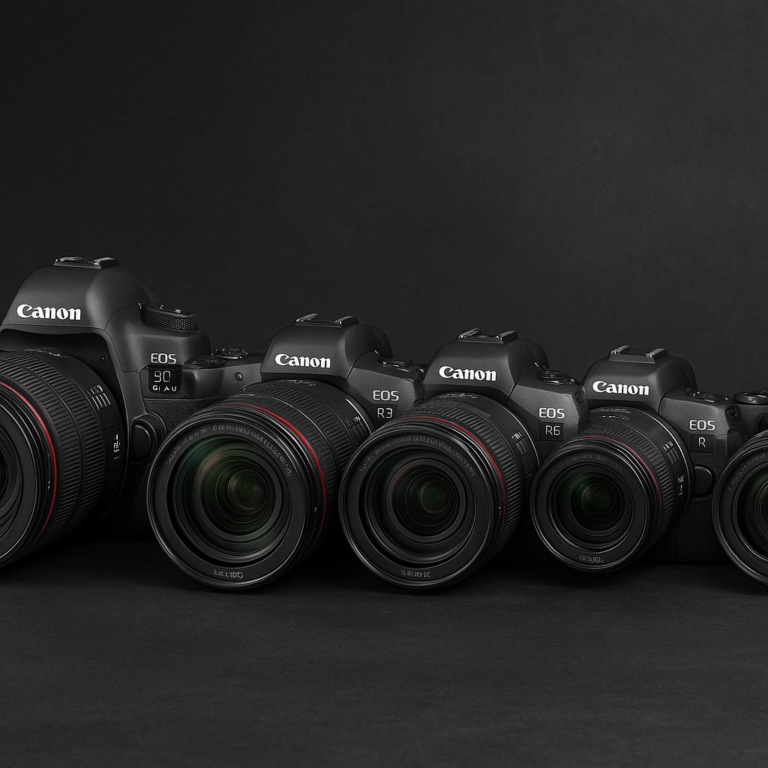
Canon DSLR camera prices vary widely by model, condition, and included lens, but a well-tested used Rebel T7 is often a smart starting point for beginners. If you’re considering an enthusiast or full-frame model, compare the complete kit—not just the camera body—with a Canon mirrorless alternative.
We’ve seen “complete camera bundles” arrive with enough accessories to outfit a tiny photography shop, yet no working battery charger. The lesson: a clear condition report and useful lens beat a pile of bargain extras. Below, we break down what drives Canon DSLR value and which models deserve a closer look.
Key Takeaways
- Buy for your photography, not the biggest model number. A Rebel can be a better first camera than an expensive professional body.
- Compare the whole kit. Body-only listings, lenses, batteries, warranty, and return terms all affect real value.
- Used can be excellent value when the camera is tested and the seller provides clear condition details.
- Check DSLR against mirrorless. Canon’s EOS R system may suit you better if you want newer autofocus and video features.
- 👉 Shop by exact model and seller protections: Canon DSLR cameras on Amazon | Canon DSLR cameras on Walmart | Canon Official Website
Table of Contents
- ⚡ Quick Tips and Facts
- 📜 How Canon DSLR Prices Have Changed
- 💰 Canon DSLR Camera Price Ranges at a Glance
- New, Used, and Refurbished: What You’ll Pay
- Body-Only vs. Lens-Kit Prices
- Why Prices Vary Between Retailers
- 📸 Best Canon DSLR Cameras by Budget and Use
- 1. Canon EOS Rebel T7: Best Affordable Starter DSLR
- 2. Canon EOS Rebel T8i: Best Beginner Upgrade
- 3. Canon EOS Rebel SL3: Best Compact DSLR
- 4. Canon EOS 90D: Best All-Around Enthusiast DSLR
- 5. Canon EOS 80D: Best Value Used DSLR
- 6. Canon EOS 7D Mark II: Best for Action on a Budget
- 7. Canon EOS 6D Mark II: Best Affordable Full-Frame DSLR
- 8. Canon EOS 5D Mark IV: Best Professional All-Rounder
- 9. Canon EOS-1D X Mark III: Best Pro Sports DSLR
- 10. Canon EOS 5DS R: Best High-Resolution Used DSLR
- 🧭 How to Choose the Right Canon DSLR for Your Budget
- Entry-Level vs. Midrange vs. Professional DSLR
- APS-C vs. Full-Frame Sensor Costs
- Megapixels, Autofocus, and Burst Speed
- Photo and Video Features Worth Paying For
- 🛒 Where to Buy Canon DSLR Cameras
- Canon Store, Camera Retailers, and Marketplaces
- Buying Used: Shutter Count, Condition, and Return Policies
- Spoting Suspicious Listings and Overpriced Bundles
- 🎒 The Real Cost of Owning a Canon DSLR
- Lenses and EF/EF-S Compatibility
- Memory Cards, Batteries, Bags, and Tripods
- Cleaning, Repairs, and Warranty Coverage
- 🔄 Canon DSLR vs. Canon Mirrorless: Which Is Better Value?
- 📉 Will Canon DSLR Prices Keep Falling?
- ❓ Canon DSLR Camera Price FAQs
- What is the cheapest Canon DSLR worth buying?
- Are Canon DSLR cameras still available new?
- Is a used Canon DSLR a good deal?
- Which Canon DSLR is best for beginners?
- Do Canon DSLR prices include a lens?
- Can EF and EF-S lenses be used on Canon mirrorless cameras?
- ✅ Conclusion
- 🔗 Recommended Links
- 📚 Reference Links
⚡ Quick Tips and Facts
If you’re comparing Canon camera options, the short version is this: Canon DSLR prices range from budget-friendly used Rebel bodies to professional full-frame cameras, but the best deal depends on the lens, condition, shutter count, and what you plan to photograph.
| Quick question | Photographer’s answer |
|---|---|
| Cheapest sensible route? | A used or refurbished Canon EOS Rebel T7, ideally with the EF-S 18–55mm kit lens |
| Best beginner value? | A Rebel T7 or T8i, depending on whether you want a simpler camera or more advanced controls |
| Best enthusiast DSLR? | The Canon EOS 90D for fast action, detailed images, and strong battery life |
| Best affordable full-frame option? | A carefully inspected EOS 6D Mark II |
| What makes a listing look cheap? | Body-only sales, high shutter counts, missing accessories, gray-market imports, or undisclosed faults |
| Still considering new? | Compare the total cost of a DSLR kit with a current Canon mirrorless kit before buying |
A word about prices: camera listings change quickly, and retailer filters are not the same thing as verified prices for a particular camera. Best Buy’s Canon DSLR category, for example, shows broad price bands and models including the Rebel T7, EOS 90D, EOS 6D Mark II, and EOS 5D Mark IV, but those category filters do not establish a current price for every model. We’ll focus on how to judge the price and value, not pretend an old listing is a live quote.
Our photographers have bought, borrowed, and used Canon DSLRs from entry-level Rebels to full-frame workhorses. We’ve also seen the classic “great deal” that arrives without a charger. (The camera was fine. The seller’s definition of “complete” was… creative.) For more buying advice, browse our Camera Buying Guide and Camera Guides.
📜 How Canon DSLR Prices Have Changed
Canon’s DSLR lineup spans decades, which is why searching for “Canon DSLR camera prices” can return everything from an older Rebel to a professional camera built for demanding work. Canon has since put substantial development emphasis on its mirrorless EOS R system; its official EOS R system overview explains the company’s current mirrorless lineup.
That shift has made the DSLR market a mix of remaining new stock, refurbished cameras, and a large second-hand market. Older cameras may offer excellent image quality, but stock and support vary by model and region. A lower asking price does not automatically mean better value: a recent mirrorless body may offer newer autofocus and video features, while a DSLR may be the smarter buy if you already own compatible EF or EF-S lenses.
What the retailer listings can—and can’t—tell you
Retail pages are useful for spotting model availability, kit configurations, condition labels, and customer feedback. They’re less useful as a permanent price guide.
For example, a Best Buy product listing summarized a Rebel T7 two-lens kit with a displayed rating of 4.8 out of 5 from 4,912 reviews. That figure describes that listing and its review pool, not an independent laboratory test or a guarantee that the same kit is available at the same terms today. The related Best Buy Canon DSLR listings also include duplicate or sponsored entries, so count unique models—not every tile on the page.
Our rule: treat a retailer’s filter as a shopping tool, a customer rating as one opinion signal, and the specific camera’s condition and included accessories as the evidence that matters most.
💰 Canon DSLR Camera Price Ranges at a Glance
Canon DSLR prices make more sense when you compare camera class, sensor size, age, condition, and included lens together. The table below describes broad buying tiers rather than today’s exact prices; used-market values fluctuate by country, availability, and condition.
| Buying tier | Models you may encounter | Typical value proposition | What to check |
|---|---|---|---|
| Entry-level | EOS Rebel T7, T6, T5, T100 | Affordable way into interchangeable-lens photography | Autofocus points, video limits, battery condition |
| Beginner / enthusiast | EOS Rebel T8i, SL3, 80D | More controls, better handling, and more room to grow | Price against newer mirrorless alternatives |
| Advanced APS-C | EOS 90D, 7D Mark II | High-speed shooting, strong controls, crop-sensor reach | Weight, lens needs, and whether you need the speed |
| Full-frame enthusiast | EOS 6D Mark II, 5D Mark III | Larger sensor and access to Canon EF full-frame lenses | Sensor condition, autofocus, shutter count |
| Professional | EOS 5D Mark IV, 1D X Mark III | Durable bodies and advanced performance for demanding jobs | Service history, wear, repair access, total system cost |
Best Buy’s broad category filters cover multiple price bands, but a filter range does not mean every Canon DSLR model is available in each band. Check a specific listing, then compare it with trusted used-camera dealers and local sellers. Our Camera Comparisons section can help when two models seem frustratingly similar.
New, Used, and Refurbished: What You’ll Pay
| Condition | Benefits | Trade-offs | Best for |
|---|---|---|---|
| New | Full retail warranty and predictable condition | Limited availability for older DSLR models; kits can include accessories you don’t need | Buyers who prioritize warranty and a straightforward return |
| Manufacturer refurbished | Inspected by the manufacturer or its program, depending on seller | Availability varies; warranty terms must be checked | Buyers who want a lower-risk alternative to private resale |
| Dealer-used | Often includes grading, testing, and a return window | Grade definitions differ between sellers | Buyers who want used value with some support |
| Private-sale used | Potentialy attractive selection and bundle options | Little recourse if faults appear; condition claims may be optimistic | Experienced buyers who can inspect and test |
| Open-box | May be close to new and include standard accessories | “Open box” can mean anything from a return to a display unit | Buyers who verify exactly what is included |
A used camera’s value depends on more than its body shell. Ask for the shutter count, a sample image, clear photos of the sensor and screen, battery and charger details, and the seller’s return policy. For a thorough inspection, see Canon’s guidance on camera care and maintenance.
One video featuring a Bangladesh camera retailer offers a useful regional perspective: older entry-level bodies such as the EOS 110D, 120D, and 130D are presented as low-cost used options, while enthusiast and professional bodies sit higher in that local market. The same video describes a shop’s replacement guarantee and service offer. Those are seller- and location-specific claims, not a universal Canon warranty; verify terms directly before travelling or paying. Watch the featured video.
Body-Only vs. Lens-Kit Prices
A body-only listing can look like a bargain until you realize you also need a lens. A standard zoom kit usually includes an EF-S 18–55mm lens on an APS-C Rebel or similar camera. That range is handy for family photos, travel, street scenes, and everyday snapshots.
| Listing type | What’s usually included | Who benefits |
|---|---|---|
| Body only | Camera body; accessories vary | Photographers who already own compatible lenses |
| Standard kit | Body plus a general-purpose zoom | First-time DSLR buyers |
| Two-lens kit | Standard zoom plus a telephoto zoom | Beginners who want to try distant subjects and sports |
| Third-party bundle | Camera plus selected accessories, sometimes from several brands | Buyers who need basics but are willing to inspect each item |
Don’t assume “two-lens kit” means two equally useful lenses. The Canon EF 75–300mm zoom often appears in entry-level bundles, but it is an older, budget-oriented lens design. It gives you more reach; it doesn’t magically turn a beginner kit into a professional wildlife setup. For lens compatibility and system choices, consult Canon’s EF and EF-S lens information.
Why Prices Vary Between Retailers
Two listings for the same model can differ because of:
- Condition: new, refurbished, open-box, or used
- Kit contents: body-only, one-lens kit, two-lens kit, or accessory bundle
- Warranty: Canon-backed, retailer-backed, seller-backed, or none
- Market and region: local stock, import rules, taxes, and shipping
- Seller quality: authorized dealer versus marketplace reseller
- Listing accuracy: duplicate listings, sponsored products, or outdated inventory
When a deal looks unusually attractive, compare the seller, condition, exact model number, lens names, return window, and warranty—not just the headline. A bundle with a camera bag, memory card, and small tripod may be convenient, but a reputable body and a good lens beat a mountain of low-quality extras.
📸 Best Canon DSLR Cameras by Budget and Use
These ratings are our practical buying scores, not lab measurements or manufacturer claims. We score each model in the context of what it costs to buy used or find in remaining stock, and the lens system you’ll need.
| Canon DSLR | Design | Functionality | Image quality | Beginner friendliness | Value potential |
|---|---|---|---|---|---|
| EOS Rebel T7 | 7/10 | 6/10 | 7/10 | 9/10 | 8/10 |
| EOS Rebel T8i | 8/10 | 8/10 | 8/10 | 8/10 | 7/10 |
| EOS Rebel SL3 | 9/10 | 7/10 | 8/10 | 8/10 | 7/10 |
| EOS 90D | 8/10 | 9/10 | 9/10 | 7/10 | 8/10 |
| EOS 80D | 8/10 | 8/10 | 8/10 | 7/10 | 8/10 |
| EOS 7D Mark II | 8/10 | 9/10 | 8/10 | 5/10 | 7/10 |
| EOS 6D Mark II | 8/10 | 8/10 | 9/10 | 6/10 | 8/10 |
| EOS 5D Mark IV | 9/10 | 9/10 | 9/10 | 5/10 | 7/10 |
| EOS-1D X Mark III | 10/10 | 10/10 | 9/10 | 3/10 | 5/10 |
| EOS 5DS R | 8/10 | 7/10 | 10/10 | 4/10 | 7/10 |
Canon has discontinued or limited availability for some DSLR models, so verify support, stock, and exact specifications through Canon’s support and product pages. You can also browse Canon camera options and our camera feature guides before choosing.
1. Canon EOS Rebel T7: Best Affordable Starter DSLR
The Canon EOS Rebel T7 is an approachable camera for learning exposure, focus, and lens choice. Canon specifies a 24.1-megapixel APS-C sensor, a 9-point viewfinder autofocus system, and Full HD video; see the official T7 specifications.
Why we like it
- Simple controls make it less intimidating than a pro body.
- The optical viewfinder gives you a clear, real-time view without a screen delay.
- A huge used EF/EF-S lens market makes it easy to experiment.
Drawbacks
- The autofocus system is basic by modern standards.
- It lacks the faster burst shooting and advanced video features of pricier bodies.
- Bundled accessories may inflate a kit’s apparent value.
For a first DSLR, a clean T7 with a standard kit lens is often a more sensible purchase than a battered higher-tier camera. If you’re comparing listings, start with Canon EOS Rebel T7 search results on Amazon and check the exact seller and bundle contents.
👉 CHECK PRICE on: Amazon | Walmart | eBay | Canon Official Website
2. Canon EOS Rebel T8i: Best Beginner Upgrade
The EOS Rebel T8i adds more advanced focusing and handling than the simplest Rebels. Canon lists a 24.1-megapixel APS-C sensor and 4K video recording in its T8i specifications.
Best for: beginners who want more room to grow, families who photograph action, and hobbyists who plan to use the camera’s video features.
Trade-off: once you’re shopping for a T8i, compare it closely with an entry-level EOS R-series mirrorless camera. You may prefer the DSLR’s optical viewfinder and existing EF-S lens value; you may prefer mirrorless autofocus and newer video features.
👉 CHECK PRICE on: Amazon | Walmart | eBay | Canon Official Website
3. Canon EOS Rebel SL3: Best Compact DSLR
The EOS Rebel SL3 is a small, light DSLR for people who want an optical viewfinder but don’t want to carry a large body all day. Its vari-angle touchscreen and guided controls make it friendly for travel and family use.
Photographer’s take: one of our team members used a compact Rebel on a long city walk and found that the camera’s lighter body made it more likely to come along. The best camera in the cupboard is a very expensive paperweight.
Check before buying: compare the used SL3’s condition and kit lens against a newer mirrorless kit. The SL3 is compelling when its DSLR ergonomics or price suit you—not just because it is small.
👉 CHECK PRICE on: Amazon | Walmart | eBay | Canon Official Website
4. Canon EOS 90D: Best All-Around Enthusiast DSLR
The Canon EOS 90D is a strong APS-C choice for wildlife, sports, events, and general enthusiast photography. Canon’s official specifications list a 32.5-megapixel APS-C sensor, up to 10 frames per second, and 4K video.
Why it can justify a higher outlay
- Detailed images with room to crop
- A fast continuous shooting rate for action
- More substantial controls and handling than a basic Rebel
Why it may not
- High resolution demands good technique and decent lenses.
- The body is larger and heavier than entry-level Rebels.
- A wildlife photographer may spend more on a suitable telephoto lens than on the body itself.
The 90D is often the “one camera for everything” answer—but does the extra performance matter for your subjects? If you mostly photograph family dinners and travel, a less expensive Rebel may leave more budget for a sharp lens.
👉 CHECK PRICE on: Amazon | Walmart | eBay | Canon Official Website
5. Canon EOS 80D: Best Value Used DSLR
The EOS 80D remains a capable enthusiast body with useful controls, a vari-angle touchscreen, and dependable handling. It’s a particularly attractive used purchase when you find one in good condition with a sensible shutter count.
Good fit for: portraits, family events, travel, and learning more advanced exposure and autofocus controls.
Potential drawback: it is an older model, so check battery health, buttons, card slots, ports, and autofocus operation. A low price doesn’t make a camera a bargain if it needs repair.
We prefer a clean, tested 80D over an older pro DSLR with unclear service history for many hobbyists. The more expensive body may have tougher construction, but reliability and condition beat prestige badges.
👉 CHECK PRICE on: Amazon | eBay | Canon Official Website
6. Canon EOS 7D Mark II: Best for Action on a Budget
The EOS 7D Mark II was built for speed and demanding shooting. Its durable body and advanced autofocus make it attractive for birding, sports, and wildlife—especially when used prices are appealing.
Benefits
- Fast continuous shooting and a robust autofocus system
- Weather-resistant construction when paired and used appropriately
- APS-C crop factor that helps frame distant subjects with a telephoto lens
Drawbacks
- Older image processing and video capabilities
- A comparatively complex body for a first-time photographer
- A high shutter count can be a concern on heavily used examples
The catch? A speed-oriented body only helps if you have an appropriate lens and understand tracking autofocus. The camera won’t chase a bird for you; it will merely give you a better chance once you do.
👉 CHECK PRICE on: Amazon | eBay | Canon Official Website
7. Canon EOS 6D Mark II: Best Affordable Full-Frame DSLR
The EOS 6D Mark II is a full-frame DSLR aimed at enthusiasts who want a larger sensor, a comfortable grip, and access to Canon EF lenses. Canon lists a 26.2-megapixel full-frame sensor in its 6D Mark II specifications.
Worth considering for: portraits, travel, landscapes, and available-light shooting.
Think twice if: you rely on fast, wide-area autofocus through the optical viewfinder, need extensive 4K video, or don’t already have full-frame lenses. Full-frame bodies can be affordable used, but the lenses may be the bigger investment.
👉 CHECK PRICE on: Amazon | eBay | Canon Official Website
8. Canon EOS 5D Mark IV: Best Professional All-Rounder
The EOS 5D Mark IV is a durable, versatile full-frame camera for professionals and serious enthusiasts. It offers a 30.4-megapixel full-frame sensor, Dual Pixel CMOS AF in Live View, and 4K video recording; review the Canon specifications.
Strong points: dependable handling, a mature EF lens ecosystem, image quality, and a broad range of professional uses.
Weak points: weight, older video limitations compared with current mirrorless cameras, and potentially high maintenance costs on a heavily used body.
For wedding, portrait, and event photographers already invested in EF lenses, a well-kept 5D Mark IV may still be a sensible working tool. For someone starting from zero, compare the full kit cost and autofocus features with an EOS R-series camera before committing.
👉 CHECK PRICE on: Amazon | eBay | Canon Official Website
9. Canon EOS-1D X Mark III: Best Pro Sports DSLR
The EOS-1D X Mark III is a flagship professional DSLR designed for demanding sports, news, and wildlife work. Its integrated vertical grip, rugged construction, and high-speed performance make it an entirely different kind of purchase from a Rebel.
It makes sense when: you earn from action photography, need a robust pro body, and can justify the size, weight, and service costs.
It doesn’t make sense when: you want a casual family camera. This is the camera equivalent of bringing a race car to collect groceries: impressive, but probably not the efficient choice.
👉 CHECK PRICE on: Amazon | eBay | Canon Official Website
10. Canon EOS 5DS R: Best High-Resolution Used DSLR
The EOS 5DS R is a specialist full-frame DSLR known for its high-resolution imaging. Canon specifies a 50.6-megapixel sensor; that detail-rich output is useful for studio work, landscapes, and large prints.
Benefits: remarkable detail when paired with strong lenses, careful focus, and a steady shooting technique.
Drawbacks: large files, demanding post-processing, and less forgiving results if camera shake or focus slips. You may need more storage and a faster computer as part of the real ownership cost.
High resolution is not a trophy you get to show off at dinner. Buy it when you’ll use the crop room or print detail—not because a bigger megapixel figure looks exciting on a box.
👉 CHECK PRICE on: Amazon | eBay | Canon Official Website
🧭 How to Choose the Right Canon DSLR for Your Budget
Before you compare listings, write down what you actually photograph. The right choice for a toddler sprinting across the living room is not necessarily the right choice for a mountain landscape or a school theater recital.
Entry-Level vs. Midrange vs. Professional DSLR
| Photographer | Models to consider | Spend priority |
|---|---|---|
| First-time learner | Rebel T7, T8i, SL3 | A clean body, standard zoom, and a memory card |
| Travel and family | Rebel SL3, 80D, 90D | Handling, useful autofocus, portability |
| Wildlife and sports | 7D Mark II, 90D | Autofocus, burst rate, telephoto lens |
| Portraits and events | 6D Mark II, 5D Mark IV | Lens quality, low-light performance, backup reliability |
| Studio and high-resolution work | 5DS R, 5D Mark IV | Resolution, lens sharpness, lighting, storage |
Don’t pay for a professional body because a reviewer called it “serious.” Pay for the feature that solves a problem you actually have. If you never shoot action, high burst speed may be money better spent on a portrait lens or lighting.
APS-C vs. Full-Frame Sensor Costs
| Factor | APS-C DSLR | Full-frame DSLR |
|---|---|---|
| Common models | Rebel T7, T8i, SL3, 80D, 90D, 7D Mark II | 6D Mark II, 5D Mark IV, 5DS R |
| Typical advantage | Smaller, lighter, and often less expensive system | More sensor area and broader wide-angle options with compatible lenses |
| Lens ecosystem | EF-S and EF lenses | EF lenses; EF-S lenses are not designed for full-frame DSLR bodies |
| Wildlife framing | Smaller sensor can make distant subjects easier to frame | Full-frame may require longer or more expensive lenses for the same framing |
| System cost | Often lower for body and lenses | Can rise quickly with full-frame lenses |
A full-frame body isn’t automatically “better.” It can offer genuine advantages, but the lens, light, subject, and your technique matter enormously. Canon’s lens compatibility guide is worth checking before you buy a body to match a lens you already own.
Megapixels, Autofocus, and Burst Speed
Compare the features you’ll use:
- Megapixels: useful for cropping and larger prints, but they don’t determine image quality alone.
- Autofocus: more focus points and better tracking help with moving subjects.
- Burst rate: valuable for sports, birds, and action; less relevant for still life.
- Viewfinder: DSLRs provide an optical viewfinder; mirrorless cameras use an electronic viewfinder or screen.
- Battery life: DSLR optical shooting can be efficient, but battery age matters on used cameras.
- Controls: a second dial, top LCD, and customizable buttons can speed up work.
When buying used, test autofocus with both a stationary subject and a moving one if possible. Fire a short burst, review the files, and confirm the camera writes reliably to the card. A camera that “powers on” has passed a very low bar.
Photo and Video Features Worth Paying For
Pay for video features only if you’ll use them. A DSLR’s video specification can sound impressive while its autofocus, crop, or recording limits may not suit your project.
Ask yourself:
- Do you need 4K, or will Full HD meet your needs?
- Do you need autofocus while recording, or do you focus manually?
- Will you use an external microphone?
- Do you need a flip-out screen for solo filming?
- Is video your main purpose, making mirrorless a better fit?
For specifications, rely on Canon’s official product pages rather than a copied marketplace description. Features may vary by model, firmware, and recording mode.
🛒 Where to Buy Canon DSLR Cameras
Canon DSLR listings can turn up through Canon, major camera retailers, large marketplaces, used-camera specialists, and local sellers. Each route has different protections.
Canon Store, Camera Retailers, and Marketplaces
- Canon’s official store and site: best for confirming current product information and regional support.
- Specialist camera retailers: often provide condition grading, tested used inventory, and return windows.
- Large retailers: convenient for remaining new stock and standard returns.
- Marketplaces: broader selection, but seller reputation and return terms matter more.
- Local sale: lets you inspect and test in person, provided you meet safely and know what to check.
A retailer review score is useful context, not proof of quality. The Best Buy T7 kit listing’s high rating may help you understand customer satisfaction with that product page, but review counts can include varied buyer needs and should not replace a hands-on check.
Buying Used: Shutter Count, Condition, and Return Policies
Follow this checklist before paying:
- Confirm the exact model. Read the product label and verify it matches the listing.
- Ask for shutter count. Treat it as one indicator of use, not a complete measure of condition.
- Inspect the sensor. Photograph a plain, bright surface at a narrow aperture and look for marks or dust.
- Test autofocus. Try multiple focus points and, where possible, a moving subject.
- Test controls and ports. Check the buttons, dials, flash, card slot, USB, and microphone connections.
- Review the files. Inspect a few images at full size for unusual lines, spots, or exposure problems.
- Check battery and charger. Confirm the charger is the correct model and the battery holds a charge.
- Get return terms in writing. Know who pays return shipping and how long you have to test the camera.
- Verify the lens. Look for fungus, haze, scratches, loose zoom rings, and autofocus problems.
- Use a protected payment method. Avoid irreversible payments to strangers.
Canon’s support pages offer model-specific information and manuals; begin with Canon camera support. Don’t rely on a seller’s word alone when the camera is costly or difficult to replace.
Spoting Suspicious Listings and Overpriced Bundles
Red flags include:
- The model name and photos don’t match.
- The seller avoids questions about condition or shutter count.
- The listing has stock photos only.
- A “new” camera lacks its original box, charger, or warranty information.
- The bundle includes several low-quality accessories but gives little detail about the camera.
- The price is far below comparable listings, with pressure to pay immediately.
- There are duplicate listings, conflicting descriptions, or copied reviews.
Bundle math, step by step:
- Price the camera body on its own.
- Identify each lens by its complete model name.
- Value accessories only if you would buy them separately.
- Compare the seller’s warranty and return policy.
- Check whether memory cards and batteries are reputable brands.
- Ask whether the listing includes the original Canon charger and a working battery.
A camera bag is nice. A camera bag filled with flimsy accessories is not a reason to overpay.
🎒 The Real Cost of Owning a Canon DSLR
The camera body is just the opening act. Lenses, storage, spare batteries, and cleaning supplies shape the real cost of a DSLR kit.
Lenses and EF/EF-S Compatibility
Canon DSLR users commonly encounter EF and EF-S lenses. EF lenses are made for Canon’s EF-mount DSLR system; EF-S lenses are designed for compatible APS-C DSLR bodies. Check Canon’s lens compatibility information before pairing a lens with a body.
| Lens type | Useful for | Buyer’s caution |
|---|---|---|
| EF-S 18–55mm kit zoom | General photography and travel | Often basic, but perfectly usable for learning |
| EF-S 55–250mm zoom | Wildlife, sports, distant subjects | Image stabilization and exact lens version matter |
| EF 50mm prime | Portraits, low-light photography, everyday use | On APS-C, framing is tighter than on full frame |
| EF 70–300mm zoom | Wildlife, field sports, distant scenes | Compare optical performance and stabilization by version |
| EF wide-angle zoom | Landscapes, interiors, architecture | Check distortion and filter compatibility |
If you already own EF or EF-S glass and plan to move to Canon mirrorless, Canon offers an EF-EOS R mount adapter. Lens compatibility depends on the particular body and lens, so verify the combination before buying.
Memory Cards, Batteries, Bags, and Tripods
| Accessory | Why it matters | Buying tip |
|---|---|---|
| SD memory card | Stores photos and video | Match the card type and speed requirements to the camera |
| Spare battery | Prevents a dead battery ending a shoot | Prefer genuine Canon or reputable compatible batteries |
| Camera bag | Protects the body and lenses | Choose fit and padding over a long accessory list |
| Tripod | Helps with long exposures, landscapes, and self-timers | Look for a stable head and realistic load capacity |
| Lens cloth and blower | Helps remove dust safely | Never wipe grit across a lens element |
Check the camera manual for supported card types. A card can fit physically yet be too slow or incompatible with a particular recording mode.
Cleaning, Repairs, and Warranty Coverage
A used DSLR may need sensor cleaning, a new battery, or service. Before buying, find out whether a local repair shop services that model and whether Canon still offers parts or support in your region.
- Keep a receipt and record the serial number.
- Ask whether a used seller’s warranty covers mechanical faults.
- Don’t open the camera body to clean the sensor unless you know the correct procedure.
- Use a reputable technician for shutter or autofocus repairs.
- Confirm whether water or impact damage is excluded from any warranty.
The cheapest listing can become the most expensive camera if it needs a repair that exceeds the value of the body. That’s why we put condition and return rights ahead of a small difference in asking price.
🔄 Canon DSLR vs. Canon Mirrorless: Which Is Better Value?
| Factor | Canon DSLR | Canon mirrorless |
|---|---|---|
| Viewfinder | Optical viewfinder | Electronic viewfinder or screen |
| System availability | A deep used EF/EF-S market | Canon’s newer EOS R system |
| Autofocus experience | Varies widely by model and shooting mode | Newer bodies offer modern subject-detection options |
| Size and weight | Can be larger, especially pro bodies | Many bodies are compact, though lenses still add weight |
| Used-market value | Often attractive for bodies and lenses | Newer features, but newer systems may cost more |
| Existing lens investment | Native EF/EF-S lens compatibility | EF lenses can be adapted; EF-S compatibility depends on body and setup |
Choose a DSLR if you value an optical viewfinder, want a cost-effective used kit, or already own Canon DSLR lenses.
Choose mirrorless if you want Canon’s current system direction, newer autofocus features, or stronger video and subject-detection tools. Canon’s EOS R system pages explain current models and compatible accessories.
A common forum question is whether a beginner should buy a Rebel, a used enthusiast body, or a mirrorless camera. The answer from the beginer-buying discussion on Reddit is best treated as a range of individual opinions, not a universal verdict. The practical lesson is to choose for your subjects, budget, and available lenses—not the loudest recommendation.
📉 Will Canon DSLR Prices Keep Falling?
Used DSLR prices may soften when more photographers switch systems, but there is no guaranteed downward path. Scarcity, condition, model reputation, and lens demand can all push used values the other way.
Models with durable bodies, useful autofocus, or desirable EF lenses can remain sought after. Entry-level cameras may stay affordable but become less appealing if newer mirrorless alternatives offer substantially better autofocus and video features. Professional cameras can retain value because working photographers care about reliability and established workflows.
Before waiting for a lower price, compare the current listing with:
- Two or more sellers offering the same model
- The cost of the camera plus a usable lens
- A comparable Canon mirrorless kit
- Warranty, return, and repair support
- Your cost of waiting—especially if you need a camera for an upcoming project
For more market context and purchase advice, see our Camera Buying Guide and Camera Comparisons.
❓ Canon DSLR Camera Price FAQs

How much does a Canon DSLR camera cost in 2026?
There isn’t one reliable price for a Canon DSLR in 2026. The cost depends on model, condition, region, lens bundle, and seller protections. A used Rebel is generally in a different buying tier from a full-frame EOS 5D Mark IV or a flagship EOS-1D X Mark III. New stock for older models may be limited, and marketplace listings can vary widely.
Use retailer filters as a starting point, not a quote. Best Buy’s category shows broad price bands and Canon DSLR model families, while individual listings provide the actual condition and kit details. Compare the complete camera kit and verify availability directly with the seller.
Read more about “🌙 10 Best Full-Frame Cameras for Low Light (2026)”
What is the cheapest Canon DSLR camera available?
The lowest-priced listing is not necessarily the cheapest camera you can use. Older Rebel models such as the EOS 110D, 120D, and 130D may appear at low prices in local used markets, while a Rebel T7 can be easier to find with a modern kit lens and more recent features.
Check whether the body includes a working battery, charger, lens, and memory card. If you need to buy those separately, a slightly more expensive complete kit may be the better value. For most first-time buyers, we recommend a tested Rebel T7 or T8i over the oldest bargain body, unless the older camera is exceptionally clean and the savings are meaningful.
Read more about “What Are the Key Features to Look for in a Canon Camera? 📸”
Are Canon DSLR cameras worth buying compared with mirrorless cameras?
Yes, for the right buyer. A Canon DSLR can be a strong value if you want an optical viewfinder, are comfortable buying used, or already own EF/EF-S lenses. A Canon mirrorless camera is usually the better fit if you prioritize newer autofocus features, modern video tools, and a system Canon is actively developing.
Compare the entire system, not just the body. A DSLR bargain can lose its edge if you need several lenses and a repair; a mirrorless purchase can become expensive if it requires replacing lenses you already own.
Read more about “15 Canon Camera Lens Reviews: Find Your Perfect Fit 📷”
Where can I find the best deals on Canon DSLR cameras?
Compare Canon’s official store, specialist camera retailers, reputable marketplaces, and local sellers. A good deal combines a fair listing, accurate condition description, a reasonable return period, and the accessories you actually need.
Before buying, search the exact model and lens name, check sold listings where available, and compare seller protections. Avoid paying extra for a bundle of low-quality accessories. When the seller cannot explain the camera’s condition, keep shopping.
Read more about “📸 Nikon Camera: 15 Best Picks for 2026”
Does the listed Canon DSLR price include a lens?
Not always. Listings may be body-only, a standard lens kit, a multi-lens kit, or a third-party bundle. Read the exact included-items list and confirm the lens model. “Camera bundle” by itself is not enough detail.
Read more about “🌊 10 Top Underwater Camera Brands & Features (2026)”
What should I check before buying a used Canon DSLR?
Confirm the model, shutter count, sensor condition, autofocus, ports, card slot, battery, charger, and return terms. Ask for real photographs and sample images, not only stock images. If buying locally, test the camera with a memory card and lens before handing over payment.
Read more about “Which DSLR Camera Company Is Best? 12 Brands Compared 📸”
Are Canon EF and EF-S lenses compatible with Canon mirrorless cameras?
Canon EF lenses can generally be used on compatible EOS R mirrorless bodies with an EF-EOS R mount adapter, but verify the specific lens and body. EF-S lenses have additional compatibility and image-area considerations, so check Canon’s documentation for your exact combination. Canon explains its adapter system on the EOS R accessories page.
Read more about “Canon DSLR vs. Mirrorless: What Really Changes? 📸”