Support our educational content for free when you purchase through links on our site. Learn more
10 Top Camera Brands for Beginners and Pros 📸

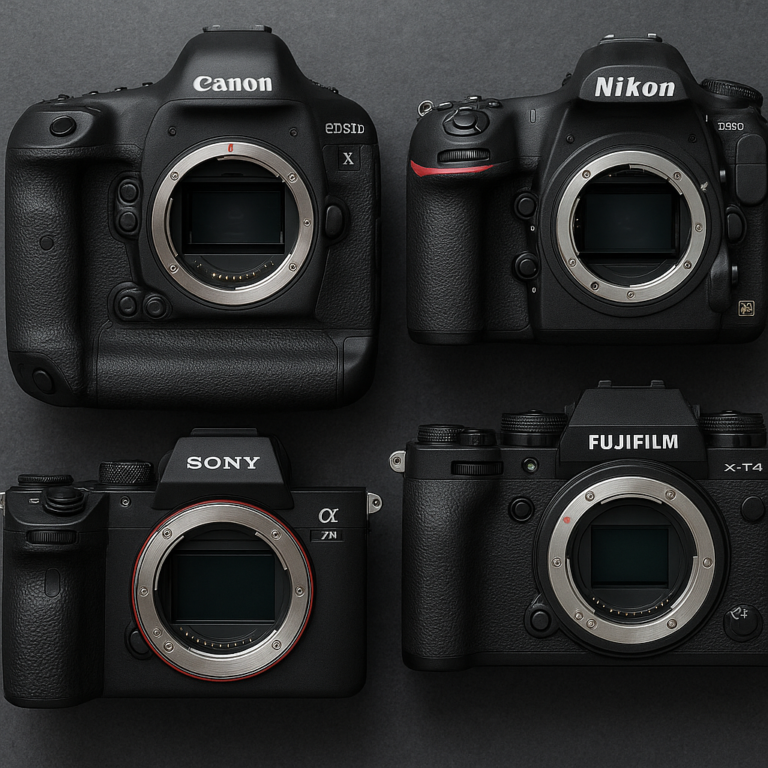
The top camera brands for beginners and professionals include Canon, Nikon, Sony, and Fujifilm for versatile mirrorless systems; OM System for a lighter outdoor kit; and Panasonic Lumix for video-focused work. The best choice depends on what you photograph, which lenses you’ll need, and whether the camera feels good in your hands.
We’ve seen first-time photographers spend hours comparing megapixels, then fall for the camera that simply felt right when they picked it up. That’s a useful reminder: a great camera is the one you’ll actually carry—and a system with lenses that suit your style can serve you long after your first photo class.
Key Takeaways
-
Canon, Nikon, Sony, and Fujifilm are strong all-around systems, with different strengths in handling, autofocus, lens choice, and in-camera color.
-
Match the camera to your subject: wildlife and sports need dependable tracking and telephoto lenses; travel rewards portability; video work needs creator-friendly features.
-
You probably don’t need full frame to start. APS-C and Micro Four Thirds cameras can deliver excellent results while keeping the kit manageable.
-
Compare the entire system, not just the body. Lens availability, size, weight, controls, and upgrade options matter.
-
Buy for the pictures you want to make—not specifications you may never use.
-
Canon cameras: Amazon | Canon Official
-
Nikon cameras: Amazon | Nikon Official
-
Sony cameras: Amazon | Sony Official
-
Fujifilm cameras: Amazon | Fujifilm Official
Table of Contents
- ⚡ Quick Tips and Facts
- 📸 Camera Brand Basics: A Short History and What Sets Them Apart
- How to Choose a Camera Brand for Your Skill Level and Style
- What Matters Most: Image Quality, Autofocus, Video, and Lenses
- Not All Beginners Are the Same: Match the Camera to Your Goals
- Moving Up From a Phone: Simple Controls and Easy Sharing
- Learning Photography as a Hobby: Room to Grow
- Choosing a Camera for Travel, Portraits, Wildlife, or Video
- Why Your First Camera Doesn’t Need to Be Expensive
- Spend Less on Gear, More on Learning
- 🏆 10 Top Camera Brands for Beginners and Professionals
- 1. Canon: Approachable Cameras and a Broad Lens Range
- 2. Nikon: Ergonomic Cameras for Beginners and Working Photographers
- 3. Sony: Fast Autofocus and a Deep Mirrorless System
- 4. Fujifilm: Film Simulations and Hands-On Controls
- 5. OM System: Lightweight Cameras for Travel and Wildlife
- 6. Panasonic Lumix: Hybrid Cameras for Photo and Video Creators
- 7. Leica: Premium Craftsmanship and Distinctive Imaging
- 8. Ricoh: Compact Cameras for Everyday Carry
- 9. Pentax: Durable DSLRs and Optical Viewfinders
- 10. Hasselblad: High-Resolution Medium-Format Photography
- The Best Cameras for Beginners: Standout Models by Brand
- Nikon Z fc: A Stylish Camera With Modern Mirrorless Features
- Fujifilm X-T30 III: Film Simulations and Creative Controls
- Canon EOS R100: An Accessible Entry to the RF System
- Ricoh GR IIIx: A Pocketable Camera for Everyday Photography
- The Best Cameras for Professionals: Systems Built for Demanding Work
- Professional Cameras for Weddings, Portraits, and Events
- Professional Cameras for Sports, Wildlife, and Action
- Professional Cameras for Commercial Work and High-Resolution Images
- Professional Cameras for Filmmaking and Hybrid Production
- Best Camera Brands by Photography Style and Budget
- Best Brands for Travel and Street Photography
- Best Brands for Portraits and Weddings
- Best Brands for Wildlife and Sports
- Best Brands for Video and Content Creation
- Mirrorless vs. DSLR vs. Compact Cameras
- Which Camera Type Is Right for You?
- Are DSLR Cameras Still Worth Buying?
- Camera Sensor Sizes Explained: Full Frame, APS-C, and Micro Four Thirds
- Camera Lenses and Mounts: Choosing a System That Can Grow With You
- Prime vs. Zoom Lenses for New Photographers
- Lens Compatibility, Third-Party Lenses, and Future Upgrades
- Camera Features That Matter: Autofocus, Stabilization, and Video
- New vs. Used Cameras: How to Buy With Confidence
- How to Compare Camera Brands Before You Buy
- Common Camera-Buying Mistakes to Avoid
- Best of the Rest: More Camera Brands Worth Considering
- 📚 Recommended Links: Photography Books and Learning Resources
- Conclusion
- Recommended Links
- FAQ: Top Camera Brands for Beginners and Professionals
- Which camera brand is best for beginners?
- Which camera brand do most professionals use?
- Is Canon or Nikon better for a beginner?
- Is Sony a good camera brand for beginners?
- Which camera brand has the best lenses?
- Should I buy a full-frame camera as my first camera?
- How much should a beginner spend on a camera system?
- Can beginners use professional cameras?
- Which camera brand is best for video?
- Reference Links
⚡ Quick Tips and Facts
If you remember one thing from our camera-shop-floor conversations, make it this: choose a camera system you’ll enjoy using, not a spec sheet you’ll enjoy reading. The number-one camera brand depends on what and how you shoot; there isn’t one brand that wins every assignment.
| Quick question | Our practical answer |
|---|---|
| Best all-around starting brands | Canon, Nikon, Sony, and Fujifilm offer strong interchangeable-lens systems. |
| Best for ready-to-share color | Fujifilm, thanks to its Film Simulation looks. |
| Best for beginner-friendly controls | Canon and Nikon are easy places to start, though menus and ergonomics are personal. |
| Best for video-first beginners | Sony, Canon, Panasonic Lumix, and Fujifilm have capable creator-focused options. |
| Best for a small travel kit | OM System Micro Four Thirds cameras and lenses; Ricoh if you want a pocketable fixed-lens camera. |
| Best value for learning | A capable APS-C camera with its kit zoom, or a carefully checked used DSLR and lens. |
| Do you need full frame? | Usually not for your first camera. Better lenses, practice, and good light often matter more. |
| How many megapixels are enough? | Around 20–24MP is plenty for most everyday photography and sharing. |
| What feature should you prioritize? | Reliable face and eye-detection autofocus if you photograph people, pets, or action. |
| Mirrorless or DSLR? | Mirrorless is generally the more future-facing choice; a used DSLR can still be an excellent learning tool. |
A quick reality check: major review sites can recommend different “best” cameras because they test different models, weigh features differently, and serve different buyers. RTINGS explains its standardized camera testing, while Digital Camera World’s beginner guide puts more emphasis on approachable models and overall usability. Both can be right for different people.
For more buying advice, browse our Camera Buying Guide and Camera Brands guides.
📸 Camera Brand Basics: A Short History and What Sets Them Apart
The camera industry used to feel like a two-team match: Canon versus Nikon. Today, Sony, Fujifilm, Panasonic Lumix, OM System, Ricoh, Leica, Pentax, and Hasselblad all have distinct strengths. The sensible question is no longer “Which brand is best?” It’s “Which system best fits the photographs I want to make?”
Some companies make a broad range of cameras and lenses for nearly every kind of photographer. Others specialize in a particular experience: compact travel gear, film-inspired color, video production, rugged field cameras, or high-resolution studio work.
| Brand | Known for | A good fit if you… |
|---|---|---|
| Canon | Friendly entry-level cameras, autofocus, broad system | Want a straightforward route from beginner to advanced gear |
| Nikon | Comfortable ergonomics, strong stills cameras, capable Z system | Value handling and want a system that can grow |
| Sony | Autofocus, mirrorless technology, wide E-mount lens choices | Photograph action, create video, or want a large lens ecosystem |
| Fujifilm | APS-C cameras, tactile controls, Film Simulations | Enjoy hands-on shooting and attractive JPEGs straight from camera |
| OM System | Compact Micro Four Thirds bodies and lenses, stabilization | Want a portable kit for travel, outdoors, or wildlife |
| Panasonic Lumix | Video features and hybrid shooting | Need a camera for both stills and serious video work |
| Ricoh | Compact fixed-lens GR cameras | Want a high-quality camera small enough to carry often |
| Leica | Premium rangefinders, lenses, and image-making experience | Prioritize craft, design, and a distinctive shooting style |
| Pentax | DSLR bodies, optical viewfinders, weather-resistant options | Prefer a DSLR experience or already own Pentax lenses |
| Hasselblad | Medium-format imaging and high detail | Work in controlled commercial, portrait, or landscape settings |
A brand’s reputation is only a starting point. The individual camera, lens selection, service support, controls, and your willingness to carry it matter more. Explore our Camera Comparisons for system-by-system differences.
How to Choose a Camera Brand for Your Skill Level and Style
Start with the pictures you actually take—or hope to take—not the most expensive camera you can technically afford.
We’ve watched new photographers obsess over burst rates, then spend months photographing landscapes. We’ve also seen a parent discover that eye-detection autofocus is worth more than a huge megapixel count once a toddler starts sprinting. Your subject changes the answer.
What Matters Most: Image Quality, Autofocus, Video, and Lenses
Before comparing brands, rank these factors:
- Lens system: Are there suitable lenses for your subjects, now and later?
- Handling: Can you hold the camera comfortably and change settings without a struggle?
- Autofocus: Does it recognize and track the people, animals, or objects you photograph?
- Size and weight: Will you carry it for a whole day?
- Video needs: Is 4K/30p enough, or do you need higher frame rates, 10-bit recording, or Log profiles?
- Stabilization: Will you often shoot handheld in dim light?
- Budget for the whole kit: Include lenses, memory cards, batteries, and perhaps a bag.
- Support and upgrade path: Can you find lenses, repairs, and learning resources for the system?
A step-by-step way to shortlist brands
Step 1: Name your main subject. Portraits, sports, family, landscapes, travel, and video each favor different features.
Step 2: Decide on kit size. A full-frame body with large lenses may be wonderful in the studio and tiresome on a long hike. OM System’s smaller Micro Four Thirds system can make a lighter complete kit; APS-C is a flexible middle ground.
Step 3: Pick two camera systems to handle. Visit a camera store if possible. Grip shape and menus are not minor details when you use them every weekend.
Step 4: Compare lenses, not just camera bodies. Look for the lens you would realistically buy next. A system with an appealing body but no suitable telephoto or wide-angle lens can become a dead end for your needs.
Step 5: Try autofocus and the viewfinder. Track a moving person, review the screen in daylight, and see whether the menus make sense to you.
Step 6: Leave room for learning. You don’t need every advanced feature on day one. A camera that gets used beats a technically superior camera that stays at home.
The first YouTube video featured in this article makes a similar point: prioritize relevant features over hype, and spend thoughtfully on lenses. Its advice is especially useful when you’re tempted by full-frame specifications before you know what you shoot.
Not All Beginners Are the Same: Match the Camera to Your Goals
“Beginer” describes experience, not a single type of buyer. A smartphone upgrader may want easy sharing and automatic modes. A hobbyist may want manual controls and a viewfinder. A new creator may need a microphone input and an articulating screen.
| Your goal | Prioritize | Brands and models to investigate |
|---|---|---|
| Everyday family photos | Eye AF, comfortable grip, simple auto modes | Canon EOS R50, Nikon Z50II |
| Learn exposure and composition | Viewfinder, direct controls, interchangeable lenses | Fujifilm X-T30 III, Nikon Z fc |
| Travel light | Compact body and lenses, stabilization | OM System OM-D E-M10 IV, Fujifilm X-M5 |
| Photograph wildlife | Tracking AF, telephoto lenses, burst performance | Canon EOS R10, Nikon Z50II, Sony α670 |
| Make videos or vlogs | Reliable video AF, flip screen, microphone support | Sony ZV-E10, Canon EOS R50, Panasonic Lumix G-series |
| Carry a camera in a pocket | Fixed lens, small body, accessible controls | Ricoh GR IIIx |
| Print large or crop heavily | Resolution, lens sharpness, larger sensor options | Full-frame Canon, Nikon, Sony, or Hasselblad systems |
These are starting points, not a ranking carved into a lens cap. Model availability and firmware can change, so check the manufacturer’s current specifications before buying.
Moving Up From a Phone: Simple Controls and Easy Sharing
A camera can give you more control over depth of field, lenses, and exposure—but it won’t automatically make every photo better. Phone cameras use computational processing to combine exposures and sharpen images. A dedicated camera gives you more direct control, larger sensors in many models, and interchangeable lenses, but expects you to make more decisions.
For a smooth transition:
- Start in Auto or an assisted mode such as Program.
- Use face and eye detection for people and pets.
- Keep the kit zoom attached until you learn which focal lengths you prefer.
- Turn on wireless transfer for quick phone sharing.
- Learn exposure compensation before diving into every menu.
- Try aperture priority to control background blur without managing every setting at once.
An electronic viewfinder can help you learn because it previews many exposure changes before you take the picture. That’s one reason mirrorless cameras can feel intuitive to newcomers. You’ll still need to learn when the preview is misleading—bright screens can make an underexposed image look better than it is.
Learning Photography as a Hobby: Room to Grow
If learning is the point, don’t rush to collect lenses. Spend a month with the kit zoom and notice what you reach for:
- At the wide end, do you photograph interiors, landscapes, or groups?
- At the long end, do you want more reach for candid portraits or wildlife?
- Do you often struggle in dim indoor light?
- Are your subjects still, or always on the move?
Then buy for the problem you actually encountered. A fast prime lens may help with indoor portraits. A telephoto zoom may be the better choice for birds or field sports. The wrong upgrade is the one that solves a problem you don’t have.
One of our photographers once spent a weekend carrying only a standard zoom rather than switching lenses every few minutes. The surprise wasn’t that the zoom did everything—it didn’t. The surprise was how quickly the photographer started anticipating pictures instead of shopping for a focal length.
Choosing a Camera for Travel, Portraits, Wildlife, or Video
Travel and street photography
Prioritize a compact kit, responsive autofocus, and a lens that gives you useful framing. Fujifilm and OM System offer small interchangeable-lens options; Ricoh’s GR series is exceptionally portable but has a fixed lens. A camera only makes travel pictures if it’s with you.
Portraits and family
Look for dependable eye detection, comfortable handling, and a lens with a flattering portrait focal length. Canon, Nikon, Sony, and Fujifilm all offer suitable bodies and lenses. A fast prime can blur a background, but good light and thoughtful distance matter too.
Wildlife and sports
Autofocus tracking, a telephoto lens, and a fast enough burst rate matter more than a retro finish. Check how a camera performs with a long lens and whether its buffer can sustain bursts. Smaller Micro Four Thirds systems can offer a useful portability advantage for long-reach kits.
Video and content creation
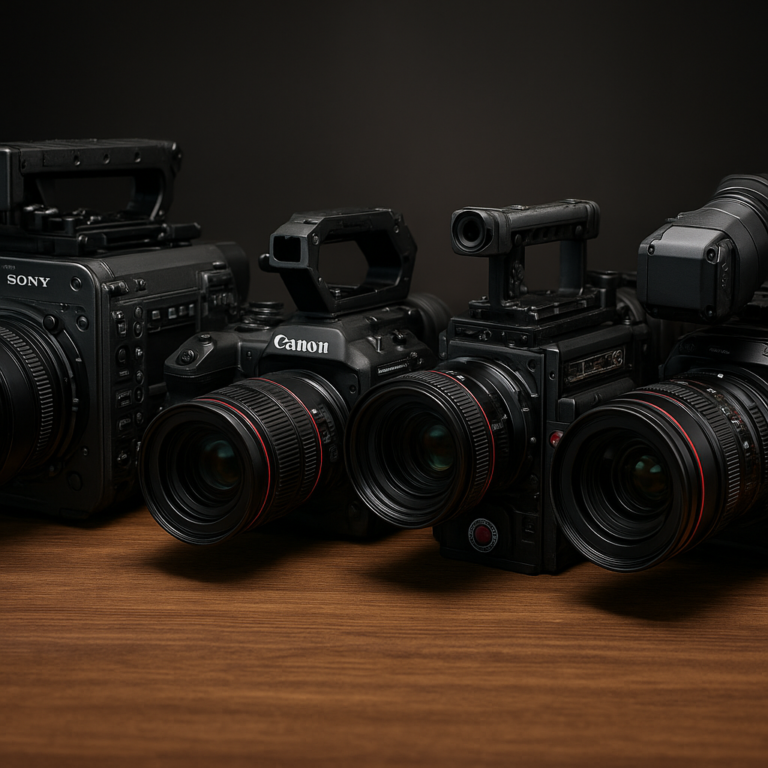
Look for the screen position you prefer, dependable continuous autofocus, microphone support, and recording limits that fit your work. A vlogger may prefer a lightweight camera with a flip-out screen; a filmmaker may need 10-bit or RAW formats. Don’t pay for cinema features if your videos are short clips for friends.
Why Your First Camera Doesn’t Need to Be Expensive
A high-end body won’t teach you composition, timing, or how to read light. Nor will more megapixels rescue a missed focus point. For most beginners, an APS-C camera or a capable Micro Four Thirds model can produce excellent results, especially when paired with an appropriate lens.
The Cotswold Photographer’s beginner guide argues that photographers should focus on “light, composition, and timing” rather than buying their way into better pictures. We agree—with one caveat: the camera still needs to suit your subject. An affordable model may be perfectly adequate for landscapes and family photos, while fast action can demand better autofocus and burst performance.
Spend Less on Gear, More on Learning
A balanced first kit might include:
- An interchangeable-lens camera body
- A standard kit zoom
- One spare battery
- A reliable memory card
- A comfortable strap or small camera bag
- A lens cloth and basic cleaning blower
- A photo backup routine
After that, invest time in practice. Try a short weekly assignment: photograph the same subject in different light, make ten images with one focal length, or shoot only in aperture priority. You’ll learn more from reviewing a focused set of photographs than from reading another comparison chart at midnight.
Browse our Camera Guides for practical shooting help, and our Camera Features articles for explanations of autofocus, stabilization, sensors, and more.
🏆 10 Top Camera Brands for Beginners and Professionals
The list below compares camera systems, not just individual camera bodies. A brand can be excellent for one photographer and a poor fit for another, so we’ve included both strengths and trade-offs.
| Brand | Beginner strengths | Professional strengths | Main trade-off |
|---|---|---|---|
| Canon | Friendly menus, approachable entry models | Broad professional body and lens lineup | RF lens choice varies by format and category |
| Nikon | Ergonomics, strong stills cameras | Advanced bodies and a growing Z lens system | Some entry-level models omit features enthusiasts want |
| Sony | Autofocus and creator-friendly options | Extensive full-frame and cinema ecosystem | Menus and handling divide opinion |
| Fujifilm | Film Simulations, tactile controls | Strong APS-C and medium-format systems | No full-frame interchangeable-lens line |
| OM System | Small bodies and lenses, stabilization | Ruged, portable outdoor systems | Smaller sensor has different low-light and depth-of-field behavior |
| Panasonic Lumix | Video-focused features | Strong hybrid and video workflows | Model-to-model autofocus behavior deserves close checking |
| Leica | Distinctive controls and compact options | Premium rangefinder and SL systems | Premium system costs and specialist ergonomics |
| Ricoh | Minimal, pocketable GR cameras | Distinctive street-photography tool | Fixed lens on GR cameras limits versatility |
| Pentax | Traditional DSLR operation | Ruged DSLR bodies and optical viewfinders | Smaller new-body and lens ecosystem than major mirrorless rivals |
| Hasselblad | Guided operation on select systems | High-resolution medium-format capture | Large, specialized, costly system |
1. Canon: Approachable Cameras and a Broad Lens Range
Canon is an easy brand to recommend when you want familiar handling, strong subject detection on many current mirrorless bodies, and cameras that can grow with your skills. The Canon EOS R100 is a straightforward stills-focused entry point, while the EOS R50 and EOS R10 offer more ambitious autofocus and video capabilities.
For professionals, Canon’s EOS R system spans compact bodies through advanced full-frame options. The RF mount also includes lenses for portraits, events, sports, and commercial work. Older EF DSLR lenses can be adapted to RF bodies, though adapters add bulk and should be included in your system planning.
Trade-off: Canon’s RF lens selection has developed over time, but some buyers may find fewer third-party APS-C choices than in more established mirrorless mounts. Check the current lens lineup before committing.
- ✅ Straightforward controls and guided modes on many beginner models
- ✅ Strong autofocus options across the range
- ✅ Clear upgrade path within the RF system
- ❌ Entry bodies may omit stabilization or advanced video tools
- ❌ Lens choice and third-party support vary by camera and mount
See Canon’s EOS R camera system and our camera brand guides.
Canon camera shopping links
- Canon EOS R100: Amazon | Walmart | Canon Official
- Canon EOS R50: Amazon | Walmart | Canon Official
- Canon EOS R10: Amazon | Walmart | Canon Official
2. Nikon: Ergonomic Cameras for Beginners and Working Photographers
Nikon’s reputation for comfortable grips and thoughtful controls remains a real advantage: a camera that feels good is a camera you’re more likely to carry and use. The Z50II is a versatile APS-C mirrorless option, while the Z fc mixes modern imaging with tactile retro-style dials. Full-frame Z bodies serve advanced enthusiasts and professionals.
Nikon’s Z mount supports both DX-format APS-C and full-frame cameras. That gives you room to move up within the system, though it’s wise to check the selection of compact DX lenses if portability is your priority.
- ✅ Comfortable handling and useful direct controls
- ✅ Good options for stills, travel, and video
- ✅ A growing Z-mount lens family
- ❌ Some entry models trade away a viewfinder or stabilization
- ❌ Adapted F-mount lenses may require an adapter
Explore Nikon’s Z series and compare models in our camera buying guides.
Nikon camera shopping links
- Nikon Z50II: Amazon | Walmart | Nikon Official
- Nikon Z fc: Amazon | Walmart | Nikon Official
3. Sony: Fast Autofocus and a Deep Mirrorless System
Sony made mirrorless cameras a serious professional option and continues to offer a broad range of bodies, from compact APS-C cameras to high-end full-frame systems. Its E-mount lens ecosystem includes Sony lenses and many third-party options, useful if you want a wider choice across budgets and styles.
For beginners who make videos, the Sony ZV-E10 is designed around creator needs. For stills and hybrid work, models such as the α640 or newer APS-C bodies may offer a more conventional camera experience, including a viewfinder on selected models.
- ✅ Strong subject-tracking autofocus on many current models
- ✅ Extensive E-mount lens options
- ✅ Many choices for creators and professionals
- ❌ Some compact creator bodies lack a viewfinder
- ❌ Menu complexity and ergonomics can take getting used to
Browse Sony’s interchangeable-lens cameras and our camera comparisons.
Sony camera shopping links
- Sony ZV-E10: Amazon | Walmart | Sony Official
- Sony α640: Amazon | Walmart | Sony Official
4. Fujifilm: Film Simulations and Hands-On Controls
Fujifilm attracts photographers who like to make creative decisions while shooting. Its Film Simulations offer distinct in-camera color treatments, while many X-series cameras include dedicated dials for shutter speed, exposure compensation, or film looks.
The X mount has a substantial lens range, and Fujifilm’s APS-C bodies can keep a travel kit smaller than many full-frame setups. The X-T30 III is a viewfinder-equipped option for photographers who want direct controls; the X-M5 favors a compact, creator-oriented design but lacks an electronic viewfinder.
- ✅ Appealing JPEG color and creative Film Simulations
- ✅ Tactile shooting controls on many models
- ✅ Broad selection of X-mount lenses
- ❌ Some compact bodies are less comfortable with large lenses
- ❌ Model choice matters: not every Fuji includes a viewfinder or IBIS
Fujifilm describes its Film Simulation modes and X-series cameras.
Fujifilm camera shopping links
- Fujifilm X-T30 III: Amazon | Walmart | Fujifilm Official
- Fujifilm X-M5: Amazon | Walmart | Fujifilm Official
5. OM System: Lightweight Cameras for Travel and Wildlife
OM System continues the Micro Four Thirds tradition associated with Olympus cameras: smaller sensors, compact lenses, and portable complete kits. Its bodies often offer in-body image stabilization, which can help with handheld photographs and video. Models such as the OM-D E-M10 IV remain worth considering as used or remaining-stock options, while current OM System bodies target travel, nature, and more demanding outdoor photography.
The smaller sensor is not automatically a disadvantage. It can help make long telephoto kits lighter, especially for wildlife trips. The trade-off is that larger sensors generally have an advantage in low light and can create shallower depth of field at equivalent framing and aperture.
- ✅ Compact body-and-lens systems
- ✅ Strong stabilization on many models
- ✅ Useful options for travel and wildlife
- ❌ Smaller sensor has different low-light and depth-of-field behavior
- ❌ Older Olympus models and current OM System models differ in features
Read OM System’s camera lineup and check the specifications of the exact body you’re considering.
OM System camera shopping links
- OM-D E-M10 IV: Amazon | Walmart | OM System Official
- OM System OM-5: Amazon | Walmart | OM System Official
6. Panasonic Lumix: Hybrid Cameras for Photo and Video Creators
Panasonic Lumix is a strong candidate if video features rank high on your checklist. Lumix cameras range from compact Micro Four Thirds models to full-frame bodies built for serious hybrid production. Depending on the model, you may find advanced recording formats, video-oriented controls, stabilization, and useful monitoring tools.
The key is to compare autofocus behavior for your actual workflow. Camera performance varies by generation and model, so test continuous autofocus with the people or movement you plan to film rather than assuming every Lumix body behaves the same.
- ✅ Strong video feature sets across selected models
- ✅ Micro Four Thirds and full-frame system choices
- ✅ Options suited to hybrid creators
- ❌ Feature-rich menus may overwhelm first-time users
- ❌ Autofocus capabilities vary by camera generation
See Panasonic’s Lumix camera lineup and compare model-specific video specifications.
Panasonic Lumix shopping links
- Panasonic Lumix G100D: Amazon | Walmart | Panasonic Official
- Panasonic Lumix S5II: Amazon | Walmart | Panasonic Official
7. Leica: Premium Craftsmanship and Distinctive Imaging
Leica is known for carefully made cameras and lenses, distinctive rangefinder handling, and premium full-frame systems. A Leica can be a wonderful tool for photographers who value a deliberate, tactile shooting experience. It is not, however, the automatic best choice for a beginner simply because the logo has a long history.
Try one in person if possible. Rangefinder focusing and controls can feel natural to one photographer and unfamiliar to another. Leica’s compact cameras and interchangeable-lens systems also serve very different needs.
- ✅ Strong build quality and distinctive handling
- ✅ High-end lenses and full-frame system choices
- ✅ A considered, tactile shooting experience
- ❌ Premium system positioning
- ❌ Specialized controls may not suit every photographer
Explore Leica’s camera range.
8. Ricoh: Compact Cameras for Everyday Carry
The Ricoh GR IIIx is a camera for photographers who want a large-sensor compact that can disappear into a jacket pocket. Its fixed lens means you can’t zoom or change lenses, but that constraint can be creatively useful: you learn the camera’s field of view and move with intention.
The GR IIIx’s 40mm-equivalent lens is a versatile everyday view, though it is a little tighter than a wide-angle lens. Its compact size is the headline; limited battery life, a fixed display, and modest video capability are the caveats.
- ✅ Pocketable camera with an APS-C sensor
- ✅ Fixed lens encourages deliberate composition
- ✅ Useful for travel and street photography
- ❌ No interchangeable lenses or optical zoom
- ❌ Not the first choice for action or video-heavy work
Ricoh’s GR series is best understood as a specialist compact, not a pocket-sized replacement for every camera system.
Ricoh camera shopping links
- Ricoh GR IIIx: Amazon | Walmart | Ricoh Official
9. Pentax: Durable DSLRs and Optical Viewfinders
Pentax is one of the notable choices for photographers who still prefer a DSLR with an optical viewfinder. Its cameras can appeal to landscape photographers, outdoor shooters, and people who already own Pentax K-mount lenses. Weather-resistant bodies and direct controls are part of the draw on selected models.
Pentax is a more specialized recommendation for a newcomer starting from nothing. Before buying, compare the current body and lens roadmap with mirrorless alternatives, and consider how easily you can rent or service the equipment where you live.
- ✅ Optical viewfinder and traditional DSLR operation
- ✅ Ruged, weather-resistant options in the lineup
- ✅ Useful for existing Pentax lens owners
- ❌ Smaller new-camera ecosystem than leading mirrorless systems
- ❌ DSLR autofocus and video capabilities vary by model
See Pentax’s digital camera lineup.
10. Hasselblad: High-Resolution Medium-Format Photography
Hasselblad is associated with medium-format photography and high-resolution image capture. Its cameras can be compelling for commercial work, portraits, still life, and landscapes where detail and tonal rendering matter more than speed or a tiny kit.
For most beginners, it is a specialist destination rather than a sensible first stop. A medium-format system is most rewarding when you already know why you need its image quality and can support it with suitable lenses, lighting, storage, and workflow.
- ✅ High-resolution medium-format imaging
- ✅ Excellent fit for deliberate studio and landscape work
- ❌ Larger, specialized system
- ❌ Less suited to casual, fast-moving everyday photography
Explore Hasselblad’s camera systems.
The Best Cameras for Beginners: Standout Models by Brand
These cameras represent different priorities, not a universal winner. Check exact specifications and current availability before purchasing: features can vary by region, kit, and model revision.
| Camera | Sensor and mount | Standout strengths | Main compromises |
|---|---|---|---|
| Canon EOS R100 | APS-C, RF | Straightforward stills, accessible entry to RF | Fixed screen, simpler video and controls |
| Nikon Z fc | APS-C, Z | Direct dials, viewfinder, retro handling | Less ergonomic for some hands; no IBIS |
| Fujifilm X-T30 III | APS-C, X | Film Simulations, tactile controls, viewfinder | Check exact autofocus and video specs for your region |
| Ricoh GR IIIx | APS-C, fixed lens | Pocketable, discreet, fixed 40mm-equivalent view | No zoom, viewfinder, or interchangeable lenses |
| Canon EOS R50 | APS-C, RF | Versatile beginner autofocus and hybrid use | No in-body stabilization |
| OM-D E-M10 IV | Micro Four Thirds, MFT | Stabilization and a compact system | Older model; smaller sensor than APS-C |
| Sony ZV-E10 | APS-C, E | Creator-focused autofocus and video design | No viewfinder; video-first body layout |
| Fujifilm X-M5 | APS-C, X | Compact, creative JPEG looks, video options | No viewfinder or IBIS |
Nikon Z fc: A Stylish Camera With Modern Mirrorless Features
The Nikon Z fc pairs a retro-inspired body with modern mirrorless imaging. Its top dials make exposure settings visible and tactile, which can help you understand shutter speed and exposure compensation. You can still use automatic modes, so it doesn’t demand manual control from day one.
The supplied competitor summary lists a 20.9MP APS-C sensor, eye-detection autofocus, an electronic viewfinder, a fully articulating display, and 4K video. Verify the exact regional specifications on Nikon’s official Z fc page.
- ✅ Engaging physical controls and an electronic viewfinder
- ✅ Compact DX-format body with access to the Z-mount system
- ✅ Automatic modes for a gentle learning curve
- ❌ Retro appearance doesn’t guarantee modern flagship ergonomics
- ❌ No in-body stabilization; stabilization depends on the lens or technique
The Cotswold Photographer calls the Z fc a “best-looking” beginner camera, but notes its handling may be less comfortable than the Z50II. That’s a useful reminder: a handsome camera should also fit your hand.
👉 CHECK PRICE on:
- Nikon Z fc: Amazon | Walmart | Nikon Official
Fujifilm X-T30 III: Film Simulations and Creative Controls
The X-T30 III is a compelling pick if you want a viewfinder, direct controls, and Fujifilm’s familiar Film Simulation looks. The supplied comparison summary describes it as a 26MP APS-C camera with a dedicated Film Simulation dial and high-resolution video modes. Because model specifications can vary by market and source, confirm the exact recording options and battery figures with Fujifilm before buying.
Its main appeal isn’t a magic shortcut to great photographs. It’s the enjoyable feedback loop: choose a look, compose through the viewfinder, and see how the image changes as you learn.
- ✅ Film Simulation looks can reduce editing for JPEG shooters
- ✅ Viewfinder and physical controls suit deliberate still photography
- ✅ X-mount provides a range of lens types
- ❌ Autofocus tracking performance may lag the strongest action-focused competitors
- ❌ Small body can feel unbalanced with large lenses
👉 CHECK PRICE on:
- Fujifilm X-T30 III: Amazon | Walmart | Fujifilm Official
Canon EOS R100: An Accessible Entry to the RF System
The R100 is best understood as a simple, photo-first mirrorless camera. Canon’s published specifications list a 24.1MP APS-C sensor and RF mount; reviewers commonly highlight its approachable operation and value while pointing out its limited screen flexibility and less advanced video feature set. Canon’s official specifications should be your final stop for regional recording details.
The R100 can be a smart first camera if you want a viewfinder, interchangeable lenses, and straightforward family or travel photography. If you shoot lots of video, fast action, or self-recorded content, compare it with the R50 or R10 before choosing.
- ✅ Familiar Canon controls and automatic options
- ✅ APS-C image quality and interchangeable RF lenses
- ✅ Electronic viewfinder for bright outdoor shooting
- ❌ Fixed rear screen is limiting for low and high angles
- ❌ More basic autofocus, burst, and video features than higher models
Digital Camera World describes it as “a no-nonsense stills camera,” and RTINGS separately recommends it as a low-cost option for photo-focused beginners. The common thread: it’s more appealing for still photography than feature-heavy video work.
👉 CHECK PRICE on:
- Canon EOS R100: Amazon | Walmart | Canon Official
Ricoh GR IIIx: A Pocketable Camera for Everyday Photography
The GR IIIx takes the opposite approach from a system camera: one camera, one fixed lens, and a pocket that doesn’t complain. Its APS-C sensor and 40mm-equivalent lens suit everyday scenes, street photographs, and travel. There’s no zoom, which is either liberating or infuriating depending on how you shoot.
A Camera World reviewer recommends the GR IIIx as a beginner street camera; RTINGS highlights its portability and image quality while flaging the fixed screen and limited video. Those views fit together: it’s a brilliant carry-everywhere specialist, not a universal all-in-one.
- ✅ Small enough to encourage daily carry
- ✅ Fixed focal length can build compositional discipline
- ✅ Strong still-image quality for its size
- ❌ Fixed lens restricts framing and subject reach
- ❌ Not ideal for sports, fast-moving children, or video-first work
- ❌ Spare battery may be useful for long days
👉 CHECK PRICE on:
- Ricoh GR IIIx: Amazon | Walmart | Ricoh Official
The Best Cameras for Professionals: Systems Built for Demanding Work
Professional photographers don’t all need the same camera. A wedding photographer may value reliable autofocus, two card slots, and backup equipment. A studio photographer may prioritize resolution and color. A sports photographer needs tracking, speed, and rugged lenses. “Professional” describes the work, not one magic specification.
| Professional work | Priorities to check | Systems worth comparing |
|---|---|---|
| Weddings and events | Eye AF, dual card slots, dependable low-light lenses | Canon EOS R, Nikon Z, Sony α |
| Sports and wildlife | Tracking AF, burst speed, telephoto lenses, buffer | Canon EOS R, Nikon Z, Sony α, OM System |
| Commercial and studio | Resolution, color workflow, tethering, lens quality | Canon, Nikon, Sony, Fujifilm GFX, Hasselblad |
| Video production | Recording formats, cooling, codecs, stabilization, audio | Sony, Panasonic Lumix, Canon, Fujifilm |
| Travel and documentary | Reliability, portability, discreet handling | Fujifilm, Sony, OM System, Ricoh, Leica |
Professional Cameras for Weddings, Portraits, and Events
For events, lost files can matter more than one extra frame per second. Consider dual card slots, robust eye AF, comfortable ergonomics, reliable low-light autofocus, and a lens lineup that covers your work. Many working photographers also carry two bodies, not because one camera is inherently untrustworthy, but because a single point of failure is a poor business plan.
Canon, Nikon, and Sony all offer professional full-frame systems. Fujifilm’s APS-C and medium-format bodies can also suit portrait and editorial work, depending on the assignment and workflow.
Professional Cameras for Sports, Wildlife, and Action
For fast subjects, prioritize autofocus tracking and long-lens availability before chasing maximum megapixels. A high burst rate is useful only if the camera can focus accurately and sustain the sequence long enough to capture the decisive moment.
Before buying:
- Test subject recognition with your target: birds, vehicles, people, or pets.
- Check lens balance and total kit weight.
- Review buffer depth and card requirements.
- Confirm weather resistance for your working conditions.
- Consider reach: a smaller sensor can frame distant subjects tightly, but crop factor is not free magnification and does not create extra optical detail.
Professional Cameras for Commercial Work and High-Resolution Images
Large prints, detailed product photography, and heavy cropping can benefit from high-resolution sensors. Medium-format systems from Hasselblad and Fujifilm GFX are tools for photographers who can use their detail, not automatic upgrades for every job.
Ask what the client actually needs. If photographs are destined for web campaigns and moderate prints, workflow speed, reliable color, lens performance, lighting, and delivery may matter more than the biggest sensor available.
Professional Cameras for Filmmaking and Hybrid Production
Video-focused work needs more than “4K” on the box. Check:
- Bit depth and chroma subsampling for color grading
- Log or RAW recording if your workflow needs flexible grading
- Recording limits and heat management
- Autofocus behavior during movement
- Stabilization and rolling shutter
- Audio inputs and monitoring
- Lens breathing and available cine lenses
A creator making short, well-lit videos may be perfectly served by a beginner-friendly hybrid camera. A production team recording long interviews or client work may need cooling, external power, professional audio, and a more robust recording workflow.
Best Camera Brands by Photography Style and Budget
The best camera brand changes with the assignment. Here’s a fast way to narrow the field.
| Style | Shortlist | Why |
|---|---|---|
| Travel | Fujifilm, OM System, Sony, Ricoh | Portable bodies, compact lens options, or pocketable fixed-lens cameras |
| Street | Ricoh, Fujifilm, Leica, Sony | Discret handling and useful everyday focal lengths |
| Portraits | Canon, Nikon, Sony, Fujifilm, Leica | Strong lens options and people-focused autofocus |
| Wildlife | Canon, Nikon, Sony, OM System | Tracking autofocus and telephoto system choices |
| Video | Panasonic Lumix, Sony, Canon, Fujifilm | Hybrid models and video-oriented features |
| Studio and commercial | Canon, Nikon, Sony, Hasselblad, Fujifilm GFX | Resolution, lens selection, and professional workflow options |
Best Brands for Travel and Street Photography
For travel, the camera you carry is more useful than the technically superior camera you leave behind. Fujifilm and OM System offer interchangeable-lens kits that can stay relatively compact. Ricoh’s GR cameras fit in a pocket, with the obvious compromise that the lens is fixed. Sony also has compact APS-C bodies and a broad range of lenses, though some lens combinations become larger quickly.
Our field tip: calculate the weight of the body and your favorite lens, not the weight printed next to the camera body alone.
Best Brands for Portraits and Weddings
Canon, Nikon, and Sony make strong all-round portrait systems with suitable fast primes and zooms. Fujifilm’s APS-C bodies and color profiles appeal to photographers who enjoy working with JPEG looks, while full-frame bodies can help when you want more control over depth of field at a given framing.
For paid event work, prioritize backups, dual slots where appropriate, dependable focus, and lenses you can afford to bring to the assignment. A camera brand is not a substitute for a backup plan.
Best Brands for Wildlife and Sports
Compare Canon, Nikon, and Sony for extensive autofocus and telephoto options; include OM System if a lighter long-lens kit matters. Don’t choose on burst-rate numbers alone. Practice panning and shutter-speed control: even excellent autofocus cannot correct subject motion blurred by a shutter that’s too slow.
Best Brands for Video and Content Creation
Sony’s ZV line is aimed at creators; Canon’s EOS R cameras offer approachable hybrid models; Panasonic Lumix is well known for video-focused features; Fujifilm offers compact hybrid options and distinctive color looks. Compare the exact camera’s screen, audio connections, autofocus, stabilization, heat behavior, and recording formats.
For casual vlogging, 4K/30p can be plenty. For client work or color grading, check codecs and bit depth before you buy.
Mirrorless vs. DSLR vs. Compact Cameras
| Type | How it works | Advantages | Trade-offs |
|---|---|---|---|
| Mirrorless | Digital sensor feeds screen and electronic viewfinder | Exposure preview, compact designs, modern tracking AF | Battery life may be shorter; EVF quality varies |
| DSLR | Mirror and optical viewfinder show the scene through the lens | Direct optical view, often strong battery life, used bargains | Systems are shifting toward mirrorless; video AF varies |
| Compact fixed-lens | Lens is built in and cannot be changed | Convenient, portable, no lens decisions | Limited focal length and upgrade flexibility |
Which Camera Type Is Right for You?
Choose mirrorless if you’re starting from scratch and want current autofocus and video features, an electronic exposure preview, and access to developing lens systems.
Choose a DSLR if you find a well-priced body and lens set, prefer an optical viewfinder, or already own compatible DSLR lenses.
Choose a compact camera if portability is the priority and its fixed lens fits your usual subjects.
The first-video advice highlighted here is straightforward: mirrorless systems tend to offer a more intuitive preview and modern tracking, while DSLRs can remain a lower-cost used entry. Neither type makes you a better photographer on its own.
Are DSLR Cameras Still Worth Buying?
Yes—particularly on the used market. A pre-owned Canon EOS Rebel or Nikon D-series DSLR can teach exposure and focus without requiring a new mirrorless system. There are extensive used lens options, too.
But buy based on condition, not nostalgia. Test the autofocus, viewfinder, buttons, card slot, battery, and shutter. Use a reputable retailer with a clear return policy if possible. Camera bodies have moving and electronic components; used lenses can be excellent value, but inspect glass for haze, fungus, scratches, and uneven focusing.
Camera Sensor Sizes Explained: Full Frame, APS-C, and Micro Four Thirds
| Sensor format | Typical advantage | Typical trade-off | Good for |
|---|---|---|---|
| Full frame | More low-light and depth-of-field flexibility in many comparisons | Larger bodies and lenses; system can cost more | Events, portraits, commercial work, demanding low light |
| APS-C | Strong balance of image quality, size, and system flexibility | Less extreme shallow-depth-of-field options than full frame | Most beginners, travel, portraits, action |
| Micro Four Thirds | Compact bodies and lenses; useful reach in a small kit | Less high-ISO flexibility than larger formats in comparable conditions | Travel, outdoor work, wildlife, lightweight kits |
A larger sensor can gather more light for a given exposure setup and can make shallow depth of field easier to achieve. But results depend on lens aperture, exposure, sensor generation, processing, subject distance, and output size. The difference can be less visible in a phone-sized image than in a large print or heavily cropped file.
The first video’s useful warning is that sensor size affects lens size and system cost too. Its line, “An expensive camera with a cheap lens is going to make your expensive camera look like a cheap one,” may be blunt, but the lesson is sound: budget for the lens.
Camera Lenses and Mounts: Choosing a System That Can Grow With You
Your lens mount determines which lenses fit directly and which may need an adapter. Canon RF, Nikon Z, Sony E, Fujifilm X, Micro Four Thirds, and Pentax K are distinct systems. Adapters can preserve options, but not every lens works equally well with every feature.
Before choosing a mount, check:
- Whether the system has the lens types you need
- Whether third-party lenses are available
- How much adapted older glass appeals to you
- The combined size and weight of your preferred lenses
- Whether lenses have optical stabilization
- Whether you expect to move between APS-C and full frame within the system
Prime vs. Zoom Lenses for New Photographers
A zoom lens changes framing without changing your position or swapping lenses. A standard kit zoom is flexible for travel, family, and general learning.
A prime lens has one focal length. It can be compact and bright, and it encourages you to think about viewpoint and composition. A 50mm-equivalent prime is popular for portraits and everyday scenes, though the best focal length depends on sensor size and your style.
| Lens type | Best for | Watch out for |
|---|---|---|
| Standard zoom | General-purpose learning, travel, family | Often less bright at the long end |
| Wide-angle zoom | Landscapes, architecture, interiors | Distortion and perspective need care |
| Telephoto zoom | Wildlife, sports, candid portraits | Size, weight, and slower apertures on some lenses |
| Fast prime | Low light, portraits, background blur | Less framing flexibility |
Lens Compatibility, Third-Party Lenses, and Future Upgrades
A system’s value becomes clearer after the kit lens. Sony E and Fujifilm X have broad lens selections that include third-party choices; Canon RF and Nikon Z offer native lenses across several categories, with adapters providing additional pathways in some cases. Mount policies and available lenses change, so check current manufacturer and retailer listings rather than relying on an old forum post.
Buy the camera you can afford to use with a good lens. A balanced body-and-lens kit usually serves a beginner better than an expensive body paired with a lens that doesn’t suit their subjects.
Camera Features That Matter: Autofocus, Stabilization, and Video
| Feature | What it does | Who benefits most |
|---|---|---|
| Face/eye detection | Prioritizes focus on people’s faces or eyes | Portraits, family, events, creators |
| Animal recognition | Detects supported animal subjects | Wildlife and pet photographers |
| IBIS | Stabilizes the camera sensor | Handheld stills and video, especially with unstabilized lenses |
| Lens stabilization | Moves optical elements in a lens to reduce shake | Telephoto and handheld shooting |
| Burst rate | Captures multiple frames in quick succession | Sports, wildlife, active children |
| Weather sealing | Helps resist dust and moisture when used correctly | Outdoor work in uncertain conditions |
| Dual card slots | Allows backup or separate file recording | Paid work where redundancy matters |
| 10-bit or RAW video | Captures more grading flexibility than basic compressed video | Advanced video and production workflows |
A sensible beginner order is:
- Autofocus for your subject: face and eye tracking is more useful for people than a headline number of AF points.
- Stabilization if you shoot handheld: IBIS can help with camera shake, but it cannot freeze a moving subject.
- Burst speed if you shoot action: around 5–7 frames per second or higher can improve your chances, though tracking and buffer performance matter too.
- Video features you will actually use: 4K/30p is enough for many personal projects.
- Weather resistance only if your conditions justify it: weather sealing does not make a camera waterproof.
Megapixels are often overemphasized. Around 20MP is sufficient for many online uses, everyday prints, and learning. Higher resolution helps with large prints and cropping, but sharp focus, good glass, light, and technique still matter.
New vs. Used Cameras: How to Buy With Confidence
Used equipment can be a smart way to stretch a camera budget, but make the purchase thoughtfully. RTINGS recommends considering reputable used-gear sources, including established camera retailers with inspection and return policies.
A step-by-step used-camera check
- Confirm the exact model and mount. Similar names can hide major differences.
- Ask about condition and return terms. Prefer a clear grading scale and a return window.
- Check the body. Look for dents, loose ports, worn controls, and damage around the mount.
- Test every button and dial. A sticky control can become a daily irritation.
- Inspect the sensor and viewfinder. Dust on a sensor may be cleanable; damage is a different matter.
- Test autofocus and burst shooting. Use a moving subject if possible.
- Check the card slot and battery. Record and review several files.
- Inspect lenses under light. Look for fungus, haze, scratches, and uneven zoom or focus movement.
- Make a few test images. Check focus, exposure, and image quality at different apertures.
- Keep a little budget for a battery or service. A bargain is less of a bargain if essential accessories are missing.
For used lenses, reputable retailers and careful testing can offer good value. For used camera bodies, the risk of hidden faults is higher; buy from a seller with an inspection process and workable returns rather than relying on a blurry listing photograph and optimism.
How to Compare Camera Brands Before You Buy
Use this simple comparison process to avoid being distracted by shiny specifications:
- Write down your top three uses. For example: family, travel, and portraits.
- Choose a camera type and sensor size. APS-C mirrorless is a practical starting point for many.
- Pick two or three systems. Compare Canon, Nikon, Sony, or Fujifilm based on your needs.
- Price the kit, not just the body. Include your preferred lens, card, battery, and bag.
- Check lens availability. Look at current native and third-party options.
- Handle the finalists. Test grip, viewfinder, buttons, menus, and screen visibility.
- Try autofocus on your real subject. A static demo cannot reveal every tracking weakness.
- Read more than one review. Compare independent testing with hands-on user feedback.
- Check software and support. Wireless apps, firmware support, service options, and file workflow matter.
- Choose the camera you’ll carry. The winning system is the one that fits your photographs and life.
For independent testing, see RTINGS’ beginner-camera roundup. For another perspective, compare it with Digital Camera World’s entry-level camera guide. Their lists differ because testing methods, available models, and editorial priorities differ. Trust the feature measurements for objective comparisons, then use your own subject and handling preferences to make the final call.
Common Camera-Buying Mistakes to Avoid
- ❌ Buying by megapixels alone. More pixels do not guarantee better pictures.
- ❌ Choosing full frame without budgeting for lenses. The complete system can be larger and more expensive.
- ❌ Ignoring autofocus needs. Landscapes and sports demand different performance.
- ❌ Buying too many lenses at once. Learn what your kit lens cannot do first.
- ❌ Assuming weather sealing means waterproof. It doesn’t.
- ❌ Overpaying for video features you won’t use. Match the camera to your actual output.
- ❌ Choosing a camera you dislike holding. Ergonomics affect how often you shoot.
- ❌ Ignoring card and battery costs. Some professional formats need faster, pricier storage.
- ❌ Expecting stabilization to freeze action. It helps with camera shake, not subject motion.
- ❌ Buying used gear without a return plan. Hidden body issues can be costly.
- ❌ Treating brand loyalty as a substitute for comparison. Try the camera and lens system that fits your work.
Best of the Rest: More Camera Brands Worth Considering
Beyond the headline names, several systems deserve a look:
- Fujifilm GFX: Medium-format options for commercial, portrait, and landscape photographers who need high resolution.
- Leica Q series: Premium fixed-lens cameras for people who want a deliberate, compact full-frame experience.
- Pentax K series: DSLR choices for optical-viewfinder fans and existing K-mount owners.
- Older Olympus cameras: Used Micro Four Thirds bodies can offer stabilization and compact lens options.
- Canon EF and Nikon F DSLRs: A used body-and-lens kit may be a practical learning tool if you’re comfortable with an older system.
- Sony E-mount APS-C cameras: A broad lens ecosystem makes selected older bodies attractive for photography and video, provided you’re comfortable with their controls and screens.
The sleeper choice is often a used body paired with a genuinely good lens. That combination can make more sense than buying a brand-new camera body with features you may never touch. Check condition, support, compatibility, and return terms before committing.
📚 Recommended Links: Photography Books and Learning Resources
A camera manual explains buttons. These resources help you make decisions when the light changes and the moment won’t wait.
- Understanding Exposure by Bryan Peterson: A practical introduction to exposure decisions.
- The Photographer’s Eye by Michael Freeman: A thoughtful guide to composition and visual structure.
- The Digital Photography Book by Scott Kelby: Practical techniques and workflow guidance.
- The Suffering of Light by Alex Webb: A visual study of color, timing, and layered street photography.
For more advice, explore our Camera Guides and Camera Features.