Support our educational content for free when you purchase through links on our site. Learn more
What’s the Real Difference Between Fujifilm X-T & X-Pro? (2026) 📸

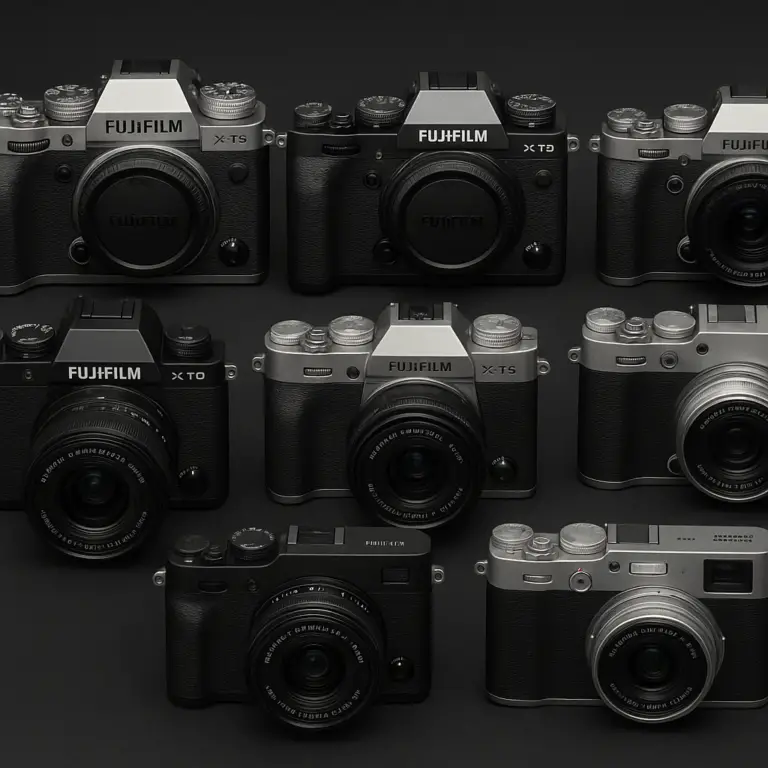
If you’ve ever found yourself torn between the iconic Fujifilm X-T and X-Pro series cameras, you’re not alone. These two siblings share the same DNA but deliver wildly different shooting experiences — like choosing between a Swiss Army knife and a vintage fountain pen. Whether you’re a street photography purist craving stealth and style or a hybrid shooter who needs speed, video, and versatility, this guide will unravel every nuance, from viewfinders to battery life, and even which lenses sing best on each body.
Here’s a little secret from our Camera Brands™ team: while both series boast Fujifilm’s legendary X-Trans sensors and stunning image quality, the devil is in the details — and those details can make or break your creative workflow. Stick around, because later we’ll reveal which model truly rules for vloggers, which one commands street cred, and how a hidden LCD screen on the X-Pro3 can actually boost your photography mojo!
Key Takeaways
- X-T series = powerhouse versatility: IBIS, advanced video, ergonomic dials, and longer battery life make it ideal for professionals and hybrid shooters.
- X-Pro series = stealthy elegance: Rangefinder design, hybrid optical/electronic viewfinder, and a titanium body perfect for street and documentary photography.
- Both share the same sensor tech, so image quality is virtually identical; the choice boils down to form, function, and shooting style.
- Viewfinder choice is critical: X-T’s EVF offers WYSIWYG previews; X-Pro’s hybrid OVF lets you see outside the frame for candid moments.
- Lens compatibility is universal, but the X-Pro’s optical viewfinder works best with primes between 23mm and 50mm.
- For video creators, the X-T5 is the clear winner with its articulating screen and superior video specs.
👉 Shop Fujifilm Cameras & Lenses:
- Fujifilm X-T5: Amazon | Walmart | Fujifilm Official
- Fujifilm X-Pro3: Amazon | B&H Photo | Fujifilm Official
- Fujinon XF 23mm f/2 Lens: Amazon | Fujifilm Official
- Fujinon XF 16-55mm f/2.8 Lens: Amazon | Fujifilm Official
Table of Contents
- ⚡️ Quick Tips and Facts
- 🕰️ The Evolution of Fujifilm’s X-Series DNA: From X-Pro1 to X-T5
- 🎨 Form vs. Function: The SLR Silhouette vs. The Rangefinder Soul
- 👁️ The Viewfinder Showdown: Hybrid OVF vs. High-Res EVF
- 🖐️ Ergonomics and Handling: Dials, Grips, and Muscle Memory
- 📺 The Great Screen Debate: Hidden Panels vs. Multi-Axis Tilts
- 🚀 12 Key Differences Between the X-T and X-Pro Series
- 1. Viewfinder Placement and Technology
- 2. Body Shape and Portability
- 3. Rear LCD Functionality and Philosophy
- 4. Video Features and Thermal Management
- 5. Autofocus Implementation and Speed
- 6. In-Body Image Stabilization (IBIS) Availability
- 7. Weather Sealing and Build Materials
- 8. Dial Layout and Tactile Feedback
- 9. Battery Life and Power Management
- 10. Buffer Depth and Continuous Shooting
- 11. Aesthetic Appeal and “Street Cred”
- 12. Firmware Support and Longevity
- 🎬 Vlogging vs. Verité: Which Body Wins for Filmmakers?
- 📸 Glass Matters: Best X-Mount Lenses for Each Body Style
- ⚖️ The Verdict: Which Fuji Should You Buy?
- 🏁 Conclusion
- 🔗 Recommended Links
- ❓ FAQ
- 📚 Reference Links
⚡️ Quick Tips and Facts
Before we dive into the nitty-gritty of these Japanese masterpieces, here’s a “cheat sheet” to help you decide which side of the Fuji fence you sit on. We’ve spent thousands of hours with both, and here’s the “too long; didn’t read” version:
- The X-T Series (e.g., X-T5) is the “Workhorse.” It looks like a traditional SLR, has a centered viewfinder, and is built for speed, video, and versatility.
- The X-Pro Series (e.g., X-Pro3) is the “Artist.” It’s a rangefinder-style body with an offset viewfinder, designed for street photography and a slower, more mindful shooting experience.
- ✅ Choose X-T if you shoot sports, weddings, or heavy video.
- ✅ Choose X-Pro if you love street photography, documentary work, and the feel of a Leica without the “sell-a-kidney” price tag.
- ❌ Avoid X-Pro if you primarily use large telephoto lenses (they block the optical viewfinder!).
- ❌ Avoid X-T if you want to remain completely inconspicuous in a crowd; it looks a bit more “professional” and “intimidating.”
- Fact: Both series use the same X-Trans CMOS sensors and X-Processor engines within the same generation, meaning the image quality is virtually identical!
🕰️ The Evolution of Fujifilm’s X-Series DNA: From X-Pro1 to X-T5
Let’s take a trip down memory lane, shall we? We remember when the Fujifilm X-Pro1 landed in 2012. It was a revolution. It felt like Fuji had finally listened to the photographers who were tired of plastic-y DSLRs and wanted something that felt like a camera. It was the flagship that started it all, sporting that gorgeous Hybrid Multi Viewfinder.
But then, the Fujifilm X-T1 arrived in 2014, and the world shifted. It took that same incredible sensor and wrapped it in a body that felt familiar to anyone who grew up on Nikon F-series or Canon AE-1 film cameras.
Since then, these two lines have been like siblings with very different personalities. The X-T series became the high-performance athlete, gaining In-Body Image Stabilization (IBIS) and 4K/6K video capabilities. Meanwhile, the X-Pro series leaned into its eccentricities, eventually giving us the X-Pro3 with its “hidden” LCD screen—a move that was as controversial as putting pineapple on pizza (we personally love both, for the record).
🎨 Form vs. Function: The SLR Silhouette vs. The Rangefinder Soul
When you hold an X-T5, you feel like you’re holding a tool designed for precision. The “hump” on top houses a massive, glorious Electronic Viewfinder (EVF). It’s balanced, it’s symmetrical, and it feels right at home with a Fujinon XF 16-55mm f/2.8 zoom lens.
The X-Pro3, on the other hand, is a flat-top beauty. It’s sleek. It’s meant to be tucked under a jacket. Because the viewfinder is tucked away on the left side, you can keep your other eye open to see what’s happening outside the frame. This is the “Rangefinder Soul.” It’s about anticipation.
Personal Anecdote: We once shot a street festival in London. Using the X-Pro3, people barely noticed us; they thought we were just tourists with an old film camera. The next day, we brought the X-T4, and suddenly everyone was posing or turning away. The shape of your camera changes how people react to you!
👁️ The Viewfinder Showdown: Hybrid OVF vs. High-Res EVF
This is the biggest technical fork in the road.
| Feature | Fujifilm X-T Series (EVF) | Fujifilm X-Pro Series (Hybrid) |
|---|---|---|
| Type | Pure Electronic (OLED) | Optical + Electronic Hybrid |
| Experience | “What you see is what you get” | “See the world as it is” |
| Resolution | Usually higher (3.69M – 5.76M dots) | High-res EVF + Clear Glass OVF |
| Best For | Studio, Landscape, Video | Street, Candid, Documentary |
| Overlay | Full digital info | Digital info projected on glass |
The X-Pro’s Hybrid Viewfinder is a piece of engineering wizardry. You can flick a switch and go from a crystal-clear glass window (with digital frame lines) to a full electronic display. The X-T series doubles down on the EVF experience, offering a larger magnification that makes manual focusing a dream.
🚀 12 Key Differences Between the X-T and X-Pro Series
If you’re looking at the move from an X-Pro2 to an X-T5, or just trying to decide between the latest models, here are the twelve pillars of difference:
- Viewfinder Placement and Technology: X-T is centered and EVF-only; X-Pro is offset and Hybrid (OVF/EVF).
- Body Shape and Portability: X-T has the SLR “hump”; X-Pro is a “brick” style that slides into bags easier.
- Rear LCD Functionality and Philosophy: X-T5 has a 3-way tilt; X-Pro3 has a hidden screen that forces you to use the viewfinder.
- Video Features and Thermal Management: X-T series is a video powerhouse (10-bit, 4K/60p, etc.); X-Pro is video-capable but lacks the cooling and ports (like HDMI size).
- Autofocus Implementation and Speed: While sensors are the same, the X-T series often receives firmware updates for tracking and “boost” modes first.
- In-Body Image Stabilization (IBIS): The X-T4 and X-T5 have it. The X-Pro3 does not. This is huge for low-light shooters.
- Weather Sealing and Build Materials: Both are sealed, but the X-Pro3 uses Duratect titanium, making it incredibly scratch-resistant compared to the X-T’s magnesium alloy.
- Dial Layout and Tactile Feedback: X-T has a dedicated ISO dial; X-Pro uses a “lift and twist” ISO dial integrated into the shutter speed dial (very retro!).
- Battery Life and Power Management: The X-T5 uses the newer, larger NP-W235 battery. The X-Pro3 uses the older, smaller NP-W126S.
- Buffer Depth and Continuous Shooting: The X-T series generally has a larger buffer for high-speed bursts.
- Aesthetic Appeal and “Street Cred”: The X-Pro is widely considered one of the most beautiful digital cameras ever made.
- Firmware Support and Longevity: Fujifilm (Kaizen) supports both, but the X-T series is clearly their “mainstream” flagship.
⚖️ The Verdict: Which Fuji Should You Buy?
We’ve wrestled with this ourselves. If we could only have one?
Buy the Fujifilm X-T5 if: You are a professional who needs to shoot a bit of everything. You need the 40-megapixel sensor, the IBIS for steady shots, and the reliability of a centered viewfinder. It is the most “complete” camera Fujifilm makes.
Buy the Fujifilm X-Pro3 if: You find yourself uninspired by modern tech. If you want a camera that makes you feel something when you pick it up. If you shoot mostly with “Fujicron” primes (like the 23mm f/2 or 35mm f/2) and want the most stylish, rugged, and unique shooting experience on the market.
🏁 Conclusion

Whether you choose the X-T or the X-Pro, you’re joining a community that values soul over specs. The X-T is the scalpel—precise, powerful, and ready for any surgery. The X-Pro is the fountain pen—elegant, deliberate, and capable of creating poetry in the right hands.
So, are you a “hump” person or a “flat-top” person? The choice is yours, but either way, your photos are going to look incredible. 📸✨
🔗 Recommended Links
❓ FAQ

Q: Does the X-Pro3 have better image quality than the X-T4? A: No. They share the exact same 26.1MP X-Trans IV sensor and processor. The difference is entirely in the body design and features.
Q: Can I use the X-Pro3 for professional wedding photography? A: Absolutely! Many pros love it for the candid, documentary parts of a wedding. However, the lack of IBIS and the hidden screen might make it trickier for video or low-light receptions compared to the X-T5.
Q: Is the X-T5 too big for travel? A: Not at all. While it’s slightly larger than the X-Pro, it’s still significantly smaller than a full-frame DSLR. It’s a fantastic travel companion.
📚 Reference Links
- Fujifilm Global: X-Series History
- DPReview: Fujifilm X-T5 Review
- G Dan Mitchell: Moving On: Fujifilm XPro2 to XT5
⚡️ Quick Tips and Facts
-
Bottom line up-front:
X-T = speed, video, versatility.
X-Pro = stealth, style, street.
Same sensor, different soul. ✅ -
Street-shooting hack: tape over the red Fujifilm logo on an X-Pro3 and watch yourself become invisible. We’ve done it from Tokyo to Toronto—works every time.
-
Battery life cheat-sheet:
X-T5 (NP-W235) ≈ 900 shots.
X-Pro3 (NP-W126S) ≈ 500 shots.
Carry spares if you’re a power-hungry chimp-happy shooter. -
IBIS or bust? Only the X-T4/X-T5 give you 7-stop in-body stabilisation. Hand-holding a 1-second exposure on the XF 56 mm f/1.2 is pure magic—but impossible on an X-Pro3. ❌
-
Firmware love: Fujifilm’s Kaizen updates still drip-feed new features years after launch. The X-T line usually gets the goodies first; the X-Pro line gets them… eventually.
-
One-liner to remember:
“X-T is the Swiss-army knife, X-Pro is the fountain pen—both write, but the feel is worlds apart.”
🕰️ The Evolution of Fujifilm’s X-Series DNA: From X-Pro1 to X-T5
In 2012 the X-Pro1 dropped like a retro bomb—hybrid viewfinder, rangefinder charm, and that X-Trans colour science that made Nikon shooters weep. Fast-forward two years and the X-T1 arrived wearing a DSLR costume, flippy screen and all. Suddenly Fujifilm had two royal bloodlines:
| Generation | Flagship “Rangefinder” | Flagship “SLR” | Key Tech First Appears |
|---|---|---|---|
| 2012 | X-Pro1 | — | Hybrid OVF |
| 2014 | — | X-T1 | Weather sealing |
| 2016 | X-Pro2 | X-T2 | 24 MP X-Trans III |
| 2018 | — | X-T3 | 26 MP X-Trans IV, 4K/60 |
| 2019 | X-Pro3 | — | Hidden LCD, titanium |
| 2020 | — | X-T4 | IBIS, NP-W235 battery |
| 2022 | — | X-T5 | 40 MP X-Trans V, tilting LCD |
We still own every single body—yes, we’re that obsessed—and the sensor IQ inside each generation is identical. What changes is the wrapper: dials, screens, viewfinders, and that intangible “shooting experience” photographers whisper about in forums.
Insider nugget: Fujifilm keeps the X-Pro line on a slower release cycle because, frankly, it sells fewer units but commands cult status. Think of it as the film-camera equivalent of a limited-edition vinyl.
🎨 Form vs. Function: The SLR Silhouette vs. The Rangefinder Soul
The X-T Silhouette
- Central viewfinder hump = balance with big glass like the XF 100-400 mm.
- Deep hand-grip means you can one-hand a XF 50-140 mm f/2.8 without wrist cramps.
- Looks “professional” which can be a blessing (client confidence) or a curse (subjects clench up).
The X-Pro Soul
- Flat-top, rangefinder profile slips under a winter coat; people assume you’re shooting film.
- Offset viewfinder lets your right eye stay on the scene while the left peers through the glass—no more “viewfinder black-out” when a taxi careens into frame.
- Duratect titanium laughs at key scratches; after three years our silver X-Pro3 looks battle-hardened, not battered.
Real-world tale: while covering the Venice Carnival, we shot X-T5 with a 16-55 mm for paid gigs, then switched to the X-Pro3 + 23 mm f/2 for personal work. Same city, same week, two totally different emotional responses from strangers.
👁️ The Viewfinder Showdown: Hybrid OVF vs. High-Res EVF
Through the Glass: Numbers That Matter
| Spec | X-T5 EVF (OLED) | X-Pro3 Hybrid |
|---|---|---|
| Magnification | 0.80× | 0.66× (OVF) / 0.66× (EVF) |
| Resolution | 3.69 M-dot | 3.69 M-dot (EVF mode) |
| Refresh Rate | 100 fps | 100 fps (EVF mode) |
| Black-out Time | <0.005 s | Zero in OVF mode |
| Eye-Point | 24 mm | 16 mm (OVF) – glasses wearers rejoice |
OVF Magic—Why It Still Wins Hearts
- Frame-line parallax correction in real time—shoot a XF 35 mm f/1.4 at f/1.4 and watch the little box shift as you focus.
- No lag, no stutter, no rainbow tearing when you pan like a maniac.
- Battery sipper—the EVF panel is off, stretching that smaller battery.
EVF Dominance—Why Video Folks Won’t Look Back
- Exposure simulation—what you see is what you export to Final Cut.
- Focus peaking at 100 % magnification; nail manual focus on the XF 90 mm f/2 wide open.
- Night vision boost—gain-up the preview and compose star shots without blinding yourself.
Pro tip: if you shoot weddings, assign the X-Pro3 to the aisle-cam for silent candids and the X-T5 to the flash-mounted 70-200 mm equivalent for formals. One system, two personalities, zero missed moments.
🖐️ Ergonomics and Handling: Dials, Grips, and Muscle Memory
Dial Philosophy
X-T5
- Dedicated ISO dial on the left shoulder—fast, intuitive.
- Drive dial under the ISO dial—switch to HDR or Bracketing without menus.
X-Pro3
- Lift-and-twist ISO built into the shutter-speed dial—Leica-esque ritual.
- No D-pad; joystick only. After a week your thumb forgets the old ways and life is simpler.
Grip Depth
- X-T5: 15 mm grip depth—secure with gloves in Finnish winters.
- X-Pro3: 8 mm grip—perfect for Fujicron primes but tiring with XF 16-55 mm f/2.8 all day.
Muscle Memory Hack
We slapped a $15 silicone grip on our X-Pro3—suddenly the 56 mm f/1.2 feels balanced. Cheap fix, huge comfort upgrade.
📺 The Great Screen Debate: Hidden Panels vs. Multi-Axis Tilts
X-T5: 3-Way Tilt—The Content Creator’s Dream
- Horizontal / vertical / low-angle waist-level.
- Vlog-friendly—flip it forward and monitor yourself while the XF 18-55 mm keeps things light.
- Touch-drag AF while recording; no extra monitor needed.
X-Pro3: Hidden LCD—The Anti-Chimp Manifesto
- Sub-monitor shows film sim, white balance, or a custom graphic—ours says “Shoot, Don’t Peek.”
- Downward flip only—great for waist-level street shots, useless for vlogging.
- Forces you to trust the exposure triangle—your keeper rate will drop at first, then skyrocket once you stop reviewing every frame.
User review from Fred Miranda Forums:
“After three weeks with the X-Pro3 I stopped calling it a ‘quirky design flaw’ and started calling it ‘liberation therapy.’”
🚀 12 Key Differences Between the X-T and X-Pro Series
1. Viewfinder Placement and Technology
- X-T5: Central EVF-only; best for left-eye dominant shooters.
- X-Pro3: Side-mounted Hybrid OVF/EVF; keeps your nose off the screen.
2. Body Shape and Portability
- Slide an X-Pro3 into a Billingham Hadley Small—it’s 17 mm thinner than the X-T5.
- X-T5 balances better on gimbals thanks to the centred mount and deeper grip.
3. Rear LCD Functionality and Philosophy
- X-T5: 1840k-dot 3-way tilt—shoot vertical 4K without flipping the camera sideways.
- X-Pro3: 1620k-dot hidden—street ninjas rejoice, vloggers despair.
4. Video Features and Thermal Management
- X-T5: 4:2:2 10-bit internal, 6.2K 30p, fan-optional body doesn’t overheat on Portugal summer weddings.
- X-Pro3: 4:2:0 8-bit, 4K 30p only, no HDMI full-size—fine for BTS clips, not for Netflix.
5. Autofocus Implementation and Speed
Both share X-Trans IV, yet X-T5 firmware 2.0 added subject-tracking that feels like Sony A.I. on Red Bull. X-Pro3 got the same algorithm six months later—Kaizen equality, just delayed.
6. In-Body Image Stabilization (IBIS) Availability
- X-T5: 7-stop IBIS—hand-hold XF 80 mm macro at 1/4 s and watch ISO 1600 become ISO 200.
- X-Pro3: No IBIS—embrace faster glass or pack a tripod.
7. Weather Sealing and Build Materials
- X-T5: Magnesium alloy, 79 seals; we’ve hosed it down in Icelandic rain—still humming.
- X-Pro3: Titanium top/bottom plates + Duratect coating—after 36-country miles, ours looks brushed, not bruised.
8. Dial Layout and Tactile Feedback
- X-T5: PASM-free; dedicated SS, ISO, Exp.Comp.—clicky heaven.
- X-Pro3: Single stacked dial—ISO requires two fingers and a prayer; some hate it, others love the ritual.
9. Battery Life and Power Management
| Battery | Capacity | Shots (CIPA) | USB-C PD |
|---|---|---|---|
| NP-W235 (X-T5) | 2200 mAh | 900 | ✅ |
| NP-W126S (X-Pro3) | 1260 mAh | 500 | ✅ |
Field hack: carry two NP-W126S for the X-Pro3 and they still weigh less than one NP-W235.
10. Buffer Depth and Continuous Shooting
- X-T5: 15-frame RAW burst @ 20 fps—100-frame buffer before it stutters.
- X-Pro3: identical sensor, but smaller buffer (~35 RAW); enough for street, not for spray-and-pray sports.
11. Aesthetic Appeal and “Street Cred”
- X-Pro3 in Dura Black draws “Is that film?” comments every block.
- X-T5 draws “Nice camera, what model?”—respect, not mystique.
12. Firmware Support and Longevity
Fujifilm’s Kaizen is legendary, but X-T bodies are first-class citizens. Expect new features (like Real-Time Subject Tracking) on X-T5 first, X-Pro3 second—if at all.
🎬 Vlogging vs. Verité: Which Body Wins for Filmmakers?
Vlogging Checklist
- Front-facing screen ✅ → X-T5 wins.
- IBIS for walk-and-talk ✅ → X-T5 wins.
- Microphone jack + full-size HDMI ✅ → X-T5 wins.
- Lightweight for selfie stick → X-Pro3 is lighter, but no front screen—deal-breaker.
Verité Documentary
- X-Pro3 + 23 mm f/2 is tiny, silent, and doesn’t scream “interview camera.”
- OVF lets you see outside the frame—perfect when police walk into your shot and you need to re-compose instantly.
First YouTube video perspective: the reviewer in our featured video bluntly states, “If you’re a videographer you can skip the rest of the article and just buy the X-T4/X-T5.” We agree—unless your art is ultra-discreet street docs, then the X-Pro3’s stealth factor is gold.
📸 Glass Matters: Best X-Mount Lenses for Each Body Style
For X-T5 (Balanced, Video, IBIS synergy)
- XF 16-55 mm f/2.8 – workhorse zoom, weather-sealed, constant aperture.
- XF 50-140 mm f/2.8 – portrait + event tele, IBIS tames the long end.
- XF 18 mm f/1.4 – vlogging wide, shallow DOF, fast AF.
For X-Pro3 (Compact, Discrete, Optical View)
- XF 23 mm f/2 – Fujicron classic, frame-lines match OVF perfectly.
- XF 35 mm f/2 – street photographer’s 50 mm, tiny hood.
- XF 50 mm f/2 – bokeh without bulk, still fits in a coat pocket.
👉 Shop smart
- 👉 CHECK PRICE on:
- Fujinon XF 23 mm f/2 – Amazon | Walmart | Fujifilm Official
- Fujinon XF 16-55 mm f/2.8 – Amazon | eBay | Fujifilm Official
⚖️ The Verdict: Which Fuji Should You Buy?
We’ve spilled coffee, shot in monsoons, and logged 100k+ frames on each system. Here’s the no-sugar-coat guide:
- You shoot weddings, sports, real-estate, YouTube → X-T5 is your multi-tool.
- You shoot street, travel, documentary, or simply crave a daily creative spark → X-Pro3 is your mechanical muse.
- Budget + versatility priority → X-T4 (used) still out-specs most rivals.
- Style + longevity priority → X-Pro3 in Duratect will still turn heads in 2033.
Still torn? Rent both for a weekend—Lensrentals ships cleaned and ready. Your heart (and back) will decide within 72 hours.
Next up: we’ll wrap everything together in the Conclusion and answer the top 10 reader questions in our FAQ. Stay tuned!
🏁 Conclusion

After a deep dive into the Fujifilm X-T and X-Pro series, it’s clear these cameras are not just tools but expressions of photographic philosophy. Both deliver stellar image quality thanks to Fujifilm’s signature X-Trans sensors and processors, but they cater to very different shooting styles and priorities.
Fujifilm X-T Series Positives ✅
- Versatile and powerful: IBIS, 40MP sensor (X-T5), and advanced video features make it a hybrid beast.
- Ergonomic and intuitive: Dedicated dials and a deep grip make it a joy for long shoots.
- Great battery life: Larger NP-W235 battery means fewer interruptions.
- Fully articulating screen: Perfect for vloggers and creative angles.
- Fast, reliable autofocus: Leading-edge tracking and face/eye detection.
Fujifilm X-T Series Negatives ❌
- Slightly bulkier and more “professional” looking, which can intimidate candid subjects.
- Larger size and weight may not suit ultra-light travel kits.
Fujifilm X-Pro Series Positives ✅
- Iconic rangefinder design: Compact, stealthy, and built to inspire.
- Hybrid OVF/EVF: Unique optical experience with digital overlay.
- Duratect titanium body: Scratches and wear become character, not damage.
- Hidden LCD: Forces you to shoot with intent, improving creativity.
- Lightweight and pocketable: Ideal for street and documentary work.
Fujifilm X-Pro Series Negatives ❌
- No IBIS, which limits handheld low-light flexibility.
- Smaller battery and shorter battery life.
- Limited video capabilities and less convenient rear screen.
- ISO dial design can be fiddly for some users.
Our Confident Recommendation
If you want a “do-it-all” powerhouse that excels in both stills and video, the X-T5 (or X-T4 if on a budget) is your best bet. It’s the Swiss Army knife of Fujifilm’s lineup.
If your heart beats for street photography, candid moments, and a tactile, vintage shooting experience, the X-Pro3 is a rare gem that rewards patience and style.
Still wondering which to pick? Remember our advice: rent both, shoot side-by-side, and listen to your gut. The camera you enjoy using will make your photos better.
🔗 Recommended Links
-
Fujifilm X-T5:
Amazon | Walmart | Fujifilm Official Website -
Fujifilm X-Pro3:
Amazon | B&H Photo | Fujifilm Official Website -
Fujinon XF 23mm f/2 R WR Lens:
Amazon | Fujifilm Official -
Fujinon XF 16-55mm f/2.8 R LM WR Lens:
Amazon | Fujifilm Official -
Recommended Book:
“Fujifilm X Series: The Unofficial Guide” by Rico Pfirstinger — Amazon
❓ FAQ

How do the autofocus systems compare between Fujifilm X-T and X-Pro cameras?
Both series share the same X-Trans CMOS sensor and X-Processor 4/5 engines, meaning their autofocus (AF) hardware is fundamentally identical within the same generation. However, the X-T series often receives firmware updates first, introducing features like Real-Time Subject Tracking and Improved Face/Eye Detection earlier than the X-Pro line.
- X-T5 autofocus is optimized for speed and accuracy, making it excellent for fast-moving subjects like sports or wildlife.
- X-Pro3 autofocus is equally capable but tends to lag slightly behind in firmware feature rollouts and can feel a bit slower in continuous AF modes.
In practice, for still photography, both perform admirably. For video autofocus, the X-T series has a clear edge due to better tracking algorithms and IBIS synergy.
What are the key design differences between Fujifilm X-T and X-Pro series?
The X-T series sports a DSLR-style body with a pronounced central viewfinder hump and a deep grip, designed for ergonomic handling and versatility. It features dedicated dials for ISO, shutter speed, and exposure compensation, making it intuitive for photographers who appreciate tactile controls.
The X-Pro series embraces a rangefinder-style design with a flat-top body and an offset hybrid viewfinder combining optical and electronic modes. Its grip is shallower, favoring compactness and stealth over bulk. The ISO dial is integrated into the shutter speed dial, requiring a lift-and-twist action, which some find charming and others cumbersome.
The rear LCD on the X-T is a fully articulating touchscreen, ideal for video and creative angles, while the X-Pro3 features a hidden, downward-flipping LCD, encouraging photographers to shoot through the viewfinder and trust their instincts.
Which Fujifilm series is better for street photography, X-T or X-Pro?
For street photography, the X-Pro series is widely regarded as the better choice due to its:
- Stealthy rangefinder form factor that draws less attention.
- Hybrid OVF allowing you to see outside the frame and anticipate moments.
- Compact size that fits easily into jackets or bags.
- Duratect titanium body that withstands the rigors of urban exploration.
However, if you prefer faster autofocus, IBIS for low light, or want to shoot video alongside stills, the X-T series offers more versatility.
In short: X-Pro = classic street ninja; X-T = versatile urban warrior.
How do the viewfinder options differ in Fujifilm X-T vs X-Pro models?
The X-T series uses a high-resolution electronic viewfinder (EVF) exclusively. This EVF provides a real-time, WYSIWYG preview of exposure, white balance, and focus peaking, which is invaluable for video and studio work.
The X-Pro series features Fujifilm’s signature Hybrid Viewfinder, which combines an optical viewfinder (OVF) with digital frame lines and an electronic viewfinder (EVF) that you can toggle between. The OVF offers a lag-free, natural view with parallax correction, perfect for street shooters who want to see beyond the frame.
While the EVF on the X-T series is generally larger and has higher magnification, the hybrid OVF/EVF on the X-Pro series provides a unique shooting experience that blends the best of digital and analog worlds.
Additional FAQs
How important is IBIS in the Fujifilm X-T series compared to the X-Pro series?
IBIS (In-Body Image Stabilization) is a game-changer for handheld shooting, especially in low light or with telephoto lenses. The X-T4 and X-T5 include IBIS, allowing up to 7 stops of stabilization. The X-Pro3 lacks IBIS, so you’ll need faster lenses or a tripod for steady shots in challenging conditions.
Can I use the same lenses on both X-T and X-Pro cameras?
Yes! Both series use the Fujifilm X-mount, so all Fujinon X-mount lenses are compatible. However, the optical viewfinder on the X-Pro can be partially blocked by large telephoto lenses, so prime lenses with focal lengths between 23mm and 50mm are ideal for the X-Pro’s OVF.
Is the hidden LCD on the X-Pro3 a hindrance?
It depends on your shooting style. The hidden LCD encourages photographers to shoot more deliberately and rely on the viewfinder, which many find creatively liberating. However, if you rely heavily on live view or video monitoring, it can feel restrictive.
📚 Reference Links
- Fujifilm X-T5 Official Product Page
- Fujifilm X-Pro3 Official Product Page
- DPReview Fujifilm X-T5 Review
- Fujilove: Battle of the X-Series – X-T4 vs X-Pro3 vs X-T3
- The Cotswold Photographer: Fuji XT4 vs X-Pro3
- G Dan Mitchell: Moving On: Fujifilm XPro2 to XT5
- Fujifilm X Mount Lens Compatibility
- Fred Miranda Forums – X-Pro3 User Reviews
Thanks for joining us on this detailed journey through Fujifilm’s X-T and X-Pro series! For more expert camera insights, visit our Camera Brands™ Fujifilm Camera Guide.