Support our educational content for free when you purchase through links on our site. Learn more
How to Choose the Right Fujifilm Lens for Your Camera in 2026 🎯


Choosing the perfect Fujifilm lens can feel like navigating a labyrinth of glass, metal, and mysterious acronyms. We’ve been there—standing in front of a wall of lenses, wondering which one will truly unlock the magic of our Fujifilm camera. Did you know that Fujifilm’s APS-C X-mount system alone boasts over 50 lenses from both Fujifilm and third-party makers? That’s a lot of options, and making the right choice can transform your photography from “meh” to mesmerizing.
In this comprehensive guide, we’ll unravel the secrets behind Fujifilm lens compatibility, decode those confusing specs, and reveal our top 15 lens picks for 2026 that suit every style and budget. Whether you’re chasing street scenes, landscapes, portraits, or wildlife, we’ll help you find the lens that feels like an extension of your creative vision. Plus, we’ll share insider tips on testing lenses before buying and how to avoid common pitfalls that trap even seasoned photographers.
Ready to discover why some photographers swear by vintage Fujicron primes while others swear by cutting-edge third-party zooms? Stick with us—you’ll soon see how to choose the right Fujifilm lens that’s perfectly tailored to your camera and style.
Key Takeaways
- Fujifilm’s X-mount system offers a diverse range of lenses tailored for APS-C sensors, with important distinctions between XF (premium) and XC (budget) lines.
- Match your lens choice to your photography style: primes for portraits and street, zooms for versatility, and specialty lenses for macro or wildlife.
- Third-party lenses from Viltrox, Sigma, and Tamron provide excellent value and performance, expanding your options beyond Fujifilm’s own lineup.
- Understanding specs like aperture, focal length, and weather sealing is crucial to picking lenses that fit your needs and shooting conditions.
- Testing lenses before buying—checking sharpness, autofocus, and build quality—can save you from costly regrets.
👉 Shop Fujifilm and compatible lenses on:
- Amazon Fujifilm Lenses | B&H Photo | Fujifilm Official
- Viltrox X-Mount Lenses | Viltrox Official
- Sigma X-Mount Lenses | Sigma Official
Table of Contents
- ⚡️ Quick Tips and Facts About Choosing Fujifilm Lenses
- 📸 The Evolution of Fujifilm Lenses: A Brief History and Overview
- 🔍 Understanding Fujifilm Lens Mounts and Compatibility
- 🎯 How to Match Fujifilm Lenses to Your Photography Style
- 1️⃣ Top 15 Fujifilm Lenses for Every Camera User in 2024
- 2️⃣ Prime vs Zoom: Which Fujifilm Lens Type Suits You Best?
- 3️⃣ Decoding Fujifilm Lens Specifications: Aperture, Focal Length, and More
- 4️⃣ Budget-Friendly Fujifilm Lenses That Don’t Compromise Quality
- 5️⃣ Specialty Fujifilm Lenses: Macro, Wide-Angle, and Telephoto Explained
- 🛠️ Essential Fujifilm Lens Accessories to Enhance Your Photography
- 💡 Insider Tips: How to Test and Evaluate Fujifilm Lenses Before Buying
- 🛒 Where to Buy Authentic Fujifilm Lenses and Avoid Counterfeits
- 🤔 Common Mistakes to Avoid When Choosing Fujifilm Lenses
- 📊 Comparing Fujifilm Lenses with Third-Party Alternatives
- 🔧 Maintaining and Caring for Your Fujifilm Lenses for Longevity
- 🎥 Using Fujifilm Lenses for Video: What You Need to Know
- 📚 Recommended Reading and Resources for Fujifilm Lens Enthusiasts
- 🏁 Conclusion: Mastering the Art of Choosing the Perfect Fujifilm Lens
- 🔗 Recommended Links for Fujifilm Lens Buyers
- ❓ Frequently Asked Questions About Fujifilm Lenses
- 📑 Reference Links and Sources
⚡️ Quick Tips and Facts About Choosing Fujifilm Lenses
Before we dive into the glass-filled rabbit hole, here are the “cheat codes” for your Fujifilm camera journey. Choosing the right lens isn’t just about focal lengths; it’s about finding the soul of your sensor! 📸
- The 1.5x Rule: Fujifilm X-series cameras use APS-C sensors. To find the “full-frame equivalent” focal length, multiply the number on the lens by 1.5. (e.g., a 35mm lens acts like a 50mm).
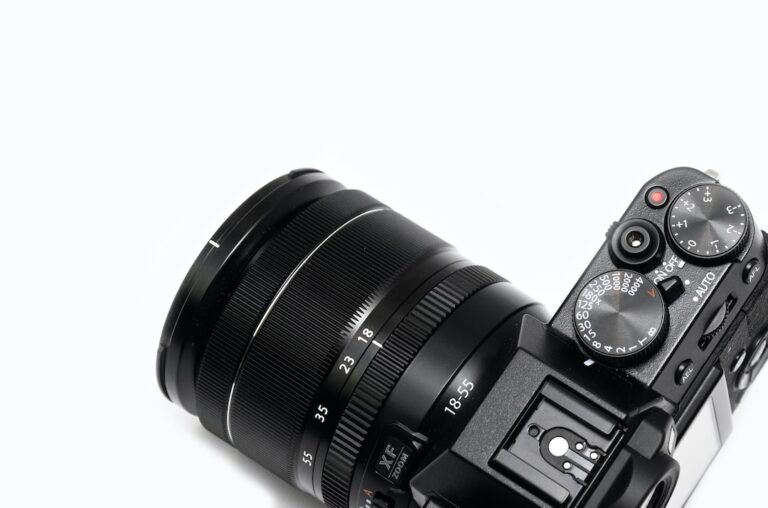
- Decipher the Alphabet Soup: WR means Weather Resistant, OIS is Optical Image Stabilization, and LM stands for Linear Motor (fast, silent autofocus).
- The “Fujicron” Cult: The f/2 prime lenses (23mm, 35mm, 50mm) are nicknamed “Fujicrons” because they are small, sharp, and snappy—much like Leica’s Summicrons.
- Red Badge = Pro Status: If you see a red “XF Zoom” badge, you’re looking at Fuji’s top-tier professional glass.
- Third-Party Renaissance: Brands like Viltrox, Sigma, and Tamron now make incredible autofocus lenses for X-mount, often at a fraction of the cost.
- Fact: Fujifilm is one of the few companies that still manufactures its own optical glass, a legacy that dates back to 1934.
📸 The Evolution of Fujifilm Lenses: A Brief History and Overview
We at Camera Brands™ often joke that Fujifilm didn’t just join the mirrorless revolution; they dressed it in a tuxedo and gave it a vintage soul. But where did this obsession with tactile rings and “color science” come from?
The history of Fujinon lenses is rooted in professional broadcasting and medium-format film. When Fujifilm launched the X-Pro1 in 2012, they didn’t just release a camera; they released a statement. They decided to skip the “full-frame” arms race and perfect the APS-C format. This focus allowed them to create lenses that are physically smaller but optically superior to many full-frame counterparts.
As noted in our Camera Buying Guide, Fujifilm’s commitment to “Kaizen” (continuous improvement) means they often update lens firmware to make older glass feel brand new. From the legendary XF 35mm f/1.4 R—which many claim has a “magical” rendering—to the modern powerhouse XF 18-120mm f/4 LM PZ WR, the evolution has been about balancing character with clinical perfection.
But here’s a question to keep you scrolling: Why do some photographers swear that a lens from 2012 is still better than the 2024 version? We’ll resolve that mystery when we talk about “rendering” versus “sharpness” later on.
🔍 Understanding Fujifilm Lens Mounts and Compatibility
Don’t get caught in a “mount mismatch” heartbreak! While we focus on the X-mount today, you need to know the landscape of Camera Brands and their specific fittings.
- X-Mount: This is for the X-series (X-T5, X-H2, X-S20, etc.). These are APS-C lenses.
- G-Mount: This is for the GFX medium format system. X-mount lenses will NOT fit GFX cameras, and vice versa.
- XC vs. XF:
- XF lenses are the premium line, usually featuring metal builds and aperture rings.
- XC lenses are budget-friendly, plastic-mount lenses that lack aperture rings but still punch way above their weight in image quality.
Compatibility Table:
| Feature | XF Lenses | XC Lenses |
|---|---|---|
| Build Material | High-grade Metal/Glass | High-quality Polycarbonate |
| Aperture Ring | ✅ Yes (Most models) | ❌ No |
| Weather Sealing | ✅ Often (Look for WR) | ❌ No |
| Mount Type | Metal | Plastic |
| Best For | Professionals/Enthusiasts | Beginners/Travelers |
🎯 How to Match Fujifilm Lenses to Your Photography Style
Choosing a lens is like choosing a wand in Harry Potter—the lens chooses the wizard! Or, more accurately, your subject matter dictates your gear. According to Cameralabs, “The key to choosing the right Fujifilm lens is matching it to your shooting style.”
- Street Photography: You want to be a ghost. Look for the “pancake” XF 27mm f/2.8 R WR or the compact XF 23mm f/2 R WR.
- Landscape: Wide is the word. The XF 10-24mm f/4 R OIS WR is a staple for sweeping vistas.
- Portraits: It’s all about that “bokeh” (background blur). The XF 56mm f/1.2 R WR is the undisputed king here.
- Wildlife/Sports: You need reach and speed. The XF 100-400mm f/4.5-5.6 R LM OIS WR is your best friend.
1️⃣ Top 15 Fujifilm Lenses for Every Camera User in 2024
We’ve tested dozens of lenses at Camera Brands™, and if we had to build the ultimate “Fuji Kit,” these 15 would be the survivors. Since “Cameralabs” mentioned 7, we’re giving you 15 to ensure you have every niche covered!
Camera Brands™ Expert Ratings
| Lens Name | Sharpness | Bokeh | Build | Value | Overall |
|---|---|---|---|---|---|
| XF 35mm f/1.4 R | 8/10 | 10/10 | 8/10 | 9/10 | 9.0 |
| XF 18-55mm f/2.8-4 | 8/10 | 7/10 | 8/10 | 10/10 | 8.2 |
| Viltrox 27mm f/1.2 Pro | 10/10 | 9/10 | 9/10 | 10/10 | 9.5 |
| XF 56mm f/1.2 R WR | 10/10 | 10/10 | 9/10 | 8/10 | 9.2 |
| XF 23mm f/2 R WR | 8/10 | 7/10 | 9/10 | 9/10 | 8.3 |
- XF 35mm f/1.4 R: The “Soulful” Prime. It’s not the fastest autofocus, but the way it renders light is legendary.
- XF 18-55mm f/2.8-4 R LM OIS: The “Swiss Army Knife.” As seen in our #featured-video, this is arguably the best kit lens ever made.
- Viltrox 27mm f/1.2 Pro: A third-party beast. Wirecutter raves that its “perspective looks natural for many kinds of subjects.”
- XF 56mm f/1.2 R WR: The portrait master. It turns backgrounds into butter.
- XF 23mm f/2 R WR: The street photographer’s essential. Fast, weather-sealed, and tiny.
- XF 10-24mm f/4 R OIS WR: The landscape workhorse.
- XF 50-140mm f/2.8 R LM OIS WR: The “Red Badge” pro zoom for weddings and sports.
- XF 27mm f/2.8 R WR: The pancake lens that turns your camera into a pocketable powerhouse.
- XF 16mm f/1.4 R WR: Incredible for close-up wide-angle shots with beautiful bokeh.
- Sigma 18-50mm f/2.8 DC DN: The tiny, constant-aperture zoom that challenges Fuji’s own.
- XF 90mm f/2 R LM WR: Arguably the sharpest lens in the entire lineup.
- XF 70-300mm f/4-5.6 R LM OIS WR: The best “bang-for-your-buck” telephoto for hikers.
- XF 80mm f/2.8 R LM OIS WR Macro: For those who want to see the eyes of a bee.
- XF 18mm f/1.4 R WR: A modern, ultra-sharp wide prime for low-light storytelling.
- Tamron 18-300mm f/3.5-6.3: The ultimate “one lens to rule them all” for travel.
👉 Shop Fujifilm Lenses on:
- Fujinon XF Lenses: Amazon | eBay | Fujifilm Official
- Viltrox X-Mount: Amazon | Viltrox Official
- Sigma X-Mount: Amazon
2️⃣ Prime vs Zoom: Which Fujifilm Lens Type Suits You Best?
This is the age-old debate in our Camera Guides. Do you want the convenience of a zoom or the “purity” of a prime?
The Case for Primes:
Primes have a fixed focal length. They force you to move your feet, which often leads to better composition. As Wirecutter suggests, “The first lens you should get is a small, portable, fixed-focal-length (prime) lens.” They generally offer wider apertures (like f/1.4 or f/2), allowing for better low-light performance and shallower depth of field.
The Case for Zooms:
Zooms like the XF 16-80mm f/4 are the kings of versatility. If you’re at a wedding or hiking a mountain, you might not have time to swap lenses. Fujifilm’s zooms are unique because many of them, like the XF 18-55mm, offer a variable but relatively “fast” aperture compared to other brands.
3️⃣ Decoding Fujifilm Lens Specifications: Aperture, Focal Length, and More
When you look at a lens barrel, it looks like a math exam. Let’s break down the Camera Features you need to know:
- Focal Length (mm): Lower numbers (10mm, 16mm) are “Wide Angle.” Higher numbers (90mm, 200mm) are “Telephoto.” 23mm to 35mm is the “Normal” range.
- Aperture (f-stop): This is the “eye” of the lens. A lower number (f/1.2) means a wider opening, more light, and more blur. A higher number (f/11) means less light but everything is in focus.
- R (Aperture Ring): This means the lens has a physical ring to change the aperture—a favorite for tactile shooters.
- LM (Linear Motor): Essential for video and fast-moving subjects. It’s the “silent ninja” of autofocus motors.
4️⃣ Budget-Friendly Fujifilm Lenses That Don’t Compromise Quality
You don’t need to sell a kidney to get great glass. In our Camera Comparisons, we often find that budget lenses hold their own.
- The XC 35mm f/2: It has the exact same glass as the XF version but in a plastic body without an aperture ring. It’s a steal!
- The TTArtisan 27mm f/2.8: An ultra-budget autofocus pancake lens that has taken the Fuji community by storm.
- Viltrox 23mm/33mm/56mm f/1.4: These three lenses are the “holy trinity” for budget-conscious portrait and street photographers.
👉 CHECK PRICE on:
5️⃣ Specialty Fujifilm Lenses: Macro, Wide-Angle, and Telephoto Explained
Sometimes a standard lens just won’t cut it. You need a specialist.
- Macro: The XF 80mm f/2.8 is a masterpiece. It features 1:1 magnification, meaning the subject is life-sized on the sensor. Cameralabs notes it’s perfect for “tiny subjects and detailed macro photography.”
- Ultra-Wide: The XF 8-16mm f/2.8 R LM WR is a “Red Badge” monster. It’s heavy, expensive, and incredibly wide—perfect for architectural photographers who need to fit a whole cathedral into one frame.
- Super-Telephoto: The XF 150-600mm f/5.6-8 is Fuji’s answer to bird photography. It’s surprisingly light for its size and offers incredible reach.
🛠️ Essential Fujifilm Lens Accessories to Enhance Your Photography
A lens is only as good as how you treat it! Here are our must-haves:
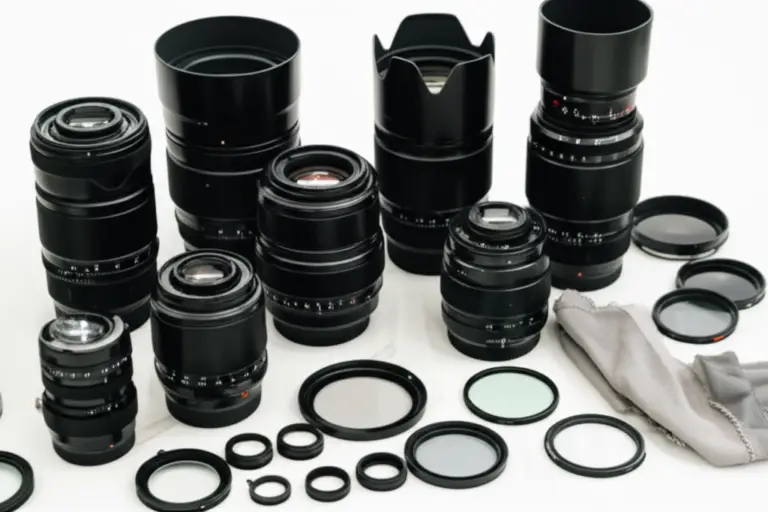
- Lens Hoods: Always use them. They prevent “flare” and protect the front element from accidental bumps.
- UV Filters: A controversial topic! We recommend a high-quality filter like Hoya or B+W to protect your expensive glass from scratches.
- Square Hoods: Brands like Haoge make metal square hoods that give your Fuji camera that classic Leica look.
- Peak Design Slide Lite: A strap that makes carrying heavy zooms like the 50-140mm much more comfortable.
💡 Insider Tips: How to Test and Evaluate Fujifilm Lenses Before Buying
Don’t just take our word for it—test it yourself! When we get a new lens at Camera Brands™, we perform the “Brick Wall Test.”
- Check for Decentering: Take a photo of a flat, detailed surface (like a brick wall) wide open. Are all four corners equally sharp? If one is blurry, the lens elements might be misaligned.
- Focus Breathing: If you’re into video, check if the image “zooms” slightly when you change focus.
- The “Aperture Click”: Does the ring feel firm or mushy? On a Fuji, the tactile feel is half the fun!
🛒 Where to Buy Authentic Fujifilm Lenses and Avoid Counterfeits
Buying gear can be a minefield. Stick to authorized dealers to ensure you get a valid warranty.
- Amazon: Great for returns, but ensure it says “Sold and Shipped by Amazon” to avoid grey-market items.
- B&H Photo / Adorama: The gold standard for photography gear in the US.
- MPB / KEH: Our top recommendations for used lenses. Fujifilm lenses are built like tanks and often last for decades, so buying used is a fantastic way to save.
🤔 Common Mistakes to Avoid When Choosing Fujifilm Lenses
We’ve seen it all. Here’s how to avoid “Buyer’s Remorse”:
- ❌ Over-buying Focal Lengths: Don’t buy a 23mm, 27mm, and 35mm all at once. They are too similar! Pick one and master it.
- ❌ Ignoring Weight: That XF 16-55mm f/2.8 is a masterpiece, but it’s heavy. If you want a light travel kit, you might regret it after four hours of walking.
- ❌ Forgetting the Crop Factor: Remember, a 50mm lens on a Fuji is a tight portrait lens, not a “standard” lens.
- The “One Lens Regret”: Many pros sell their XF 35mm f/1.4 for the newer, faster XF 33mm f/1.4, only to miss the “character” of the old lens and buy it back a year later. Don’t be that person—know if you value clinical sharpness or artistic rendering!
📊 Comparing Fujifilm Lenses with Third-Party Alternatives
The “Great Third-Party Opening” of 2021 changed everything. Now, Sigma, Tamron, and Viltrox are in the game.
| Lens Category | Fujifilm Option | Third-Party Alternative | Winner for Value |
|---|---|---|---|
| Standard Zoom | XF 16-55mm f/2.8 | Sigma 18-50mm f/2.8 | Sigma (Tiny & Cheap) |
| Portrait Prime | XF 56mm f/1.2 | Viltrox 75mm f/1.2 | Viltrox (Insane Sharpness) |
| All-in-One | XF 18-135mm | Tamron 18-300mm | Tamron (More Reach) |
🔧 Maintaining and Caring for Your Fujifilm Lenses for Longevity
Treat your glass like royalty.
- Use a Rocket Blower: Never blow on your lens with your mouth (hello, moisture!). Use a dedicated air blower.
- Microfiber is King: Keep a clean cloth in every bag.
- Sensor Swabs: If you change lenses often, you will get dust on your sensor. Learn to clean it safely or take it to a pro.
🎥 Using Fujifilm Lenses for Video: What You Need to Know
Fujifilm has become a video powerhouse (looking at you, X-H2S). But not all lenses are created equal for film.
- OIS is Essential: If your camera doesn’t have IBIS (In-Body Image Stabilization), you must get a lens with OIS for handheld video.
- Power Zoom (PZ): The XF 18-120mm f/4 LM PZ WR allows for smooth, motorized zooming that looks professional.
- Aperture De-clicking: Some newer lenses allow you to turn off the “clicks” on the aperture ring for silent adjustments during recording.
📚 Recommended Reading and Resources for Fujifilm Lens Enthusiasts
Want to go deeper? Check out these high-authority resources:
- Fujifilm X-Mount Lens Roadmap: See what’s coming next.
- Fujivibe: A community dedicated to the “Fuji look.”
- DPReview Lens Database: For technical charts and lab tests.
🏁 Conclusion: Mastering the Art of Choosing the Perfect Fujifilm Lens
So, after this deep dive into the world of Fujifilm lenses, what’s the final verdict? Whether you’re a street shooter craving the nimble XF 27mm f/2.8, a portrait artist swooning over the buttery bokeh of the XF 56mm f/1.2, or a wildlife enthusiast eyeing the reach of the XF 100-400mm, the key takeaway is this:
There is no one-size-fits-all lens. Your choice depends on your style, budget, and how much you want to carry on your adventures. But here’s the kicker: investing in quality glass is one of the smartest moves you can make. Lenses often outlive camera bodies and retain value better than any other gear.
Remember the mystery we teased earlier about why some photographers prefer older lenses? It boils down to character versus clinical perfection. The older XF 35mm f/1.4 has a unique rendering that some say adds soul to images, while newer lenses prioritize razor-sharp edges and autofocus speed. Neither is wrong—it’s about what you want your photos to feel like.
Our recommendation? Start with a versatile prime like the Viltrox 27mm f/1.2 Pro or Fujifilm’s own XF 35mm f/1.4 R, then build your kit based on your favorite subjects. Don’t be afraid to mix in third-party lenses—they’re often hidden gems.
Above all, test lenses yourself if possible, and don’t rush. Your perfect lens is out there, waiting to turn your moments into masterpieces.
🔗 Recommended Links for Fujifilm Lens Buyers
-
Fujifilm XF 35mm f/1.4 R:
Amazon | B&H Photo | Fujifilm Official Website -
Viltrox 27mm f/1.2 Pro:
Amazon | Viltrox Official Website -
Fujifilm XF 56mm f/1.2 R WR:
Amazon | B&H Photo | Fujifilm Official Website -
Fujifilm XF 18-55mm f/2.8-4 R LM OIS:
Amazon | B&H Photo | Fujifilm Official Website -
Tamron 18-300mm f/3.5-6.3 Di III-A VC VXD:
Amazon | Tamron Official Website -
Books on Fujifilm Photography:
“Fujifilm X Series: The Unofficial Guide” by Rico Pfirstinger | “Mastering Fujifilm X-T4” by Darrell Young
❓ Frequently Asked Questions About Fujifilm Lenses
What factors should I consider when selecting a Fujifilm lens for portrait photography?
Portrait lenses need to deliver beautiful subject isolation and flattering perspective. Look for:
- Focal length: Between 50mm and 90mm (75mm to 135mm full-frame equivalent) is ideal to avoid distortion.
- Wide aperture: f/1.2 to f/2.8 lets you create creamy bokeh and shoot in low light.
- Build quality: Weather sealing (WR) helps if you shoot outdoors.
- Autofocus speed: Fast and silent autofocus motors (LM) are great for candid portraits.
Examples: The XF 56mm f/1.2 R WR is a classic portrait lens with stunning bokeh, while the XF 90mm f/2 R LM WR offers razor-sharp images with a slightly tighter frame.
How do different Fujifilm lenses affect image quality and style?
Lens choice influences not just sharpness but the character of your photos:
- Rendering: Older primes like the XF 35mm f/1.4 have a unique “glow” or “character” that some photographers love.
- Sharpness: Newer lenses and zooms tend to be clinically sharp edge-to-edge.
- Color and contrast: Fujifilm lenses often produce vibrant colors and pleasing contrast, complementing the brand’s renowned color science.
- Bokeh quality: Fast primes produce smooth, creamy backgrounds, while zooms may have more mechanical blur.
Your choice depends on whether you want clinical precision or artistic flair.
Which Fujifilm lenses are best for landscape photography?
Landscapes demand wide angles and sharpness across the frame:
- XF 10-24mm f/4 R OIS WR: Versatile ultra-wide zoom, weather-sealed, with optical stabilization.
- XF 16mm f/1.4 R WR: A wide prime with excellent sharpness and low-light capability.
- XF 8-16mm f/2.8 R LM WR: For ultra-wide, dramatic perspectives (heavier and pricier).
Weather sealing and optical stabilization are important for outdoor shooting. Also consider portability if hiking.
How can I match a Fujifilm lens to my camera model for optimal performance?
Most Fujifilm X-series cameras use the X-mount, so lenses are broadly compatible. However:
- Sensor size: All X-mount lenses are designed for APS-C sensors, so expect a 1.5x crop factor.
- In-body stabilization: If your camera lacks IBIS (e.g., X-T30), prioritize lenses with OIS.
- Firmware updates: Keep your camera and lenses updated to benefit from autofocus improvements.
- Lens size and weight: Match heavier lenses like the XF 16-55mm f/2.8 with larger bodies (X-T4, X-H2) for better balance.
Always check the lens’s compatibility on Fujifilm’s official site or trusted retailers.
Additional FAQs
Can I use third-party lenses on Fujifilm cameras without sacrificing quality?
Yes! Third-party lenses from Viltrox, Sigma, and Tamron have made huge strides in autofocus speed and image quality. Many offer excellent value and unique focal lengths not available from Fujifilm. Just ensure firmware updates and compatibility checks before purchase.
Is weather sealing essential for Fujifilm lenses?
If you shoot outdoors often, especially in rain or dusty environments, weather sealing (WR) is highly recommended. It protects your investment and allows you to keep shooting when conditions get tough.
📑 Reference Links and Sources
- Fujifilm Official Lens Page: https://fujifilm-x.com/en-us/products/lenses/
- Cameralabs Best Fujifilm Lenses 2023: https://www.cameralabs.com/best-fujifilm-lenses/
- Wirecutter’s Best Fujifilm X-Mount Lenses: https://www.nytimes.com/wirecutter/reviews/best-fujifilm-x-mount-mirrorless-lenses/
- Viltrox Official Website: https://viltroxstore.com/
- Tamron Official Website: https://www.tamron-usa.com/
- Sigma Global Vision: https://www.sigma-global.com/en/lenses/
- DPReview Lens Database: https://www.dpreview.com/lenses
For more on Fujifilm cameras and lenses, visit our Camera Brands™ Fujifilm category.