Support our educational content for free when you purchase through links on our site. Learn more
DSLR vs Mirrorless Camera Brands: 9 Key Differences You Must Know (2025) 📷

Choosing between DSLR and mirrorless cameras can feel like stepping into a photography jungle—so many brands, features, and tech buzzwords flying around! Did you know that mirrorless cameras now outsell DSLRs globally, marking a seismic shift in how we capture moments? Yet, DSLRs still hold a loyal fanbase thanks to their rugged build and optical viewfinders. In this article, we unravel the 9 crucial differences between DSLR and mirrorless camera brands that every photographer—from beginner to pro—needs to understand before investing.
Stick with us as we explore everything from autofocus wizardry and lens ecosystems to battery life and video capabilities. We’ll also reveal which brands are leading the charge in each camp, and help you decide which system fits your style and budget. Spoiler alert: the future is mirrorless, but DSLRs still pack a punch!
Key Takeaways
- Mirrorless cameras are lighter, more compact, and excel in autofocus and video features.
- DSLRs offer longer battery life, optical viewfinders, and a vast legacy lens ecosystem.
- Top brands like Canon, Nikon, and Sony are investing heavily in mirrorless tech, but DSLRs remain relevant for many pros.
- Choosing the right system depends on your photography style, budget, and priorities like portability or battery endurance.
- Adapting lenses and transitioning workflows are easier than ever, making the switch from DSLR to mirrorless smoother.
Ready to find your perfect camera match? Dive in and discover which system will unlock your creative potential!
Table of Contents
- ⚡️ Quick Tips and Facts
- 📸 The Evolution of Camera Tech: A Brief History of DSLRs and Mirrorless
- 🤔 DSLR vs. Mirrorless: Unpacking the Core Operational Differences
- 1. The Viewfinder Experience: Optical vs. Electronic
- 2. Autofocus Systems: Speed, Precision, and Tracking
- 3. Continuous Shooting & Burst Rates: Capturing the Action
- 4. Low-Light Performance: Seeing in the Dark
- 5. Image Stabilization: Steady Shots, Handheld Freedom
- 6. Video Capabilities: From Stills to Cinema
- 7. Imaging Sensor Size & Image Quality: Does Bigger Always Mean Better?
- 💪 Size, Weight, and Ergonomics: Handling Your Creative Tool
- 🔋 Battery Life: Powering Your Photography Adventures
- 🔍 Lens Ecosystems & Compatibility: A World of Glass
- 💰 The Cost Factor: Initial Investment & Long-Term Value
- 🛠️ Maintenance & Durability: Keeping Your Gear in Top Shape
- 🌟 Brand Showdown: Who’s Doing What in DSLR & Mirrorless?
- 🤔 Which Camera Type is Best for YOU? A Personalized Guide
- 🔄 Making the Switch: Transitioning from DSLR to Mirrorless
- 🔮 The Future of Photography: Where Are DSLRs and Mirrorless Heading?
- 🎯 Conclusion: The Future is Now (But DSLRs Still Rock!)
- 🔗 Recommended Links for Your Photography Journey
- 📚 Reference Links: Our Sources & Further Reading
⚡️ Quick Tips and Facts
Welcome to the ultimate showdown between DSLR and mirrorless camera brands! At Camera Brands™, we’ve spent years capturing moments with both systems, and we’re here to spill the beans on what really sets them apart. Whether you’re a shutterbug just starting out or a seasoned pro, these quick facts will get you thinking:
- Mirrorless cameras are generally smaller and lighter than DSLRs because they ditch the bulky mirror box. ✅
- DSLRs offer optical viewfinders (OVFs), which some photographers swear by for their clarity and zero lag. Mirrorless cameras use electronic viewfinders (EVFs) that preview your shot digitally. ✅
- Autofocus tech has evolved fast: modern mirrorless cameras often match or beat DSLRs in speed and accuracy, especially in video and live view modes. ✅
- Battery life still favors DSLRs, but mirrorless batteries are improving, and many mirrorless models come with dual battery slots or USB charging. ✅
- Lens ecosystems matter: DSLRs have a legacy of decades-old lenses, while mirrorless systems are rapidly expanding with new, cutting-edge optics. ✅
- Video shooters tend to prefer mirrorless for better autofocus and compactness. ✅
- Price points overlap: Entry-level mirrorless cameras can be as affordable as DSLRs, but professional mirrorless gear can be pricier due to new tech. ✅
Curious how these facts translate into real-world shooting? Stick around—we’ll unpack every detail, brand by brand, feature by feature. Ready? Let’s dive in!
For more on camera brands and how to pick your perfect match, check out our Camera Brands category.
📸 The Evolution of Camera Tech: A Brief History of DSLRs and Mirrorless

Before we get into nitty-gritty specs, let’s rewind the tape. Understanding the history of DSLR and mirrorless cameras helps explain why they differ so much today.
The DSLR Legacy: Mechanical Marvels
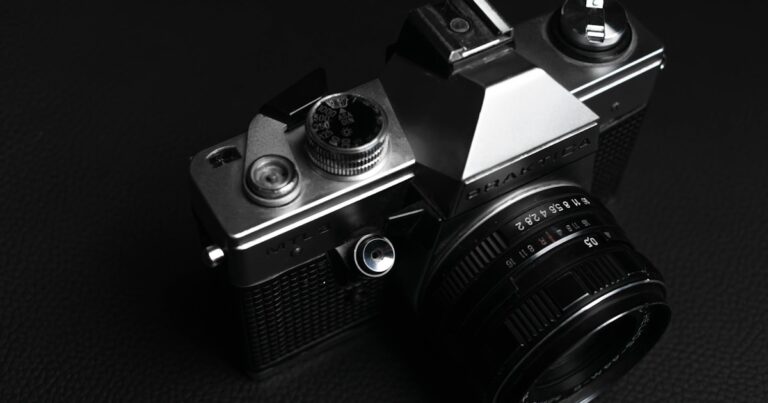
DSLRs (Digital Single-Lens Reflex cameras) trace their roots back to film SLRs from the mid-20th century. The defining feature? A mirror and prism system that reflects light from the lens up into an optical viewfinder. When you press the shutter, the mirror flips up, letting light hit the sensor.
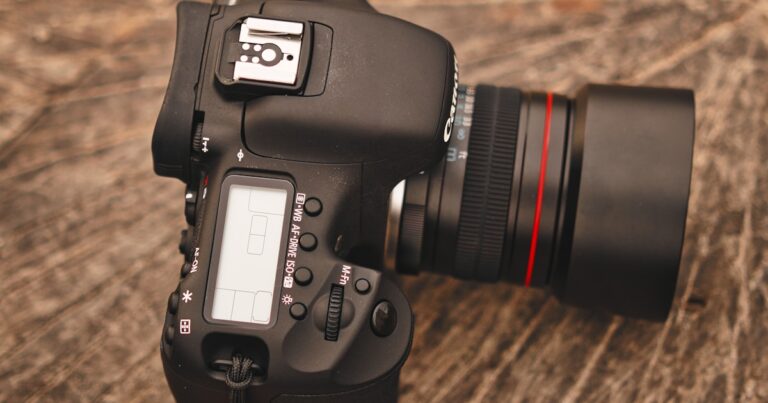
This design gave photographers a true-to-life optical preview and fast autofocus via dedicated AF sensors. DSLRs became the workhorses for pros and enthusiasts alike, with giants like Canon EOS-1D series and Nikon D850 leading the charge.
Mirrorless Cameras: The Digital Disruptors
Mirrorless cameras emerged in the early 2000s but only gained serious traction in the 2010s. By removing the mirror and optical viewfinder, manufacturers created smaller, lighter bodies with electronic viewfinders (EVFs) or just LCD screens.
Sony’s Alpha series (A7 and A9) revolutionized full-frame mirrorless cameras, pushing the boundaries of autofocus and image quality. Other brands like Fujifilm X-series, Canon EOS R, and Nikon Z-series quickly followed.
Why Does This Matter?
The mirror mechanism in DSLRs adds bulk and complexity but delivers a distinct shooting experience. Mirrorless cameras trade that for compactness and new tech advantages like silent shooting and real-time exposure previews.
Want to geek out more on camera history? Our Camera Guides have you covered.
🤔 DSLR vs. Mirrorless: Unpacking the Core Operational Differences
Let’s get into the heart of the matter: how do DSLRs and mirrorless cameras actually differ in operation? We’ll break this down into key features.
1. The Viewfinder Experience: Optical vs. Electronic
| Feature | DSLR (OVF) | Mirrorless (EVF) |
|---|---|---|
| Viewfinder Type | Optical (mirror + prism) | Electronic (digital screen) |
| Real-time Preview | Yes, through lens, no lag | Yes, with exposure simulation |
| Low-Light Visibility | Can be dark, no brightness adjustment | Brightness adjustable, can amplify view |
| Lag | None | Slight lag (improving with tech) |
| Battery Impact | Minimal | Higher due to screen usage |
Our Take: We love the optical clarity and zero lag of DSLR viewfinders, especially for fast action or bright outdoor scenes. But mirrorless EVFs offer exposure preview and focus aids like focus peaking, which can be a game-changer in tricky lighting.
2. Autofocus Systems: Speed, Precision, and Tracking
Modern mirrorless cameras use on-sensor phase detection and contrast detection autofocus, enabling:
- Eye and face detection
- Real-time subject tracking
- Better video autofocus
DSLRs rely on dedicated AF sensors for phase detection, which historically offered faster autofocus in stills, but mirrorless tech has caught up or surpassed this.
Example: The Sony A9 II mirrorless camera boasts 693 phase-detection points covering 93% of the frame, rivaling or exceeding DSLR autofocus coverage.
3. Continuous Shooting & Burst Rates: Capturing the Action
Mirrorless cameras often excel in burst shooting due to:
- No mirror flipping mechanism slowing down shots
- Electronic shutters enabling silent, high-speed bursts
Example: The Canon EOS R5 mirrorless shoots up to 20 fps with the electronic shutter, while the Canon 5D Mark IV DSLR maxes out around 7 fps.
4. Low-Light Performance: Seeing in the Dark
Sensor size and ISO performance dominate here, not camera type. Both systems offer full-frame and APS-C sensors with excellent low-light capabilities.
Mirrorless EVFs can brighten the scene in dark environments, helping compose shots where DSLR OVFs might be too dark.
5. Image Stabilization: Steady Shots, Handheld Freedom
Many mirrorless cameras feature in-body image stabilization (IBIS), stabilizing any attached lens. DSLRs often rely on lens-based stabilization alone.
Example: The Nikon Z6 II mirrorless has 5-axis IBIS, while the Nikon D850 DSLR depends on VR lenses for stabilization.
6. Video Capabilities: From Stills to Cinema
Mirrorless cameras dominate video with:
- Superior autofocus during video
- Higher frame rates and resolutions (4K, 6K, 8K)
- Advanced codecs and log profiles for color grading
DSLRs can shoot video but often lag behind in autofocus and video-centric features.
7. Imaging Sensor Size & Image Quality: Does Bigger Always Mean Better?
Both DSLRs and mirrorless cameras come in:
- Full-frame (35mm)
- APS-C (crop sensor)
- Micro Four Thirds (mirrorless only)
Image quality depends on sensor tech, processing, and lens quality rather than form factor alone.
💪 Size, Weight, and Ergonomics: Handling Your Creative Tool
| Camera Type | Average Weight | Typical Size | Ergonomics Notes |
|---|---|---|---|
| DSLR | 700-1000g | Larger | Larger grip, more physical controls |
| Mirrorless | 400-700g | Compact | Smaller body, some find controls cramped |
Mirrorless cameras win for portability, perfect for travel and street photography. DSLRs offer a more substantial grip favored by those shooting with heavy lenses or in challenging conditions.
🔋 Battery Life: Powering Your Photography Adventures
DSLRs typically last longer on a single charge because:
- OVFs don’t consume power
- Larger batteries due to bigger body size
Mirrorless cameras rely on EVFs or LCDs, which drain batteries faster. However, many mirrorless models now support:
- Dual batteries (e.g., Sony A7R IV)
- USB-C charging on the go
- Power banks for extended shoots
🔍 Lens Ecosystems & Compatibility: A World of Glass
DSLR Lens Mounts: Canon EF/EF-S, Nikon F, Pentax K
DSLRs boast decades of lens options, including:
- Canon EF mount: 70+ years of lenses, including L-series pro glass
- Nikon F mount: Legendary optics with vast third-party support
- Pentax K mount: Durable lenses with weather sealing
Mirrorless Lens Mounts: Sony E, Canon RF/EF-M, Nikon Z, Fujifilm X, Micro Four Thirds
Mirrorless mounts are newer but rapidly growing:
- Sony E mount: Extensive full-frame and APS-C lenses
- Canon RF mount: High-speed communication and new optical designs
- Nikon Z mount: Large diameter for future-proofing lens designs
- Fujifilm X mount: APS-C lenses with excellent image quality
- Micro Four Thirds (Panasonic/Olympus): Compact lenses with IBIS synergy
Adapting Lenses: Bridging the Gap Between Systems
Mirrorless cameras’ short flange focal distance allows use of DSLR lenses via adapters, preserving autofocus and image quality in many cases.
💰 The Cost Factor: Initial Investment & Long-Term Value
Camera Bodies: Entry-Level to Professional Options
| Brand | DSLR Entry-Level | DSLR Pro | Mirrorless Entry-Level | Mirrorless Pro |
|---|---|---|---|---|
| Canon | EOS Rebel T8i | EOS-1D X Mark III | EOS RP | EOS R5 |
| Nikon | D3500 | D6 | Z50 | Z9 |
| Sony | N/A (mirrorless only) | N/A | A6100 | A1 |
Lenses: The Real Investment in Your Kit
Lenses often cost more than bodies. DSLRs benefit from legacy lenses, sometimes available used at bargain prices. Mirrorless lenses tend to be newer, pricier, but often feature advanced optics and stabilization.
Accessories: Batteries, Memory Cards, and More Essentials
Mirrorless users should budget for extra batteries due to shorter life. Both systems require fast memory cards for high-res images and video.
🛠️ Maintenance & Durability: Keeping Your Gear in Top Shape
- DSLRs have more moving parts (mirror, shutter) that may require servicing.
- Mirrorless cameras have fewer mechanical parts but rely heavily on electronic components.
- Weather sealing varies by model; pro DSLRs and mirrorless bodies often feature robust sealing.
- Regular sensor cleaning is essential for both.
🌟 Brand Showdown: Who’s Doing What in DSLR & Mirrorless?
Canon: The EOS Legacy and RF Future
| Aspect | Rating (1-10) |
|---|---|
| Design | 9 |
| Autofocus | 9 |
| Lens Ecosystem | 10 |
| Video | 8 |
| Battery Life | 8 |
Canon remains a giant with its EOS DSLR line and rapidly expanding RF mirrorless system. The EOS R5 and R6 mirrorless cameras are favorites for hybrid shooters.
Nikon: F-Mount Stalwarts and Z-Mount Innovators
| Aspect | Rating (1-10) |
|---|---|
| Design | 8 |
| Autofocus | 8 |
| Lens Ecosystem | 9 |
| Video | 7 |
| Battery Life | 8 |
Nikon’s Z-series mirrorless cameras impress with large-diameter mounts and excellent image quality, while DSLRs like the D850 remain workhorses.
Sony: Mirrorless Pioneers and Market Leaders
| Aspect | Rating (1-10) |
|---|---|
| Design | 9 |
| Autofocus | 10 |
| Lens Ecosystem | 8 |
| Video | 9 |
| Battery Life | 7 |
Sony is the undisputed leader in mirrorless tech, especially with the Alpha A7 and A9 series. No DSLRs here, just mirrorless innovation.
Fujifilm: Retro Charm Meets Cutting-Edge APS-C
| Aspect | Rating (1-10) |
|---|---|
| Design | 9 |
| Autofocus | 8 |
| Lens Ecosystem | 7 |
| Video | 7 |
| Battery Life | 7 |
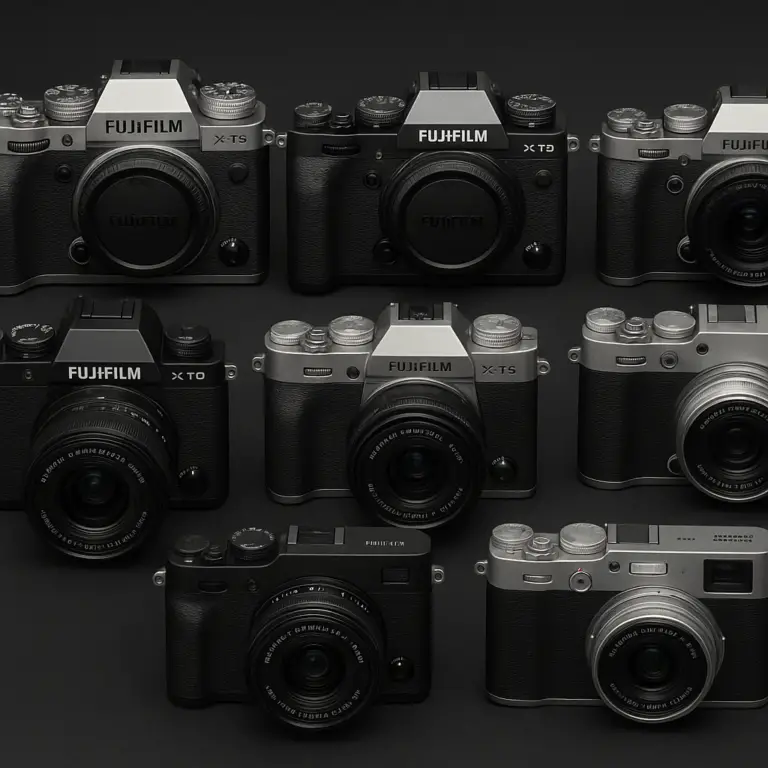
Fujifilm’s X-series mirrorless cameras are beloved for their color science and tactile controls, perfect for enthusiasts.
Panasonic & Olympus: The Micro Four Thirds Advantage
| Aspect | Rating (1-10) |
|---|---|
| Design | 8 |
| Autofocus | 7 |
| Lens Ecosystem | 7 |
| Video | 8 |
| Battery Life | 8 |
Great for travel and video, Micro Four Thirds cameras like the Panasonic GH5 and Olympus OM-D series offer compactness and IBIS.
Other Players: Pentax, Leica, and Beyond
Pentax DSLRs are rugged and weather-sealed, favored by outdoor shooters. Leica offers premium mirrorless cameras with exquisite build and image quality but at a luxury price.
🤔 Which Camera Type is Best for YOU? A Personalized Guide
For the Beginner Photographer: Simplicity vs. Power
- DSLRs like the Canon Rebel T8i offer intuitive controls and great battery life.
- Mirrorless options like the Sony A6100 provide compactness and advanced autofocus.
For the Enthusiast & Hobbyist: Balancing Features and Budget
- Mirrorless cameras offer future-proof tech and video features.
- DSLRs provide robust lens options and longer battery life.
For the Professional Photographer: Reliability, Performance, and Ecosystem
- Pro DSLRs like the Nikon D6 or Canon 1D X Mark III remain stalwarts.
- Mirrorless pro models like the Sony A1 and Canon EOS R5 push boundaries in speed and resolution.
Considering Your Photography Style: What Do You Shoot?
- Sports and wildlife: Mirrorless for autofocus and burst speed.
- Portraits and landscapes: Both systems excel; lens choice matters more.
- Video: Mirrorless is generally superior.
🔄 Making the Switch: Transitioning from DSLR to Mirrorless
Evaluating Your Current Gear: What to Keep, What to Sell
- Keep lenses compatible with adapters.
- Sell older DSLR bodies if upgrading.
Budgeting for the Transition: A Smart Investment Strategy
- Allocate funds for new lenses.
- Consider trade-in programs from Canon, Nikon, Sony.
Learning New Habits: Embracing the Mirrorless Workflow
- Get comfortable with EVFs and menus.
- Explore features like focus peaking and silent shutter.
🔮 The Future of Photography: Where Are DSLRs and Mirrorless Heading?
The industry is clearly moving toward mirrorless technology, with major brands investing heavily in new lenses, sensors, and AI-powered autofocus. However, DSLRs still hold value for certain niches and photographers who prefer optical viewfinders and proven durability.
As the first YouTube video summarized above (#featured-video), “the lines are now blurred between DSLR cameras and mirrorless,” with mirrorless cameras offering next-generation image quality in a compact form.
If you’re hungry for more detailed comparisons, check out our Camera Comparisons category and Camera Features for deep dives.
CHECK PRICE on popular mirrorless and DSLR cameras:
- Canon EOS R5: Amazon | B&H | Canon Official Website
- Nikon Z6 II: Amazon | B&H | Nikon Official Website
- Sony A7 III: Amazon | B&H | Sony Official Website
Ready to explore more? Don’t miss our Camera Buying Guide for expert tips on choosing your next camera!
🎯 Conclusion: The Future is Now (But DSLRs Still Rock!)

After our deep dive into the world of DSLR and mirrorless camera brands, it’s clear: both systems have their unique strengths and ideal users. Mirrorless cameras are undeniably the future, boasting compact designs, cutting-edge autofocus, and superior video capabilities. Brands like Sony, Canon (RF series), and Nikon (Z series) are pushing the envelope with innovative features that make shooting faster, smarter, and more versatile.
However, DSLRs are far from obsolete. Their robust build, longer battery life, and vast lens ecosystems still make them a reliable choice—especially for photographers who value optical viewfinders and proven durability. Canon’s EOS-1D X Mark III and Nikon’s D850 remain favorites among pros who need rock-solid performance in challenging environments.
If you’re on the fence about switching from DSLR to mirrorless, consider your shooting style, budget, and how much you value portability and video features. Mirrorless systems offer exciting possibilities but may require investing in new lenses and adapting to a different workflow.
In short:
- Want the latest tech, compactness, and video prowess? Go mirrorless.
- Prefer traditional handling, longer battery life, and legacy lenses? Stick with DSLR.
At Camera Brands™, we recommend trying both if possible. Rent or borrow cameras, test them in your typical shooting scenarios, and see which feels right. The best camera is the one that inspires you to create stunning images and capture unforgettable moments.
🔗 Recommended Links for Your Photography Journey
👉 Shop DSLR and Mirrorless Cameras:
- Canon EOS R5 Mirrorless: Amazon | B&H | Canon Official Website
- Canon EOS-1D X Mark III DSLR: Amazon | B&H | Canon Official Website
- Nikon Z6 II Mirrorless: Amazon | B&H | Nikon Official Website
- Nikon D850 DSLR: Amazon | B&H | Nikon Official Website
- Sony Alpha A7 III Mirrorless: Amazon | B&H | Sony Official Website
Recommended Books on Photography and Camera Systems:
- Understanding Exposure by Bryan Peterson: Amazon — A classic guide to mastering exposure, essential for both DSLR and mirrorless users.
- The Digital Photography Book by Scott Kelby: Amazon — Practical tips and tricks from a pro photographer.
- Mirrorless Cameras For Dummies by David D. Busch: Amazon — A great intro to the mirrorless world.
❓ Frequently Asked Questions (FAQ)

Are DSLR cameras still worth investing in, or should I switch to a mirrorless camera system?
DSLRs remain a solid investment if you value optical viewfinders, longer battery life, and access to a mature lens ecosystem. They are especially favored by professionals in sports, wildlife, and studio photography. However, mirrorless cameras offer more advanced autofocus, compactness, and superior video features, making them the future-proof choice for many.
How do the battery lives of DSLR and mirrorless cameras compare?
DSLRs generally have longer battery life because optical viewfinders consume no power, and their larger bodies accommodate bigger batteries. Mirrorless cameras rely on electronic viewfinders and LCD screens, which drain batteries faster. That said, mirrorless manufacturers are improving battery tech and offering dual battery slots or USB charging.
Do mirrorless cameras have an advantage over DSLR cameras in terms of video recording capabilities?
✅ Yes! Mirrorless cameras typically provide better autofocus during video, higher frame rates (4K, 6K, 8K), and advanced codecs. They also support features like focus peaking and silent shooting, making them ideal for hybrid shooters who want both stills and video.
What are the main differences in lens options between DSLR and mirrorless camera systems?
DSLRs benefit from decades of lens development, offering a vast selection of both new and used lenses, including professional-grade glass. Mirrorless systems have newer mounts but are rapidly expanding their lens lineups with innovative optics and in-body stabilization. Mirrorless cameras also allow adapting DSLR lenses with minimal loss in performance.
Which camera brand is best for beginners, DSLR or mirrorless?
Both DSLR and mirrorless brands offer excellent beginner cameras. For DSLRs, Canon EOS Rebel T8i and Nikon D3500 are user-friendly and affordable. For mirrorless, Sony A6100 and Canon EOS M50 Mark II provide compactness and advanced autofocus. Your choice depends on whether you prioritize size and video (mirrorless) or battery life and optical viewfinder (DSLR).
Read more about “9 Affordable Mirrorless Cameras for Beginners That Wow in 2025 📸”
How do the image quality and autofocus systems differ between DSLR and mirrorless cameras?
Image quality depends mostly on sensor size and lens quality, not camera type. Mirrorless cameras often have on-sensor phase detection autofocus, enabling more focus points and better subject tracking, especially for video. DSLRs use dedicated AF sensors, which are fast but less versatile in live view or video.
What are the key advantages of mirrorless cameras over DSLR cameras?
- Smaller, lighter bodies
- Electronic viewfinders with exposure preview
- Superior autofocus and subject tracking
- Better video features
- In-body image stabilization (IBIS) on many models
- Silent shooting modes
Read more about “Which Brand Has the Best Camera? 📸 Top 6 Picks for 2025 Revealed!”
How do image quality and performance compare between DSLR and mirrorless cameras?
Both systems offer excellent image quality, especially in full-frame and APS-C formats. Mirrorless cameras tend to have faster burst rates and more advanced autofocus, while DSLRs may have better battery life and optical viewfinders preferred by some photographers.
What are the pros and cons of DSLR versus mirrorless camera brands?
| Aspect | DSLR Pros | DSLR Cons | Mirrorless Pros | Mirrorless Cons |
|---|---|---|---|---|
| Size & Weight | Larger grip, balanced with heavy lenses | Bulky and heavy | Compact and lightweight | Smaller grip may feel cramped |
| Autofocus | Fast phase detection AF in viewfinder | Limited AF points in live view/video | Advanced on-sensor AF, eye tracking | Slight EVF lag (improving) |
| Battery Life | Longer battery life | Heavier batteries | Shorter battery life | Need extra batteries or power banks |
| Lens Ecosystem | Vast legacy lens selection | Older lenses may lack modern features | New lenses with advanced optics | Smaller lens selection (growing fast) |
| Video | Basic video capabilities | Slower AF in video | Superior video autofocus and features | Battery drain during video |
Read more about “What Is the Best Camera Brand for Professional Photography? 📸 (2025)”
Are mirrorless cameras more compact and lightweight than DSLRs?
✅ Absolutely. Mirrorless cameras remove the mirror box and optical prism, allowing manufacturers to design smaller and lighter bodies without sacrificing sensor size or image quality.
Read more about “10 Best Compact Cameras with Advanced Features You Need in 2025 📸”
What are the best DSLR and mirrorless camera brands for professional photography?
- DSLR: Canon (EOS-1D X Mark III), Nikon (D6)
- Mirrorless: Sony (Alpha A1), Canon (EOS R5/R3), Nikon (Z9)
These brands offer robust build quality, extensive lens lineups, and cutting-edge features tailored for professionals.
Read more about “Which Is Best: Nikon or Canon? 📸 The Ultimate 10-Point Showdown (2025)”
How do autofocus systems vary between DSLR and mirrorless cameras?
DSLRs use dedicated phase-detection AF sensors that excel in optical viewfinder shooting but are limited in live view and video. Mirrorless cameras use on-sensor phase and contrast detection, enabling more focus points, better subject tracking, and superior video autofocus.
Read more about “Camera Brand Lens Mount Compatibility: The Ultimate 2025 Guide 🔍”
📚 Reference Links: Our Sources & Further Reading
- Canon Official Website
- Nikon Official Website
- Sony Alpha Cameras
- Fujifilm X Series
- Panasonic Lumix
- Olympus OM System
- Pentax Cameras
- Leica Camera AG
- The Phoblographer: What are the Best Camera Brands? Advice from a Photographer
For more expert insights, visit our Camera Brands category and Camera Buying Guide.
Ready to capture your next masterpiece? Whether DSLR or mirrorless, the perfect camera is waiting for you! 📸✨